
Last updated September 20, 2026
Free on-site gate assessment - hinges, posts, and your LiftMaster or Nice gate operator checked before anything is quoted
The assessment is free and the quote is the invoice.

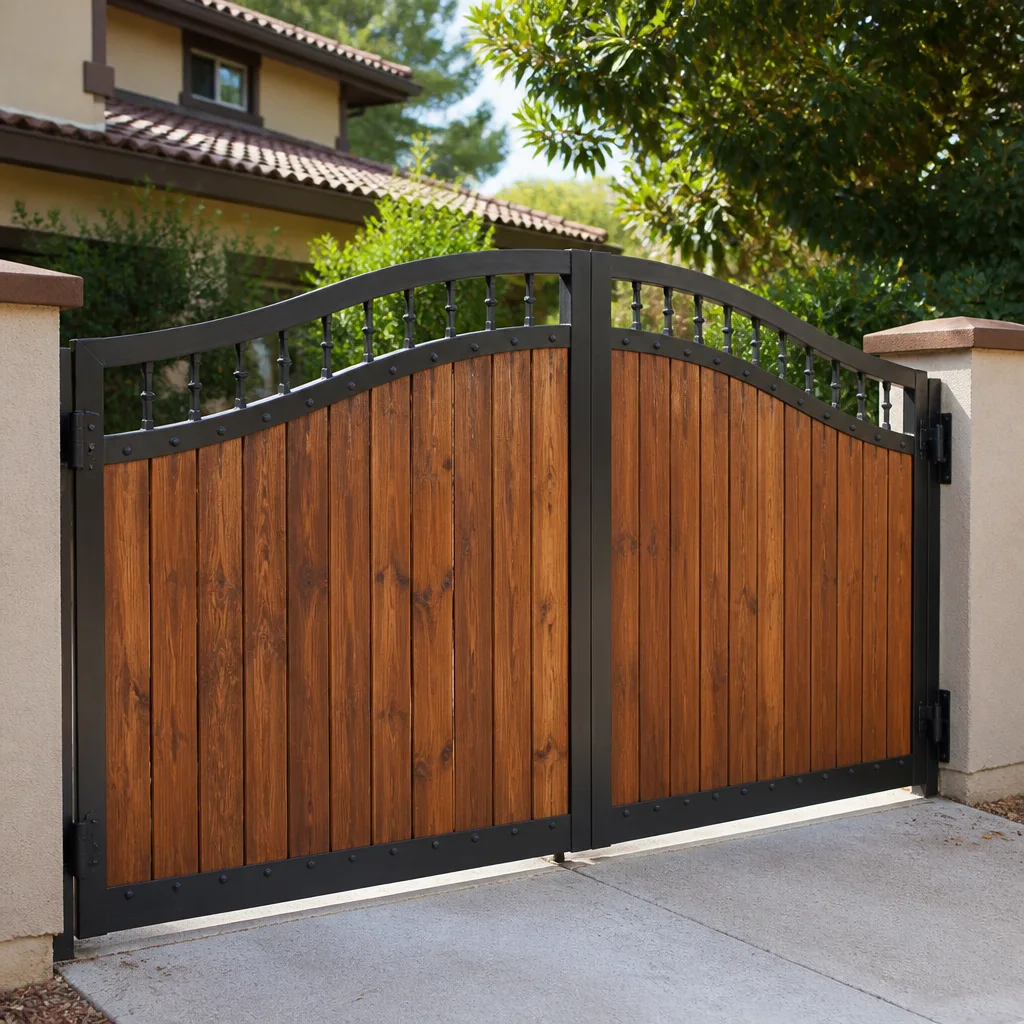
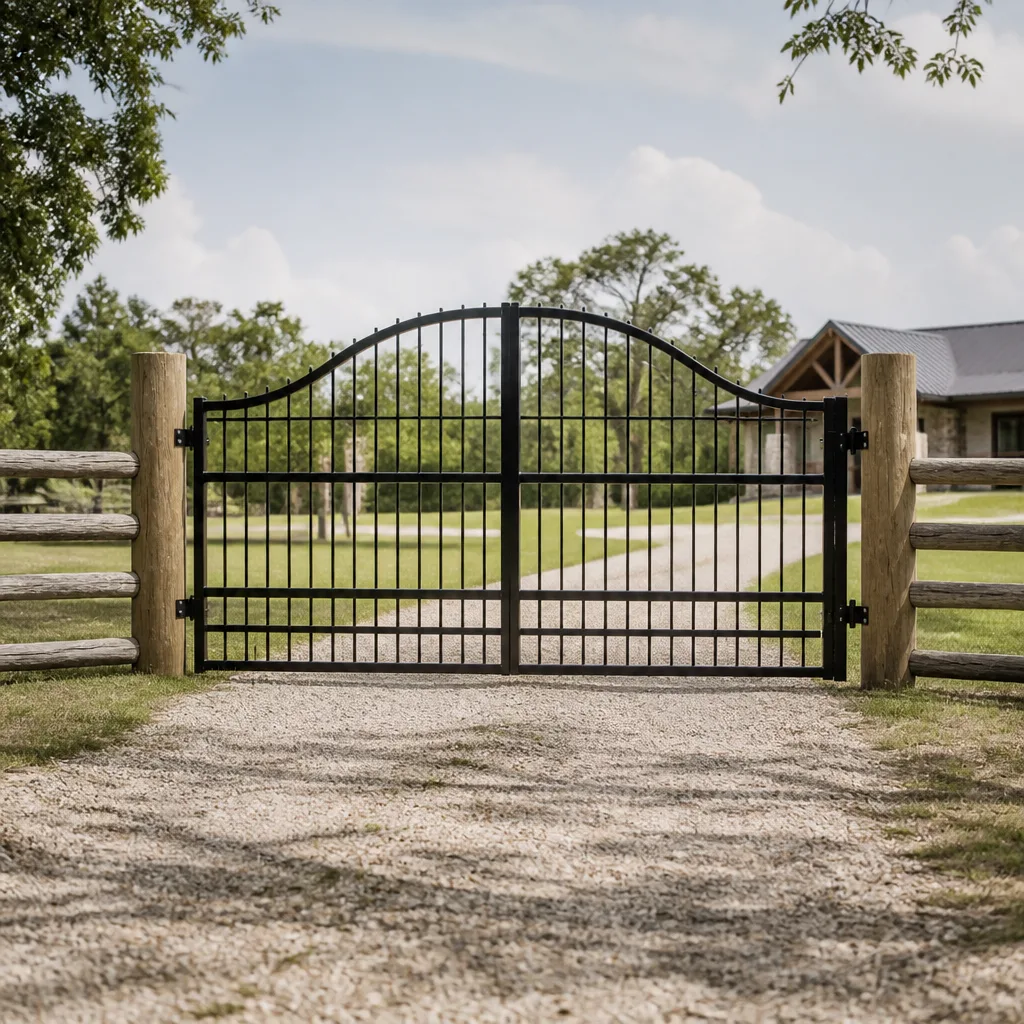
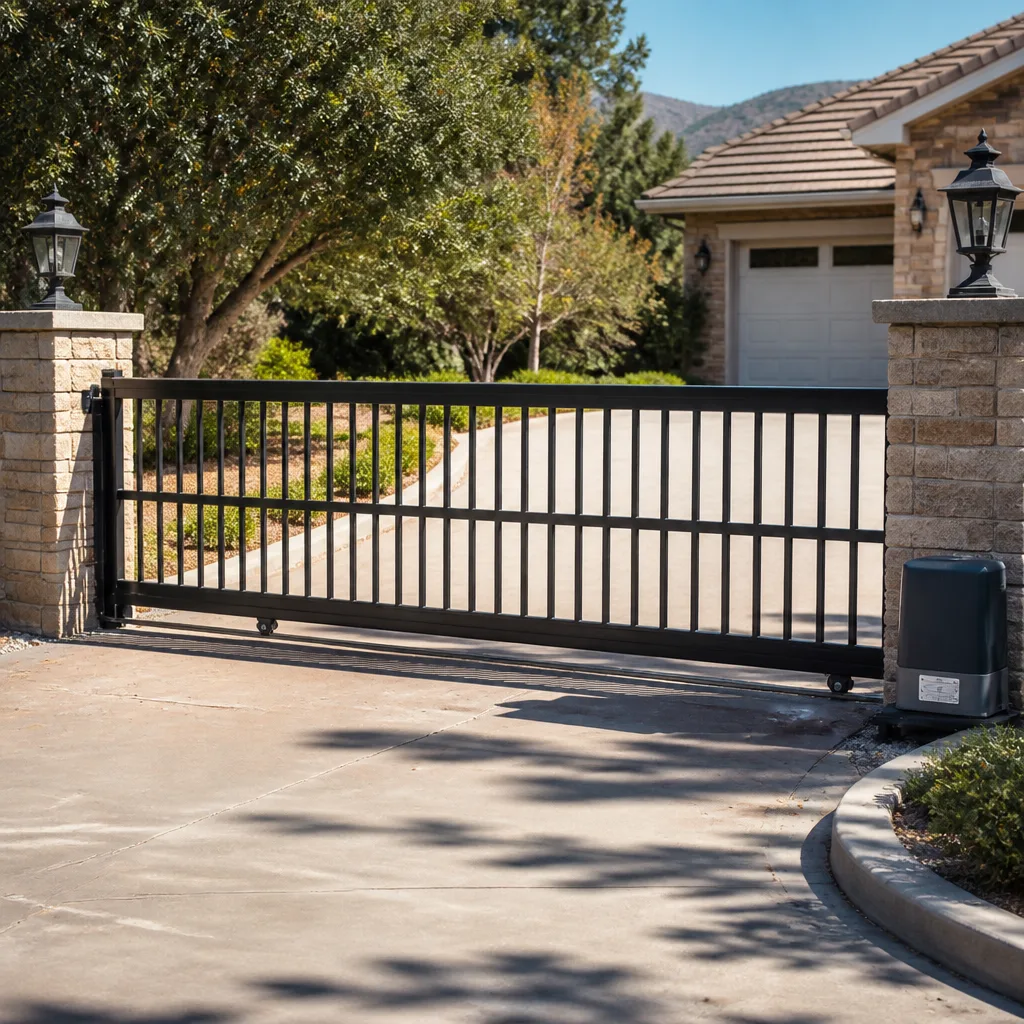
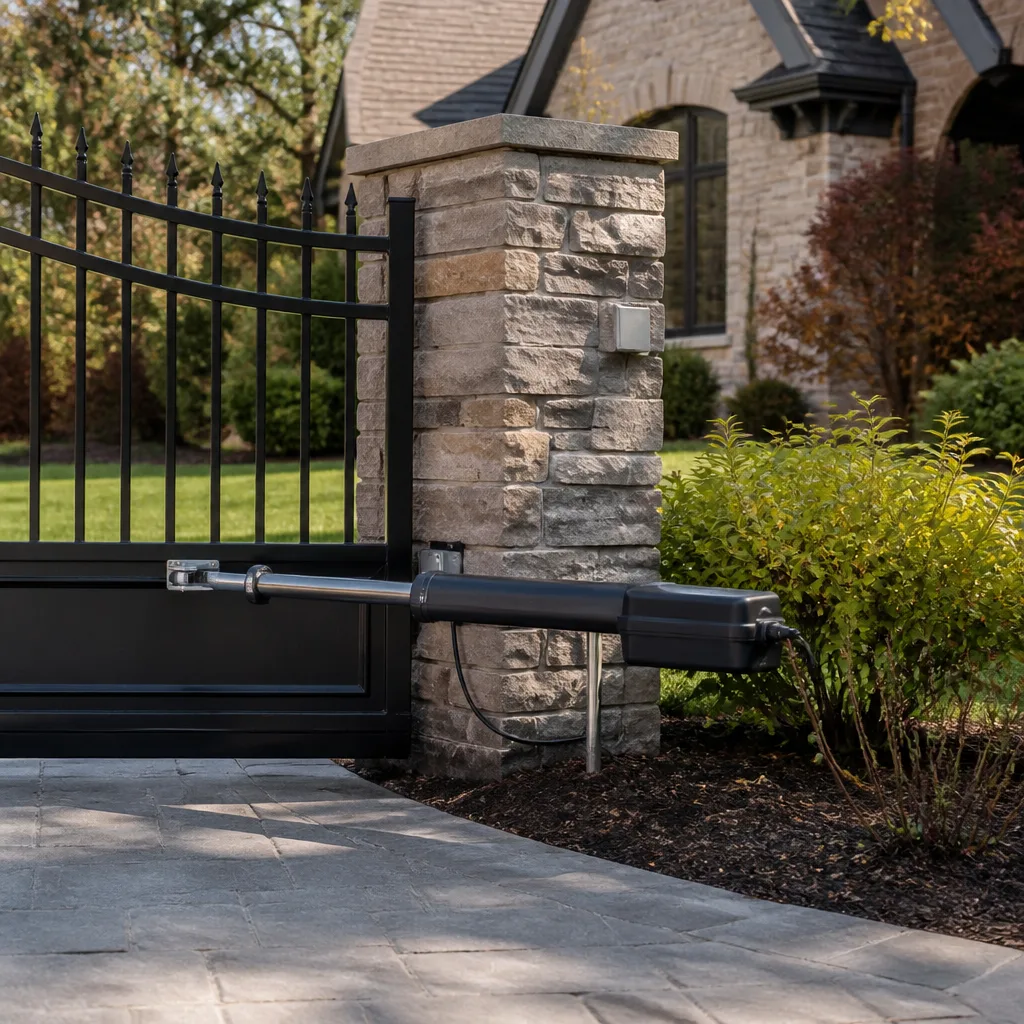
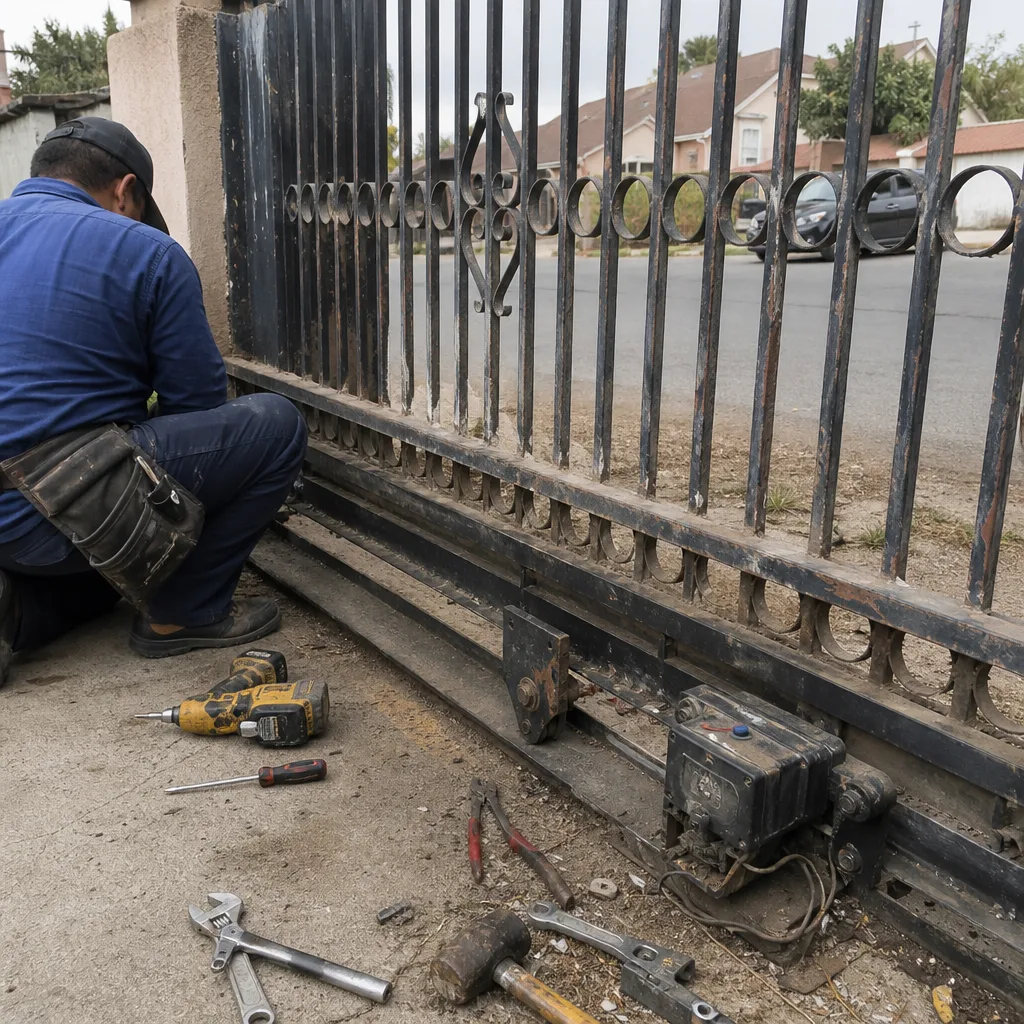 Before
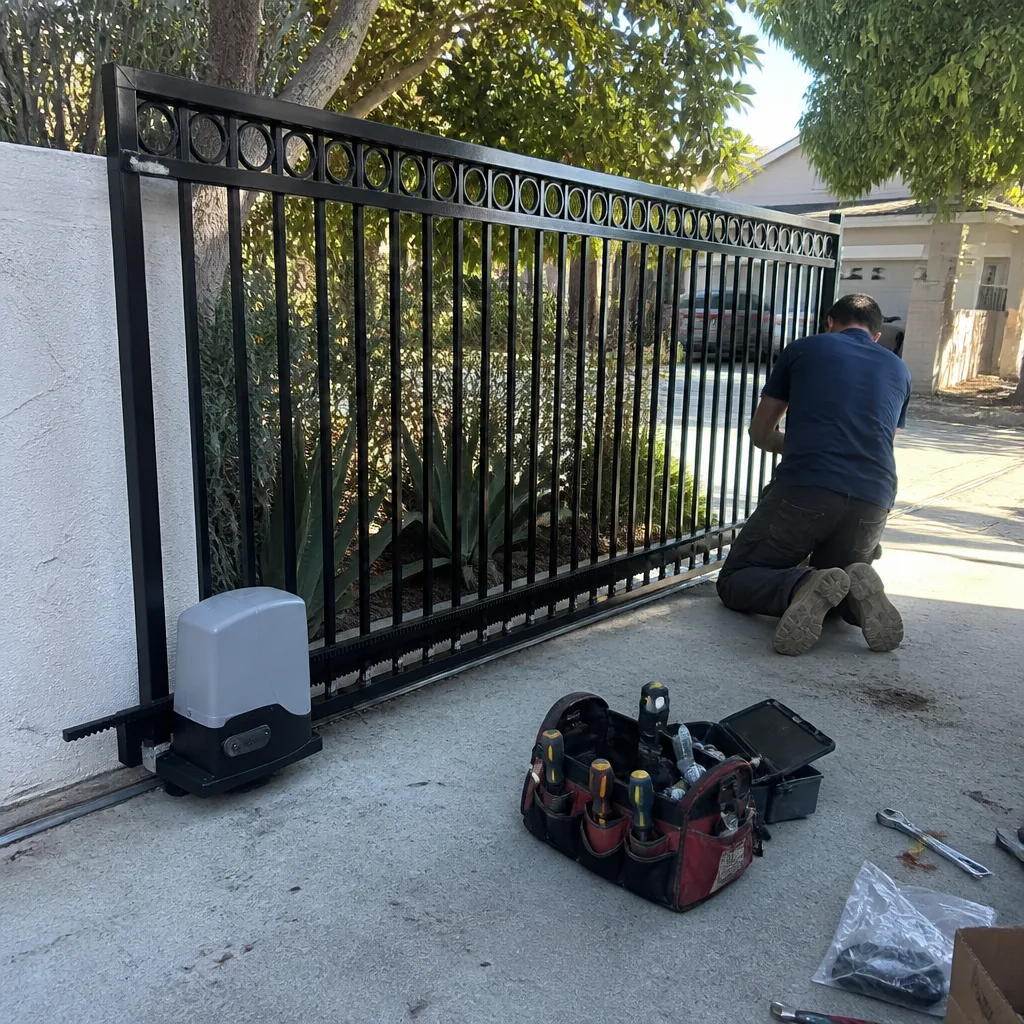 After
AfterGate Repair Warning Signs: A San Fernando Homeowner’s Reference Guide
A gate that hesitates for two seconds before moving costs about $80 to fix today. Left alone, that same hesitation pattern leads to a burned motor at $600, and the hesitation was there every single morning for three weeks before the failure. Most emergency gate calls in San Fernando are preceded by at least two observable warning signs that homeowners simply didn’t know how to read. This guide breaks down every meaningful gate warning sign by urgency tier, translates what you’re seeing into what’s actually happening mechanically, and explains which symptoms signal money versus time.
Quick Answer
The most common gate repair warning signs in San Fernando are hesitation before movement, reduced remote range, unusual sounds during the deceleration phase, gate drift after stopping, and false-reversal behavior on hot days. Behavioral changes that persist for more than a week indicate a component that’s compensating for a developing fault, not a one-time glitch. When a warning sign appears, the question isn’t whether to act but which tier of urgency it belongs in, and this guide explains how to categorize each symptom correctly.
Table of Contents
- The Three Urgency Tiers: Stop, Schedule, Monitor
- Hesitation Before Movement: The Most Expensive Two Seconds on Your Property
- Sounds You Should Not Ignore: Deceleration-Phase Noise and What It Means
- Remote Range Reduction: The Warning Sign Nobody Checks
- Gate Drift After Stopping: When a Gate Runs on a Workaround
- False Reversal and Heat-Related Sensor Drift in San Fernando
- Slow on Open, Normal on Close: What That Pattern Tells a Technician
- Common Mistakes to Avoid
- When to Call a Professional
- Frequently Asked Questions
BeforeAfterThe Three Urgency Tiers: Stop, Schedule, Monitor
Not every warning sign deserves the same response. We categorize gate symptoms in San Fernando into three tiers because treating a monitor-level issue as an emergency wastes money, and treating a stop-level issue as a monitor wastes a motor. Here’s the framework.
Tier 1: Stop Using the Gate Now
These symptoms indicate a component is actively failing and continued operation will compound the damage. A gate in Tier 1 should be disconnected from automation and operated manually, if at all, until a technician arrives.
- Metal-on-metal grinding during travel: This usually means a wheel bearing has failed or a hinge has lost its bushing. Every cycle scores the track or the hinge pin deeper.
- The gate reverses mid-cycle without anything in the path: In San Fernando heat, this can be sensor drift, but it can also mean the motor is drawing excessive current and tripping an internal safety. Continued cycling will cook the motor.
- A burning smell near the operator after use: That’s the smell of a motor winding or a capacitor overheating. Another ten cycles could be the last ten cycles.
- The gate stops partway and the operator hums but nothing moves: This typically means the motor is stalled against a mechanical bind. More attempts will burn the motor out.
Tier 2: Schedule Repair This Week
These symptoms indicate a component is degrading but hasn’t reached the failure point. You can keep using the gate for a few days, but the repair cost goes up every time you use it.
- Hesitation of one to three seconds before movement starts: The operator is struggling against resistance, which usually means a capacitor is weakening, a limit switch is mispositioned, or the gate itself is binding. This is the single most predictive warning sign we see in San Fernando before a motor failure.
- Remote range that was 80 feet and is now 25 feet: A failing receiver board does this. It’s not the battery. When the board fails fully, the gate won’t respond at all, and that’s typically a more expensive board replacement versus a repair now.
- Gate drift after stopping: The gate settles a few inches after the motor stops. That’s a limit switch that’s lost its setting, a chain or belt that’s stretched, or a hydraulic that’s bypassing internally. All three get worse.
- Intermittent false reversals on hot afternoons: We’ll go deep on this below, but the short version: it’s usually the photo-eye drifting in the heat, and it’s a $95 adjustment rather than a $500 board replacement if you catch it early.
Tier 3: Add to Next Maintenance Visit
These symptoms are worth noting, worth documenting, and worth mentioning when a technician is already on site, but they don’t require a special trip.
- Slight squeak during a specific portion of travel: Usually a hinge or a wheel that needs lubrication. Note where in the travel the sound occurs, because that tells the tech exactly which component.
- Remote works but requires a second press occasionally: Could be the remote itself, could be interference, could be the receiver getting marginal. Worth checking when someone’s there.
- The gate closes slower than it opens, but it’s been doing that for years: As long as it’s been constant and gradual rather than a recent change, this is often just how a particular operator is configured. Document it and move on.
The distinction between these tiers matters because a repair that costs $80 today in Tier 2 becomes a $600 motor replacement in Tier 1 about three to six weeks later. The gate tells you it’s failing. You just have to know which behaviors are the telling ones.
Hesitation Before Movement: The Most Expensive Two Seconds on Your Property
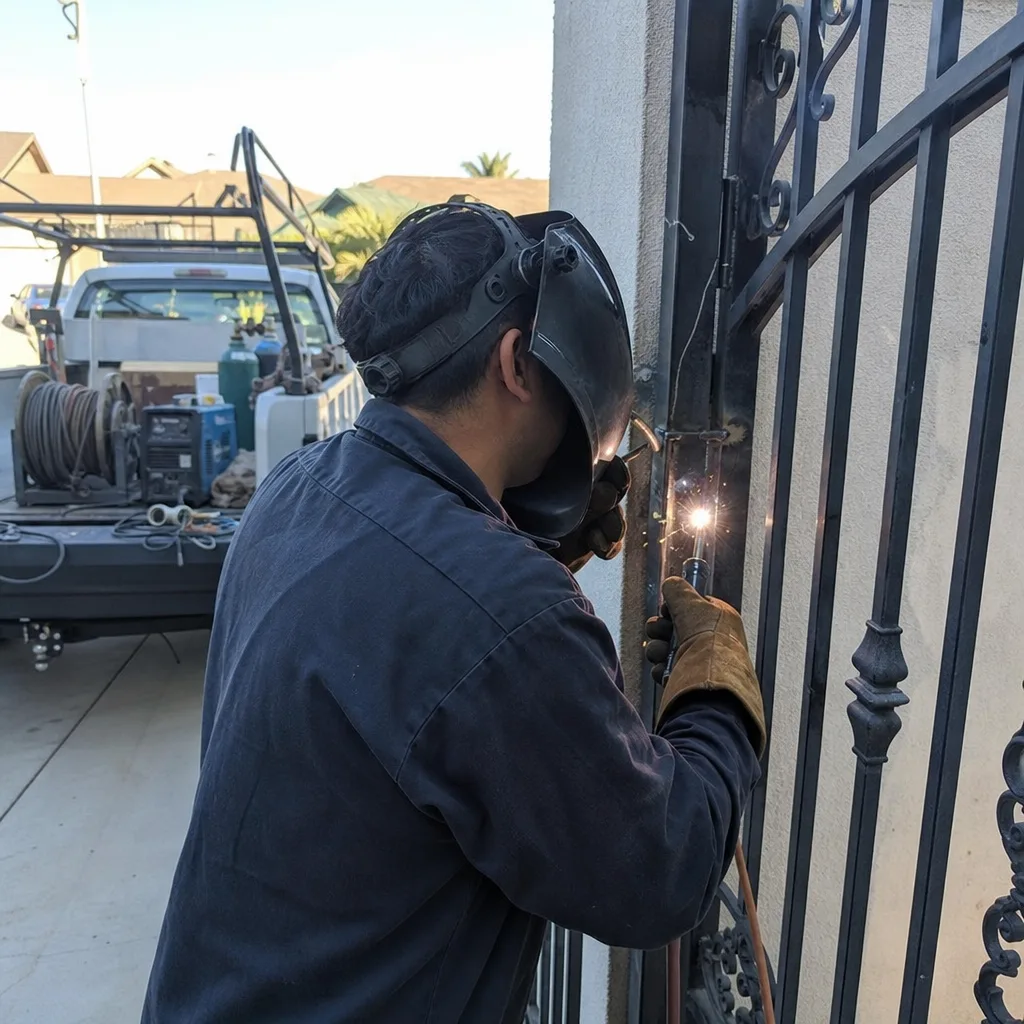
The hesitation pattern is the single most reliable early warning sign of a gate motor that’s working harder than it should. When you press the remote and the gate pause for a beat or two before moving, something in the system is compensating. In San Fernando, where heat accelerates capacitor degradation, those two seconds are measuring something real.
What’s actually happening during that hesitation depends on the type of operator you have. On a sliding gate with a chain or belt drive, hesitation typically means the start capacitor is weak and can’t deliver the initial jolt the motor needs to overcome resting inertia. The motor eventually gets moving, but each cycle puts more stress on the windings. On a swing gate with an arm-type operator, hesitation usually means the gate itself is binding at the hinge post, often due to settling that’s shifted the post a few degrees out of plumb. The operator pushes harder, the hesitation gets longer, and eventually something gives: the capacitor, the gearbox, the weld on the gate frame, or the motor itself.
A specific version of this in San Fernando: many homes in this area sit on clay-rich soil that expands and contracts with seasonal moisture. A gate post that was perfectly plumb when installed can shift over two or three wet winters. That shift adds resistance, and the resistance shows up as hesitation. We’ve seen gate posts shift enough to visibly distort the gate’s swing arc, and the only reason the homeowner noticed was the two-second delay they’d attributed to the remote’s battery.
If your gate hesitates, time it. A consistent one to three-second delay that’s been going on for more than a week is Tier 2. A delay that’s getting longer by the day is approaching Tier 1. The fix at the hesitation stage is typically a gate motor repair: a capacitor replacement, a limit-switch reset, or a hinge-post realignment, typically in the $80 to $250 range. The fix at the motor-failure stage is a gate opener replacement, which starts around $600 and goes up from there.
Sounds You Should Not Ignore: Deceleration-Phase Noise and What It Means
Most homeowners notice a grinding gate at full travel. That’s the obvious sound. The one people consistently miss is the sound the operator makes during the deceleration phase, the last 18 inches before the gate stops. That sound is diagnostic, and it’s quieter, which is exactly why it gets overlooked.
During deceleration, the operator’s internal limit switch tells the motor to slow down. The force required to move the gate is changing, and the mechanical components respond differently to partial force than they do to full force. A grinding sound that appears only during deceleration on a sliding gate typically means the drive chain or belt has developed slack, and the slack is slapping or skipping as the motor eases off. That’s a $120 adjustment today. Left alone, the slack increases until the chain skips a tooth during full travel, and then the gate’s stopping position drifts, and then the limit switch loses its reference, and now you’re looking at a chain replacement and a full re-setup.
A clicking sound during deceleration on a swing gate often points to a gearbox that’s wearing unevenly. Gear teeth wear in the pattern of the load they carry, and deceleration applies load differently than acceleration. A click is a tooth with a wear point. It’s quiet, it’s brief, and it’s costly if ignored because gearbox wear that reaches the point of tooth fracture is not repairable, it’s replaceable.
The deceleration phase is also where you’ll hear a failing bearing that’s masked at full speed by the general noise of operation. A bad bearing sounds like a rhythmic scrape or a low rumble that’s tied to the gate’s position, not to the motor’s speed. If the sound happens in the same physical spot every time, regardless of how fast the gate is moving, that’s a bearing, a wheel, or a track issue, not a motor issue.
In our experience with gate repair in San Fernando, the homeowners who catch deceleration-phase sounds early are the ones whose repairs involve an adjustment, a replacement bearing, or a chain tensioning, all under $200. The ones who don’t are the ones whose operators eventually fail during a heat wave, because that’s when everything that was marginal hits its limit at the same time.
Remote Range Reduction: The Warning Sign Nobody Checks
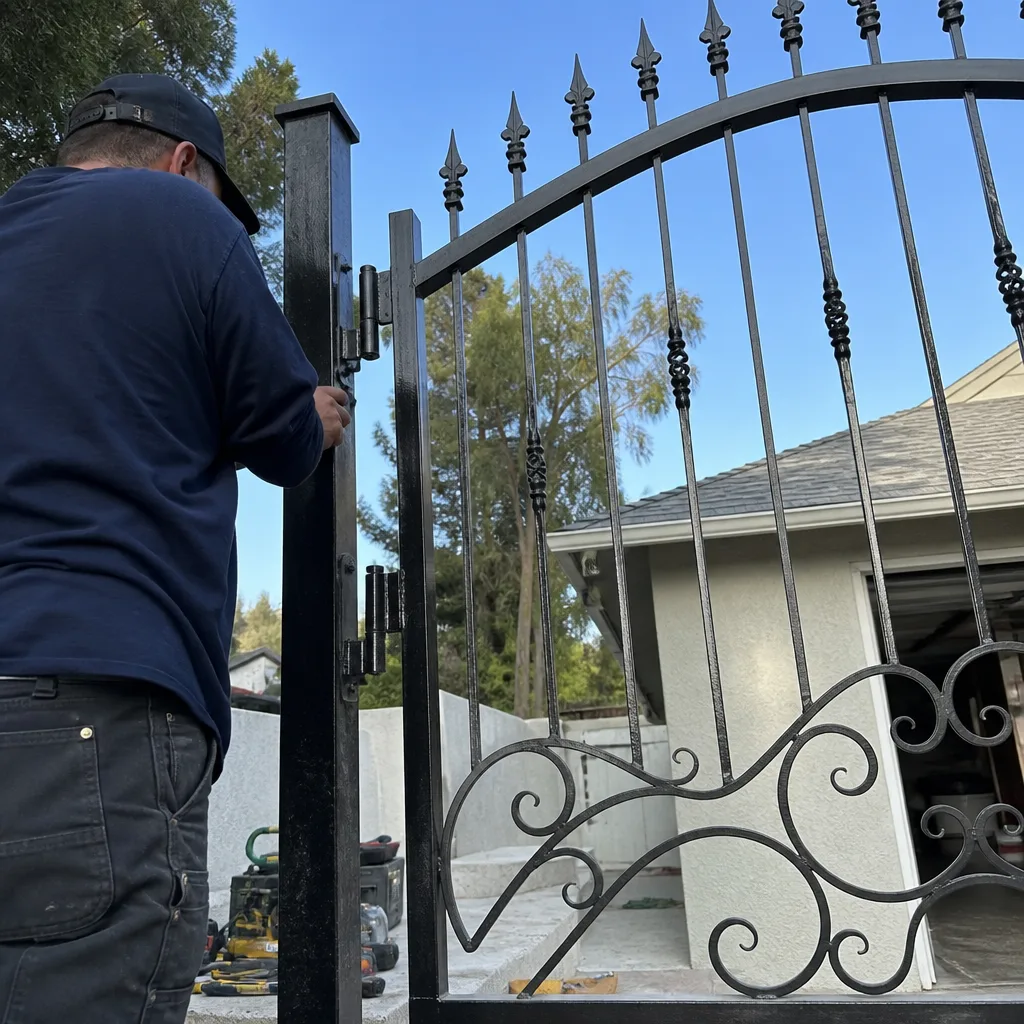
Remote range reduces slowly. One month the remote works from the corner. The next month you have to be halfway down the driveway. Two months later you’re practically at the gate. Nobody notices because the change is gradual and because the remote still works, just from closer.
Here’s what range reduction actually means. The receiver board inside the operator has an antenna circuit, and that circuit has a component called a trimmer capacitor that tunes the receiver to the remote’s frequency. When that trimmer drifts, the receiver’s sensitivity drops. The remote is still transmitting fine. The problem is the receiver’s ability to hear. That’s why changing the remote’s battery doesn’t fix it.
Range reduction can also come from a totally different source: interference. In San Fernando, with the density of homes, commercial properties, and the proliferation of wireless devices, a gate receiver is competing with everything from baby monitors to smart-home hubs. If your range dropped suddenly, think about what changed in the environment. A new neighbor’s security camera system or a newly installed mesh Wi-Fi network operating on a nearby frequency can reduce effective range substantially.
The diagnostic distinction matters because it changes the fix. If the range dropped gradually over months, it’s the receiver board aging, and a good tech can test the receiver sensitivity and often replace just the receiver module rather than the entire operator. If the range dropped suddenly, it’s likely interference, and the fix might be a frequency change or antenna relocation. If range drops suddenly and is accompanied by the gate working only intermittently even from close range, that’s a receiver board actively failing, and that’s Tier 2 heading toward Tier 1.
Every Vance Gate Repair San Fernando home service visit includes a receiver sensitivity check as part of the inspection, because range reduction is a warning sign that costs nothing to check and a few hundred dollars to ignore.
Gate Drift After Stopping: When a Gate Runs on a Workaround
Gate drift is subtle. The gate stops where it’s supposed to, and then over a few seconds it settles an inch or two farther. You might see it as a soft bump at the end of travel, or you might not see it at all if you’ve already turned away. But drift is the gate telling you that the stopping mechanism is no longer holding its position.
On a sliding gate, drift usually means one of three things. First, the limit switch that tells the motor where to stop has moved slightly, so the motor cuts out a little late and the gate’s momentum carries it the extra distance. Second, the chain or belt has stretched and the motor is actually stopping in the right place, but the slop in the drive allows the gate to roll the extra distance. Third, on heavier gates, the guide rollers have worn enough that the gate can shift slightly after the motor stops.
On a swing gate with a hydraulic operator, drift after stopping often means the internal bypass valve is leaking slightly. The motor pushes the gate to its stop point, the valve should close and hold the gate there, but a worn valve lets hydraulic fluid seep past and the gate eases forward. This is one of the most commonly misdiagnosed symptoms in gate repair. We’ve seen gate installation customers in San Fernando told they needed a full operator replacement when the actual issue was a $140 bypass-valve seal kit.
Drift matters for two reasons. First, it’s a mechanical component failing, and mechanical failures compound. The worn guide roller that allows drift will eventually allow tracking problems, which will eventually cause the gate to bind. Second, drift changes the gate’s stopping position, which changes the safety characteristics. A gate that drifts past its intended stop point can drift into a position where the photo-eye no longer sees the full closing path, or where the gate sits past the catch on its stop, or where it rests against a post with tension that wasn’t designed to be held there. Every component in the system is now operating outside its design parameters.
If you see drift, mark the gate’s stopping position with a piece of tape on the ground and watch it over a few cycles. A consistent drift of more than an inch means Tier 2. A drift that’s increasing means Tier 1. The fix at the drift stage is almost always an adjustment or a seal replacement under $200. The fix at the failure stage is an operator rebuild or replacement.
False Reversal and Heat-Related Sensor Drift in San Fernando
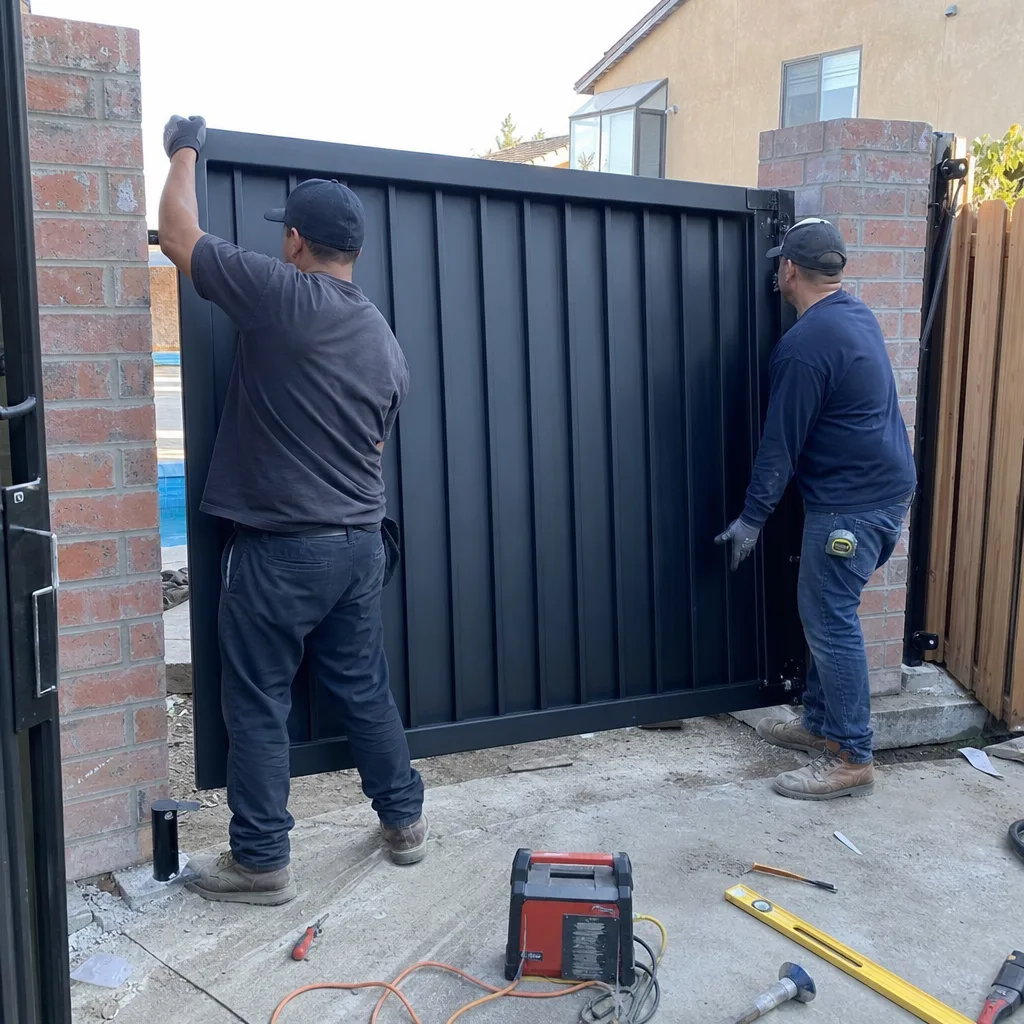
San Fernando summers hit 95 degrees and up, regularly. That heat does something specific to the photo-eye sensors on automated gates: it changes their alignment. The photo-eye is the infrared beam that spans the gate’s opening and stops the gate if anything crosses the path. On a hot afternoon, the metal brackets holding the photo-eye expand slightly. If the beam was marginally aligned to begin with, a few thousandths of an inch of expansion is enough to break the beam’s line-of-sight. The gate’s controller interprets a broken beam as an obstruction, and the gate reverses mid-cycle.
That reversal looks exactly like the gate thinks something is in the way, because the gate thinks something is in the way. It’s not a malfunction, it’s a sensor that’s drifted out of alignment. But here’s the thing: when the temperature drops in the evening, the brackets contract, the beam reconnects, and the gate works fine again. Homeowners in San Fernando experience this as a gate that only misbehaves on hot afternoons.
The temptation is to treat this as an intermittent problem and wait. Don’t. Every false reversal cycle puts the operator through a full reversal sequence, which is harder on the motor than a normal cycle. Over a full San Fernando summer, a gate that false-reverses three times a week is putting about 150 extra reversal cycles on the motor. The reversal sequence is the highest-torque, highest-stress moment in the operator’s duty cycle.
The fix is typically an alignment adjustment and sometimes a bracket replacement with a sturdier mount that’s less susceptible to thermal expansion. The cost is usually under $100. The alternative, if left for a season or two, is motor wear that shortens the operator’s life by years.
The diagnostic distinction between heat-related sensor drift and an actual obstruction detection matters. A gate that false-reverses only when there’s something in the path is working correctly. A gate that false-reverses in the heat, consistently from about noon to about sunset, is drifting. A gate that false-reverses at all temperatures is likely a failed photo-eye or a controller issue. Tell your technician which pattern you’re seeing. A good tech will ask.
Slow on Open, Normal on Close: What That Pattern Tells a Technician
Speed asymmetry is one of the most diagnostically rich symptoms a gate can produce. When a gate opens slowly but closes normally, or opens normally but closes slowly, the pattern points to a specific set of causes, and a technician who can name those causes from your description is a technician who actually knows the equipment.
Slow on open with normal close, on a swing gate, most commonly points to a hinge-side bind. The gate’s opening travel meets resistance early: a post that’s shifted, a hinge that’s wearing, a wheel that’s flat-spotted from sitting in one position. The operator has to work harder to overcome that initial resistance, which slows the opening travel. On the close travel, gravity and momentum work with the gate, and the operator coasts through what would otherwise be resistance. The bind masks itself on the close.
On a sliding gate, slow on open with normal close often means the track has a low spot or a worn section near the closed position. The gate sits in that worn section all night, and the first movement in the morning requires climbing out of the rut. That initial climb is a high-torque moment. The motor labors, the gate moves slowly, then once it clears the worn section it picks up speed. On the close, momentum carries it through.
Slow on close with normal open tells a different story. On a swing gate, this often means the operator’s internal hydraulics or the gear train is wearing asymmetrically. The close travel in many gate operators is the one that gets the most duty cycles, because it’s the one that’s always fighting gravity. The wear pattern reflects that. On a sliding gate, slow on close often points to a track issue near the closed position: debris accumulation, a wheel that’s binding, or a track section that’s shifted slightly out of alignment and only catches the gate when it’s moving in that direction.
Either way, speed asymmetry is not normal. Some gates are configured with different open and close speeds by design, but that’s a setting, not a symptom. A gate that changes speed in one direction over time is telling you something mechanical is degrading. A technician who says, “they all do that” should not be the technician working on your gate.
Common Mistakes to Avoid
- Changing the remote battery first. Range reduction is almost never the remote’s battery. It’s usually the receiver board drifting or interference. You’ll spend $8 on a battery, the range won’t improve, and you’ll lose a week while the receiver continues to degrade.
- Greasing the track to quiet a grinding sound. Grease on a sliding gate track attracts San Fernando dust and creates an abrasive paste that accelerates wear on wheels and track. Grinding means a bearing or a wheel is failing, not that the track needs lubricant.
- Ignoring the heat-related symptoms because the gate works fine at night. The false-reversal pattern that only appears on hot afternoons in San Fernando is the gate telling you the photo-eye alignment is marginal. The fact that it works at night doesn’t mean the problem is minor; it means the problem is temperature-sensitive, and every summer day is a stress test the gate is failing.
- Treating hesitation as a remote issue. The two-second delay before movement is almost never the remote. It’s the operator struggling against mechanical resistance. Replacing the remote or the battery does nothing for the hesitation.
- Running the gate after a burning smell to “see if it goes away.” A burning smell from an operator is never a one-time event. It’s a component overheating. Each additional cycle gets you closer to a full failure that’s often not repairable without a motor replacement.
- Forgetting that drift compounds. A gate that drifts an inch today drifts two inches next month and binds against the post the month after. The settlement is gradual, but the damage from the binding is sudden and expensive.
When to Call a Professional
Call a professional when you hear a grinding sound during deceleration, when your gate hesitates for more than a second before moving, when the remote range drops noticeably, when the gate drifts after stopping, or when false reversals happen on hot afternoons. For How to Hire a Gate Repair Contractor in San Fernando: A Step-by-Step Guide, read our detailed walkthrough. These are all symptoms that tell a technician exactly where to look, and catching them at the symptom stage is the difference between an adjustment under $150 and a full operator replacement over $600. Vance Gate Repair San Fernando offers free estimates in San Fernando with a written price before any work starts. Call (747) 260-0589 and describe what you’re seeing. The diagnostic conversation itself, before we ever arrive, usually narrows the problem down to one or two likely causes.
Frequently Asked Questions
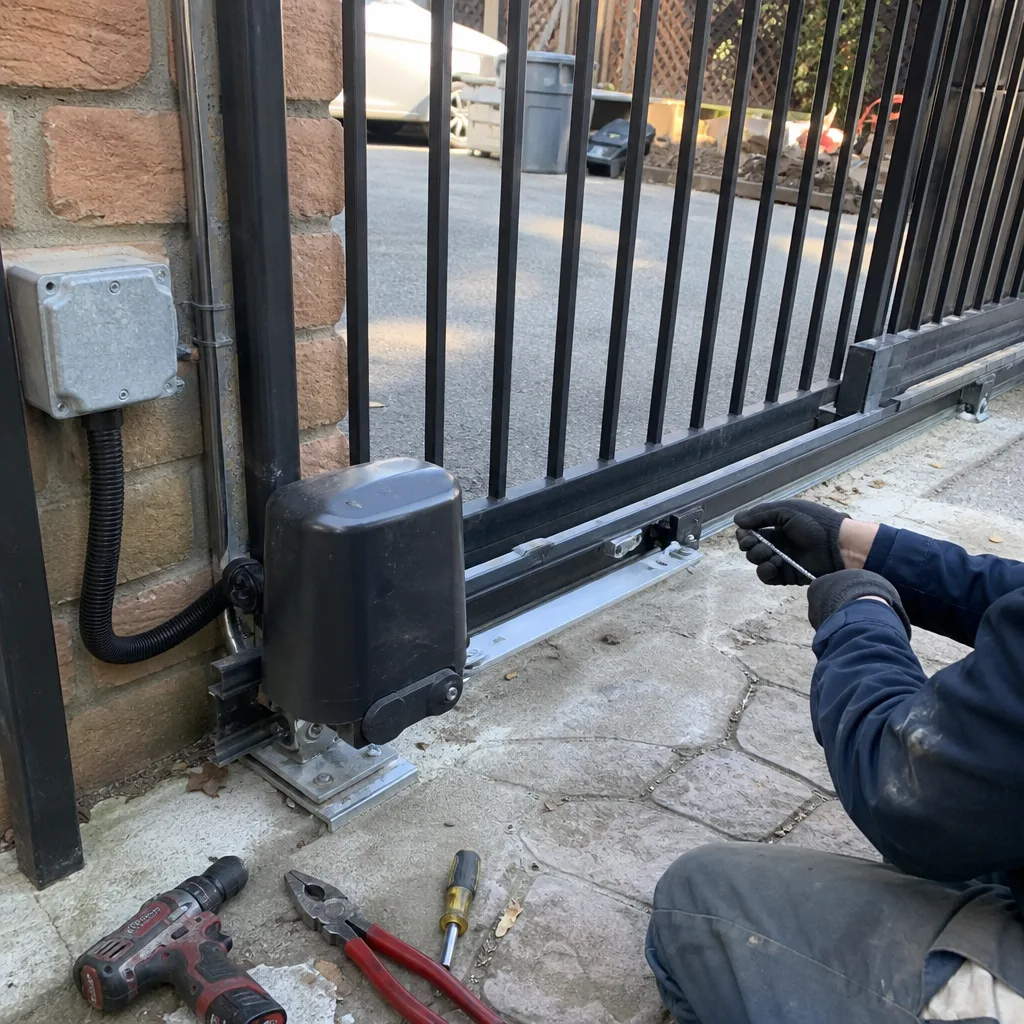
Most gate repairs in San Fernando fall between $80 and $350, covering typical fixes like limit-switch adjustments, photo-eye realignment, chain tensioning, and hinge or wheel replacement. Motor replacements run $600 to $1,200 depending on brand and whether you have a sliding or swing gate, and full gate replacement starts around $1,500. The written price you get before work starts is the price you pay, no surprises. Call (747) 260-0589 for a free estimate.
Heat-related photo-eye drift is the most common seasonal problem in San Fernando, where summer temperatures cause sensor brackets to expand and break the infrared beam’s alignment, producing false reversals. See our Seasonal Gate Repair Care for San Fernando: Year-Round Homeowner’s Guide for the full maintenance calendar. Year-round, the most common issue is limit-switch drift that causes the gate to stop in the wrong position or drift after stopping. Both are quick, inexpensive fixes when caught early.
A gate that only malfunctions on hot San Fernando afternoons is almost always experiencing heat-related sensor drift. The metal brackets holding the photo-eye expand in the heat, breaking the beam’s line-of-sight and triggering false reversals. When the temperature drops, the brackets contract, the beam reconnects, and the gate works normally. The fix is a photo-eye alignment adjustment and sometimes a sturdier bracket, typically under $100.
For most repair issues, yes, we can usually get a technician to your San Fernando property the same day you call. A live person answers at (747) 260-0589 at any hour, and our technicians carry the common parts for LiftMaster, DoorKing, Elite, and Mighty Mule operators on the truck. Repairs like limit-switch adjustments, photo-eye realignment, and chain tensioning are typically completed in a single visit.
A full gate inspection covers the operator’s motor draw and capacitor health, the limit-switch positions, photo-eye alignment and sensitivity, track condition on sliders, hinge condition on swings, receiver sensitivity for the remotes, and the condition of every wheel, bearing, and weld. You’ll receive a documented photo record of what was found, what was adjusted, and what was replaced, along with a written price for any recommended work before it starts.
We service nine major gate-automation brands in San Fernando including LiftMaster, DoorKing, Elite, Mighty Mule, FAAC, BFT, Linear, Viking, and Ghost Controls. We repair the motor that’s already on your property rather than steering you toward a replacement, and the written price covers the specific brand and model you have, not a generic estimate.
The Bottom Line
A gate that’s failing announces itself in specific, observable ways, and the difference between an $80 adjustment and a $600 motor replacement is usually measured in weeks, not months. Hesitation before movement, remote range reduction, deceleration-phase sounds, gate drift, false reversals on hot afternoons, and speed asymmetry all point to specific mechanical causes. Learn to read the signals, categorize them by urgency, and act at the symptom stage. Browse our more guides & resources to keep your gate running smoothly year-round. The gate will tell you what’s wrong. You just have to know how to listen. And when you do call, get the price in writing before anyone picks up a tool.
Written by Adrian Vance, Owner at Vance Gate Repair San Fernando, serving San Fernando since 2014.