
Last updated September 20, 2026
Free on-site gate assessment - hinges, posts, and your LiftMaster or Nice gate operator checked before anything is quoted
The assessment is free and the quote is the invoice.

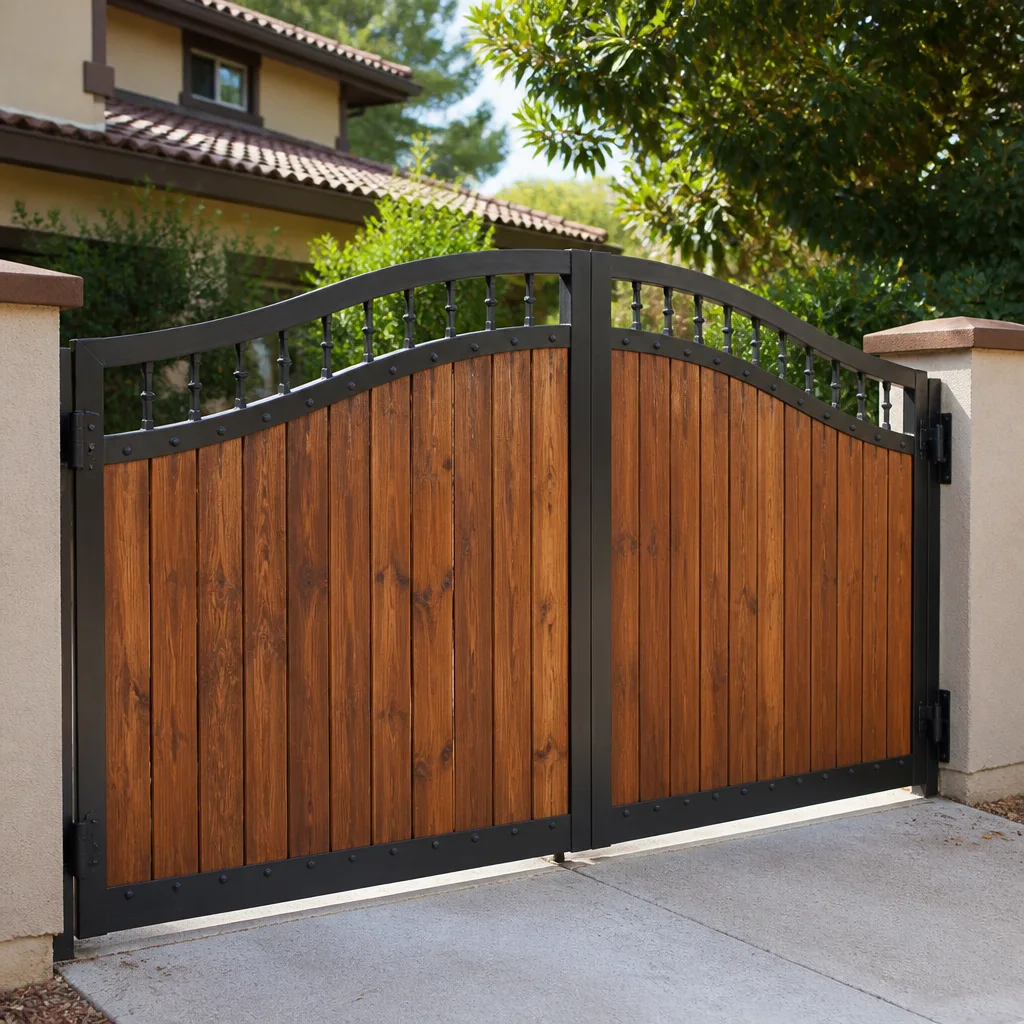
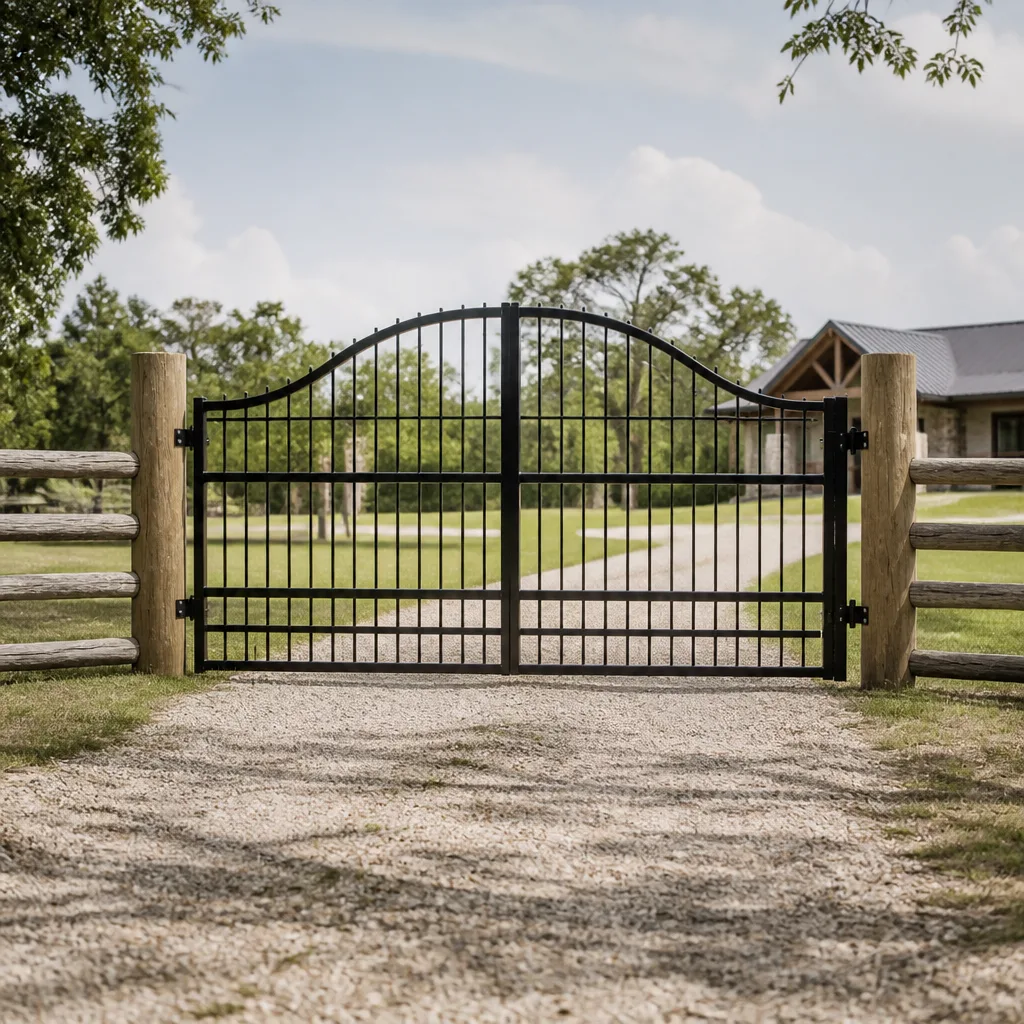
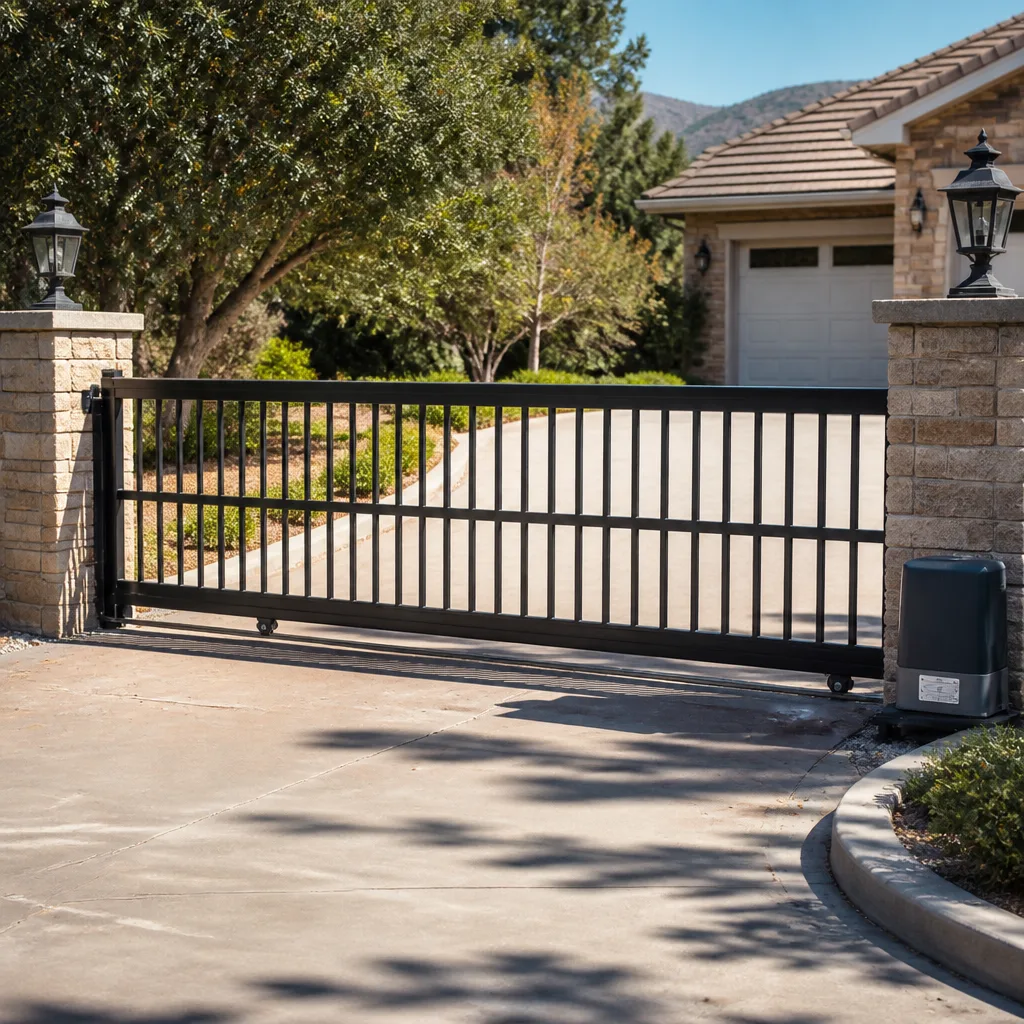
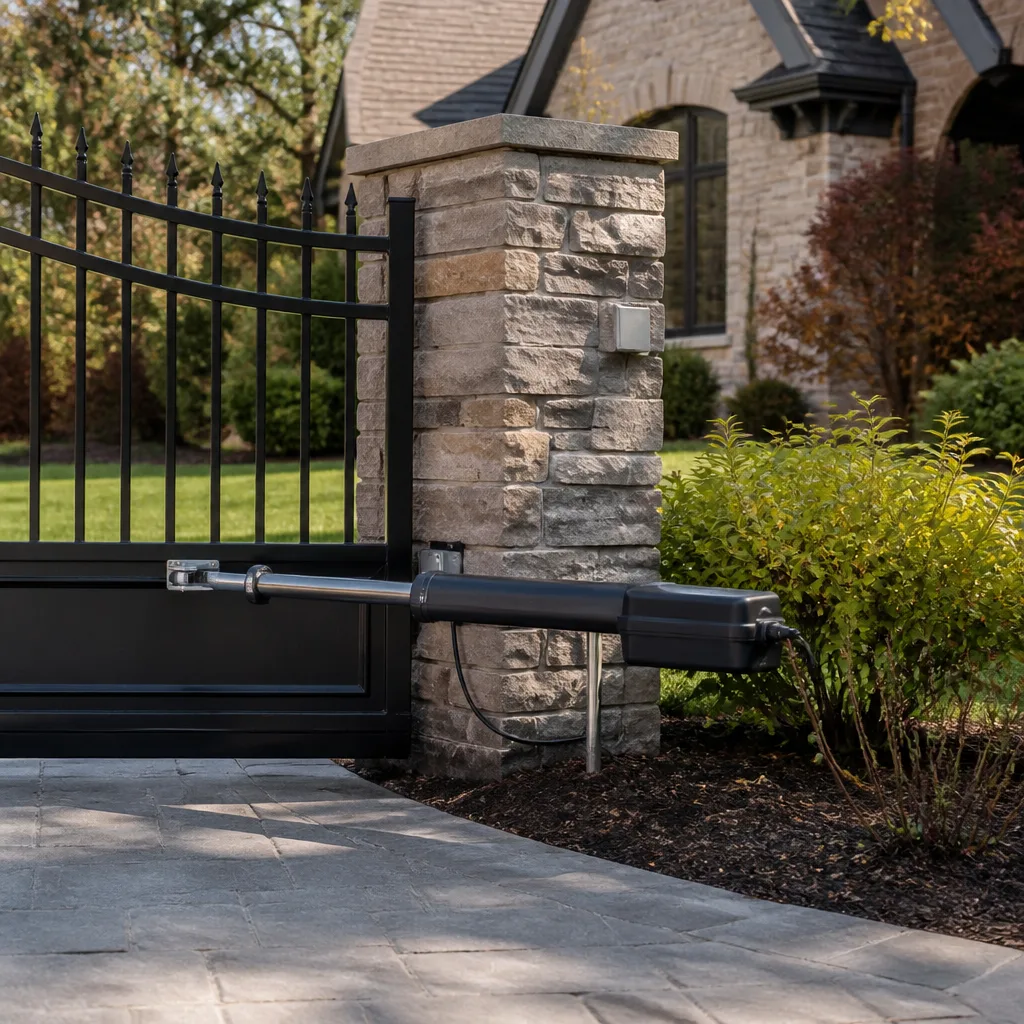
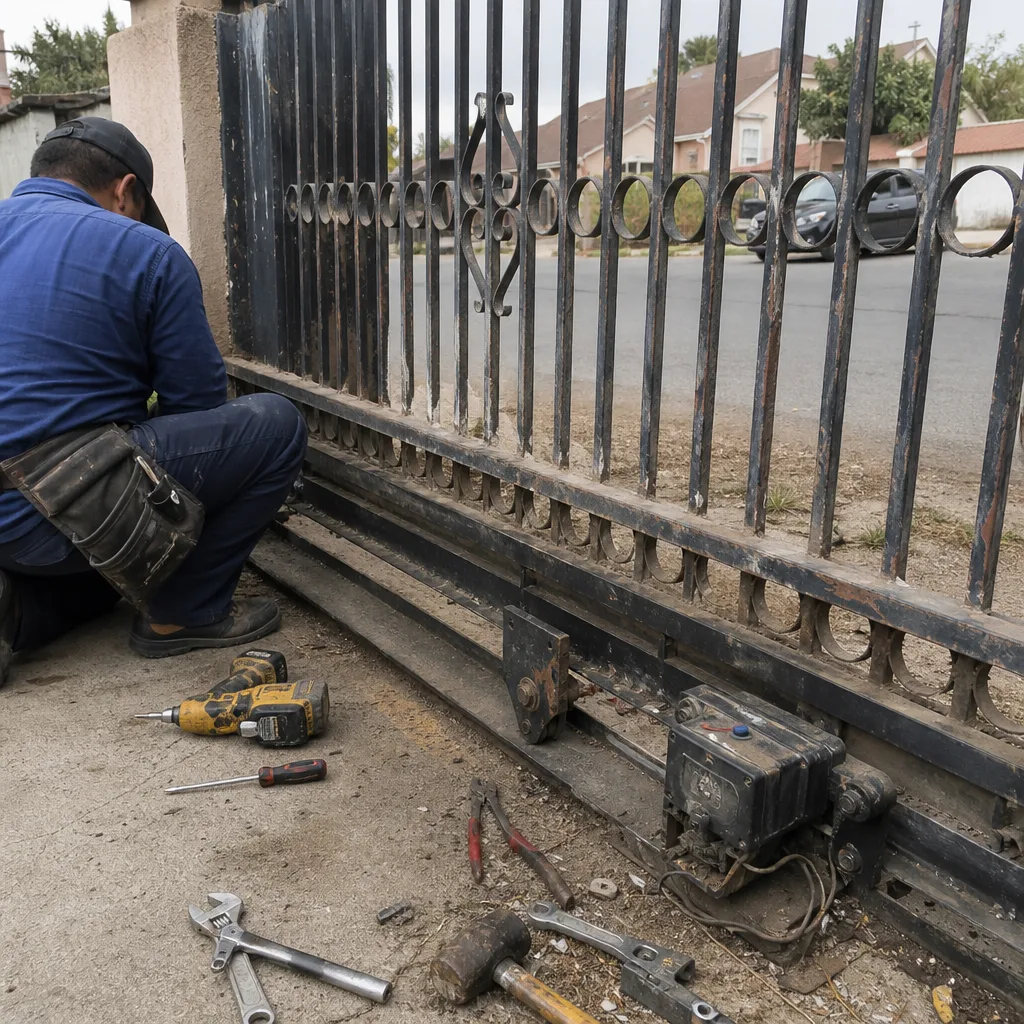 Before
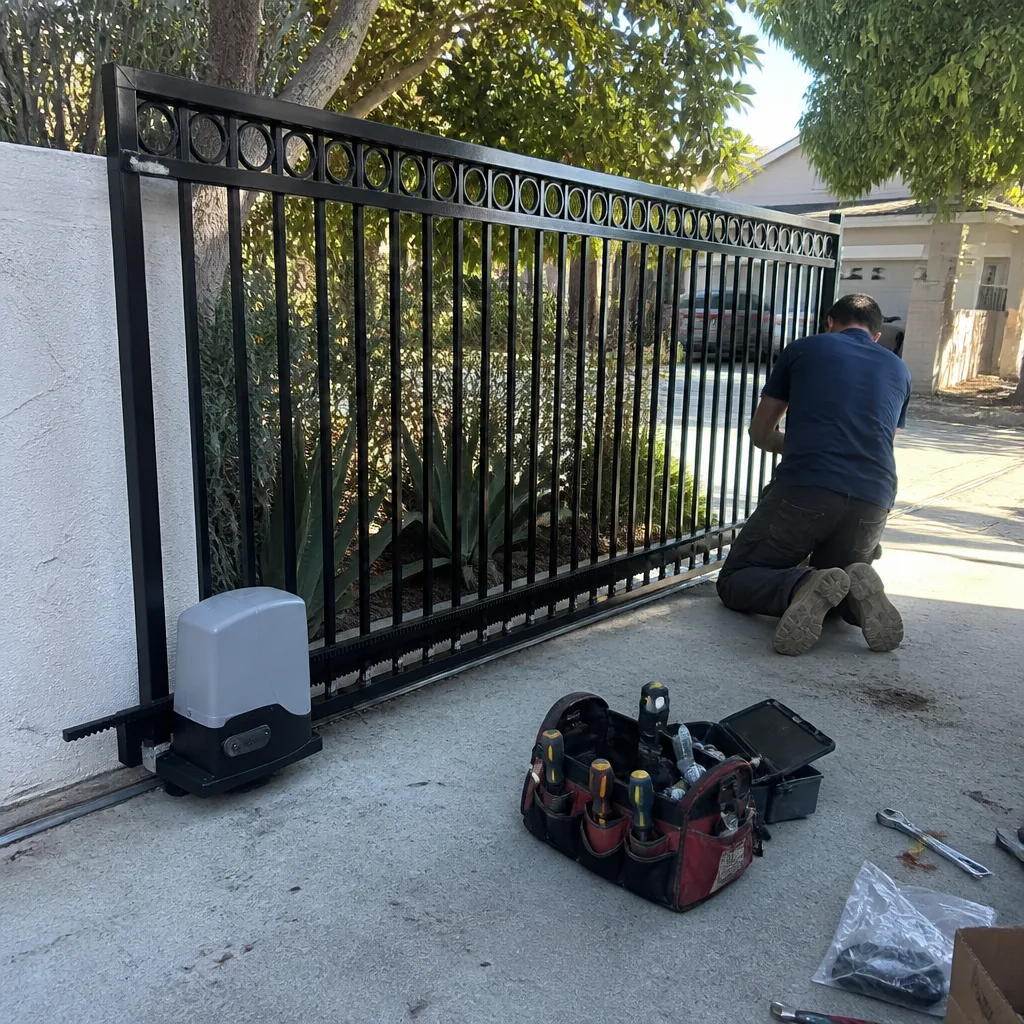 After
AfterSeasonal Gate Repair Care for San Fernando: Year-Round Homeowner’s Guide
October is when San Fernando gate technicians stay busiest. Not because anything breaks in October, but because summer finally stops hiding what it did: limit switches cooked 12 degrees past travel, grease that turned to varnish in July, and battery reserve capacity quietly burned down to nothing across six weeks of triple-digit afternoons. This guide walks through what actually fails on driveway gates in San Fernando, when it fails, and what to check each month so you’re not the homeowner standing in the driveway at 6:40 a.m. with a gate that won’t open. For deeper reading, see The Complete Guide to Gate Repair in San Fernando.
Quick Answer
San Fernando doesn’t have four equal seasons. It has one sustained heat-stress period, June through September, that causes most gate damage for the year, followed by three seasons where that damage finally shows up. The practical fix is a maintenance schedule built around heat load, Santa Ana wind events, and colder-morning battery behavior, not a generic spring/fall checklist.
Table of Contents
- The Real San Fernando Climate Pattern: One Stress Season, Three Consequence Seasons
- What San Fernando Heat Above 95°F Actually Does to Gate Components
- Santa Ana Wind Season: The Structural Stress Most Guides Skip
- Carry-Forward Damage: Why November Is When Summer Bills Come Due
- Month-by-Month Gate Care Calendar for San Fernando
- What a Homeowner Can Safely Check vs. What Needs a Technician
- Common Mistakes to Avoid
- When to Call a Professional
- Frequently Asked Questions
- The Bottom Line
BeforeAfterThe Real San Fernando Climate Pattern: One Stress Season, Three Consequence Seasons
Most seasonal gate maintenance content gets written by people who imagine four equal seasons. San Fernando weather doesn’t cooperate with that template. The San Fernando Valley hits 95°F or higher on a regular basis from June through early October, with stretches above 100°F that last multiple days. That sustained heat is the single biggest variable for gate longevity here, more than rain, more than wind, more than cold.
Here’s the pattern we see in the field, season by season, starting from the actual damage source:
- June through September: The heat-load period. This is when most component damage initiates. Lubricants degrade faster, battery chemistry accelerates, control board capacitors age measurably faster, and metal expands and contracts across wider daily swings. Nothing may fail visibly during this window, but the damage is being booked.
- October through November: The consequence period. Temperatures drop, Santa Ana winds arrive, and components weakened over summer finally register symptoms. The gate moves slower in the morning. The motor hums but doesn’t turn. The remote range shrinks. The opener behaves inconsistently. Technically underserved weeks are September through November, and that’s when most service calls from San Fernando homeowners come in.
- December through February: The cold-weather adjustment period. San Fernando mornings routinely drop into the 40s and occasionally the 30s. Hydraulic fluid thickens, battery reserve capacity drops with temperature, and lubricants that were fine at 90°F stiffen up at 45°F. A gate that operated passably in August may refuse to move on a 42-degree December morning.
- March through May: The recovery window. This is the narrow band when temperatures are moderate and stable. It’s the best opportunity to do prep work before the heat-load period starts again. Most homeowners do their maintenance in March, which is fine, but the calendar should be built around June’s arrival, not spring cleaning.
The gate that gets maintained on a generic four-season schedule is always 60 to 90 days behind the actual failure curve in San Fernando. We work on gate systems across the city, from gate repair in San Fernando to full rebuilds, and the service call patterns map cleanly to this climate reality, not to a calendar someone drew in Michigan.
What San Fernando Heat Above 95°F Actually Does to Gate Components
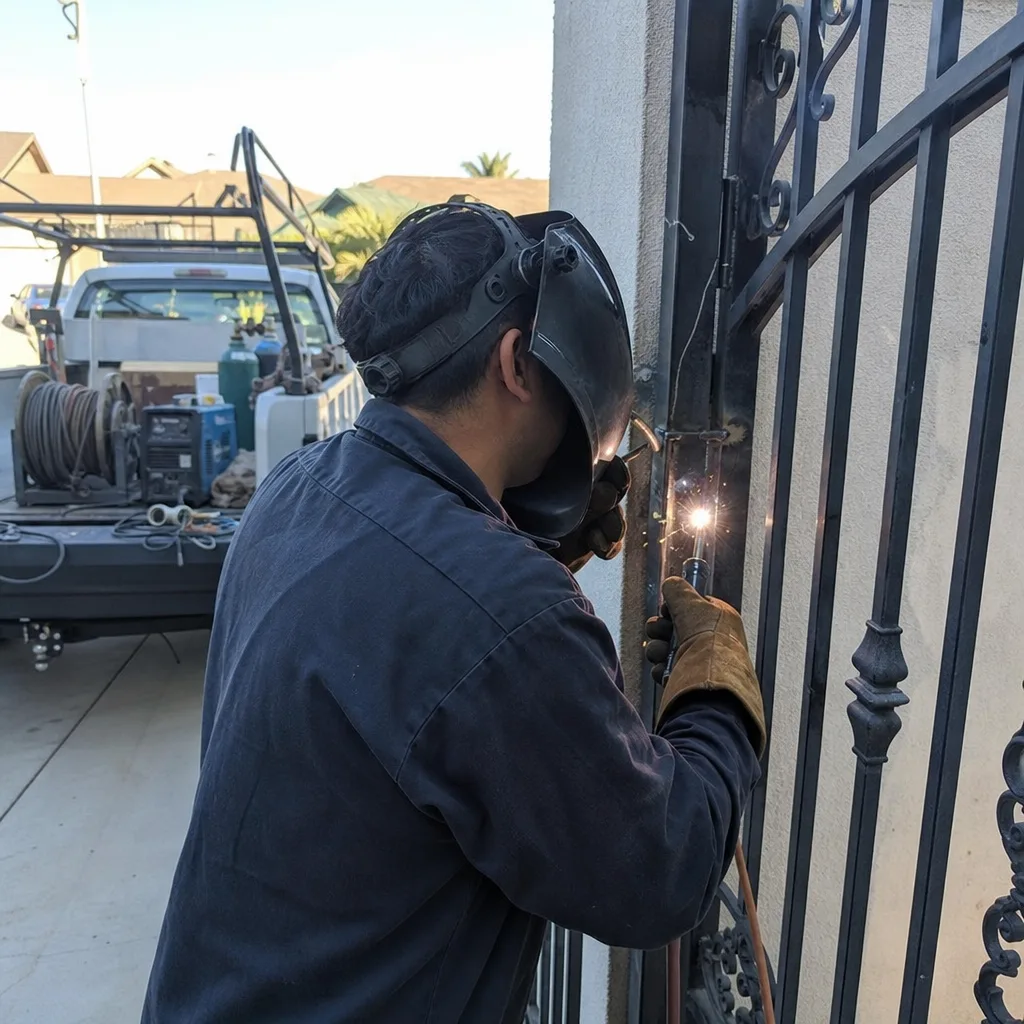
Heat doesn’t break gates the way a car crash breaks a fender. It degrades specific components in measurable, predictable ways. Here’s what sustained San Fernando heat does to the three most vulnerable systems, plus the symptoms each failure produces.
Hydraulic Operators
Hydraulic gate operators use fluid pressure to move a piston. At 95°F and above, the fluid thins, seals soften, and the system runs with less internal resistance. That doesn’t sound bad, but it masks developing problems. A hydraulic operator with a slightly worn seal will test fine in July because thin fluid still moves pressure effectively. The same operator in November, when fluid thickens in cooler mornings, may stall mid-cycle.
Symptoms of heat-degraded hydraulic systems: gate moves slower in the first cycle of the morning, uneven movement during travel, visible fluid weeping at fittings, and a soft stop instead of a crisp one at the end of travel. Any of these shows up first in October or November, after the heat has already done its work.
Battery Backup Systems
Battery chemistry is rated at 77°F. Every sustained 15-degree rise above that roughly halves expected service life. A sealed lead-acid battery installed in a San Fernando gate cabinet that sits in direct afternoon sun can cook through a meaningful portion of its cycle life in a single summer. Homeowners often don’t discover this until a power outage in November or December, when the backup battery that should hold the gate for hours fails in minutes.
Symptoms of heat-degraded battery systems: gate runs on AC power but fails during outages, battery tester shows low voltage even after a full charge cycle, audible beeping from the operator indicating battery fault, and shorter run times than the battery’s rated capacity. We check battery reserve on every visit, because in San Fernando it’s the component most likely to look fine in June and be dead by January.
Control Board Capacitors
Electrolytic capacitors on gate control boards have a rated lifespan in hours at a given temperature. The formula is roughly: every 18°F above rated temperature halves the life. A control board in a metal cabinet facing west sun in August can sit at 140°F internal temperature for hours at a stretch. Capacitors rated for 10 years at 77°F can fail in 3 to 4 years under sustained San Fernando heat.
Symptoms of heat-degraded control boards: intermittent remote response, gate starting then immediately reversing, limit switch errors that reset after power-cycling, and random unexplained faults that come and go with temperature. This is one reason we photograph every control board we service and record the readings, a practice that comes out of Adrian Vance’s commercial access-control background and now applies to every residential gate in San Fernando we touch.
Santa Ana Wind Season: The Structural Stress Most Guides Skip
Santa Ana winds in San Fernando typically arrive between October and February, with peak intensity in November and December. Sustained gusts above 40 mph are common in wind-corridor neighborhoods, and gusts over 60 mph happen most years. For a driveway gate, that’s not just weather. It’s structural testing.
A swing gate is a large sail. A 12-foot steel or aluminum swing gate presents roughly 60 to 80 square feet of surface to the wind. In a 50 mph gust, that’s a substantial lateral load transmitted through the hinge, the gate operator, and the post anchors. Wind doesn’t usually break a gate outright. It fatigues connections, loosens hardware, and loads the operator in a direction it wasn’t sized for.
Post-Wind Inspection: 15-Minute Checklist for San Fernando Homeowners
- Check hinge bolts. Grab the gate at the latch edge and lift. More than a quarter-inch of vertical movement at the hinge line means hinge bolts are loose or hinge bushings are worn. Tighten bolts that turn easily. If they won’t hold torque, the post threads may be stripped, and that’s a technician call.
- Check the gate operator mounting bracket. This is the metal plate connecting the operator arm or piston to the gate. Wind loads concentrate here. Look for fresh cracks in the weld, elongated bolt holes, or a bracket that has shifted from its original position. Any of these is a stop-using-the-gate condition until it’s fixed.
- Run the gate through a full open/close cycle. Watch for hesitation, jerky movement, or a change in travel speed. Wind stress can bend a slide rail or shift a limit switch just enough to change how the gate behaves.
- Check the photo-eye alignment. Wind-driven debris or a shifted gate can knock the photo-eye (the infrared beam that stops the gate if something crosses the path) out of alignment. If the gate reverses when nothing is in the way, that’s the usual cause.
- Look at the post base. Walk around both gate posts. Fresh cracks in concrete, exposed anchors, or a visible gap between post and concrete means the post moved. That’s a structural problem, not a maintenance item.
After a significant Santa Ana event, we get calls from homeowners across San Fernando reporting gates that won’t close, gates that close too slowly, or gates that reverse for no reason. The underlying cause is almost always wind loading that found a weak point. A 15-minute check after each major wind event catches most of these before they strand a vehicle in the driveway.
Carry-Forward Damage: Why November Is When Summer Bills Come Due
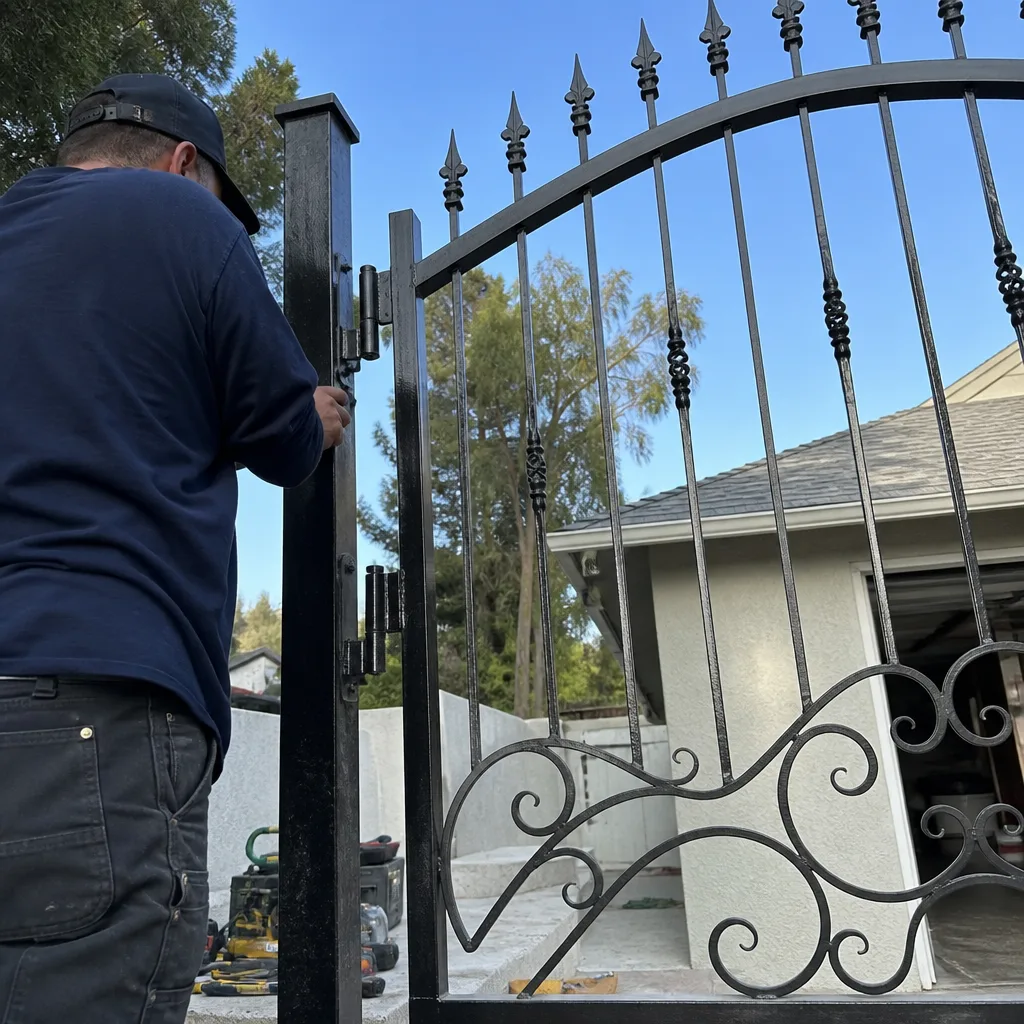
Here’s the scenario we see most often in San Fernando: a homeowner’s gate worked fine all summer. September comes and goes, no problem. First week of November, first cold morning of the year, the gate won’t open. The homeowner assumes something broke in November. What actually happened is carry-forward damage.
Three factors combine in that first cold week:
- Battery reserve capacity drops with temperature. A battery that spent the summer degrading at 110°F internal temperature now has to deliver power at 45°F, when its chemical reaction is slower. A battery that was marginal at 90°F will fail outright at 45°F. The gate ran all summer on AC power, masking the deficit. The first real demand on the battery, whether from an outage or a cold-morning load spike, exposes it.
- Lubricant viscosity rises as temperature falls. Grease that was thin and functional in August is thick and resistant in November. The operator now has to work harder to move the gate through the same travel, drawing more current, adding load to gears, and slowing travel speed. The gate was fine at 95°F, but the same lubrication at 48°F increases rolling resistance enough that a marginal operator can’t finish a cycle.
- Metal contracted overnight. Gate tracks, hinges, and rails shrink slightly in cold temperatures. A gate that had acceptable clearance all summer now binds at one point in its travel. This is especially pronounced on slide gates in San Fernando, where rail misalignment of even a quarter-inch can cause the gate to stall.
None of these factors is a sudden failure. All three develop during the heat-load period and surface on the first cold morning that demands more from a weakened system. That’s why we recommend running a full open/close test and a battery voltage check in early October, before the temperature drop. It gives the homeowner a month of lead time to address problems while the gate still opens.
Month-by-Month Gate Care Calendar for San Fernando
This calendar is built for San Fernando’s actual climate pattern. If you do these items in the months listed, you’ll be ahead of the failure curve instead of chasing it.
January
- Cold-morning test. Run the gate once at 6:30 a.m., the coldest part of the day. Note travel speed. If it’s noticeably slower than summer, that’s lubricant or battery resistance showing up.
- Battery voltage check. If you have a multimeter, check the battery bank voltage with the gate unplugged from AC power. Most 12V systems should read 12.6V or higher at rest. Anything below 12.2V is a failing battery.
- Post-rain inspection. If San Fernando has had winter rain, check cabinet seals for moisture intrusion and look for standing water near the track or hinge posts.
February
- Lubricate hinge points. Light machine oil on hinge pins, gate wheels, and slide-track rollers. Don’t over-lubricate. A film of oil is correct; dripping oil collects dirt.
- Test the reversal function. Place a 2×4 across the gate path and close the gate. It should detect the obstruction and reverse. If it contacts the wood and keeps pushing, the safety circuit needs immediate attention.
- Check remote range. Stand 30 feet out and test both remotes. Short range in cool weather is often a weak remote battery, but it can also signal an antenna issue on the receiver.
March
- Pre-heat-season prep. This is the month to schedule any deferred maintenance. The heat-load window is roughly 90 days out, and that’s enough lead time to get parts or schedule service before summer heat complicates the work.
- Clean the photo-eye lenses. A soft cloth and water. Dust build-up on the lens reduces beam strength and can cause false reversals as heat increases infrared interference.
- Inspect the gate for rust. San Fernando gets limited rain, but rust still forms at welds and under peeling powder coat. Treat surface rust with a wire brush and touch-up paint before it penetrates.
April
- Test the backup battery under load. Unplug the operator from AC power and run the gate through two full open/close cycles on battery alone. It should complete both without sluggishness. If it struggles, replace the battery before summer heat accelerates its decline.
- Check gate balance. A properly balanced swing gate should stay in place when opened halfway without being held. If it swings open or closed on its own, the hinges are worn or the post has shifted, and the operator is working harder than it should.
- Check slide-gate rollers and track. Clean debris from the track, check roller bearings for roughness, and verify the track has no kinks or separations.
May
- Inspect the operator’s ventilation. Pull leaves, spider webs, and debris away from operator cabinet vents. Restricted airflow in summer directly reduces control-board and transformer lifespan.
- Re-torque exposed hardware. Hinge bolts, bracket bolts, and post anchor nuts. Heat expansion will loosen them if they’re marginal.
- Consider a cabinet shade if your operator sits in direct afternoon sun. A simple sun shield that allows airflow can reduce internal cabinet temperature by 20 degrees or more. It’s one of the cheapest lifespan improvements possible for a San Fernando gate system.
June
- First heat spike check. After the first week of 95°F-plus weather, run the gate and listen. A high-pitched whine from the operator can be heat-thinned hydraulic fluid or a transformer struggling in high temperature. Note it. It won’t get better in July.
- Check all wire connections at the control board. Heat cycling loosens terminal screws. Turn the breaker off first, then verify each wire is tight. A loose neutral or limit switch wire causes intermittent faults that are notoriously difficult to diagnose later.
- Inspect the manual release. Test the manual release key or lever. If you can’t open the gate manually in June, you won’t want to find that out during a July power outage.
July
- Mid-summer performance check. Time the gate’s full travel on a day above 90°F. Compare against a cool-morning baseline from January or February. If travel time has increased by 20% or more, the operator or lubricant is degrading.
- Check hydraulic fluid (if applicable). Look for discoloration or a burned smell. Heat-damaged fluid darkens and smells acrid. It should be replaced before it degrades the seals.
- Test the battery again. Heat kills batteries fastest during peak summer. A 10-minute load test takes little time and can reveal a battery that was healthy in April but has since degraded.
August
- Peak heat inspection. Touch the operator cabinet at 3 p.m. on a 100°F day. If it’s too hot to hold a hand on for five seconds, internal temperatures are over 140°F and every electronic component inside is aging faster than rated. Consider venting or shade before next summer.
- Listen for capacitor whine. A faint high-pitched whine from the control board under load can be an electrolytic capacitor nearing failure. It will often still work, but it’s giving warning.
- Run the gate after dark. If the gate behaves differently at 85°F than at 105°F, you have a temperature-sensitive component that needs documentation and likely replacement.
September
- Post-summer damage assessment. This is the most important month on the entire calendar. Run the full inspection: hinges, brackets, battery, photo-eyes, limit switches, travel speed, and remote range. This is the moment to identify carry-forward damage before it surfaces in November.
- Pre-Santa-Ana hardware check. Tighten everything structural. Wind season starts in a few weeks. Loose hardware that survived calm summer nights will be found quickly by a 50 mph gust.
- Schedule any needed repairs before winter demand spikes. October and November are the busiest months for gate techs across San Fernando. Early September service gets faster scheduling and cooler working conditions.
October
- First cold-morning cycle test. Run the gate at dawn on the first morning below 50°F. If it’s sluggish, investigate lubricant and battery. This is your last clean window before winter.
- Check cabinet gaskets and seals. Rain in San Fernando is rare but it happens, usually between December and March. Seals that are cracked now will admit water in January.
- Verify the heater or de-icer (if equipped). Most San Fernando gates don’t need them, but if your operator has a cold-weather kit, test that it activates.
November
- Post-Santa-Ana structural check. After each significant wind event, run the 15-minute checklist from the Santa Ana section above. Hinge bolts, operator bracket, photo-eye alignment, post bases.
- Cold-start cycling. Run the gate three times in a row on a cold morning. If the third cycle is slower than the first, the operator is working against thickened lubricant or a weak battery, and that’s a repair item for this month, not next spring.
- Test the manual release again. If the gate fails in December, you want to know you can open it manually.
December
- Rain and moisture inspection. If San Fernando gets winter rain, check for water pooling around the track, water inside the operator cabinet, and condensation on the control board. Moisture on electronics is a top cause of December failures.
- Year-end record keeping. Compile your log notes for the year. Which months showed sluggish travel? When did the battery last get replaced? Gate maintenance should be recorded the same way a car service log is kept, so the next technician doesn’t re-diagnose a problem you already know about.
- End-of-year safety sweep. Test the photo-eye, the reversal function, the manual release, and the audible warning if equipped. This is the annual gate equivalent of checking smoke detectors.
What a Homeowner Can Safely Check vs. What Needs a Technician
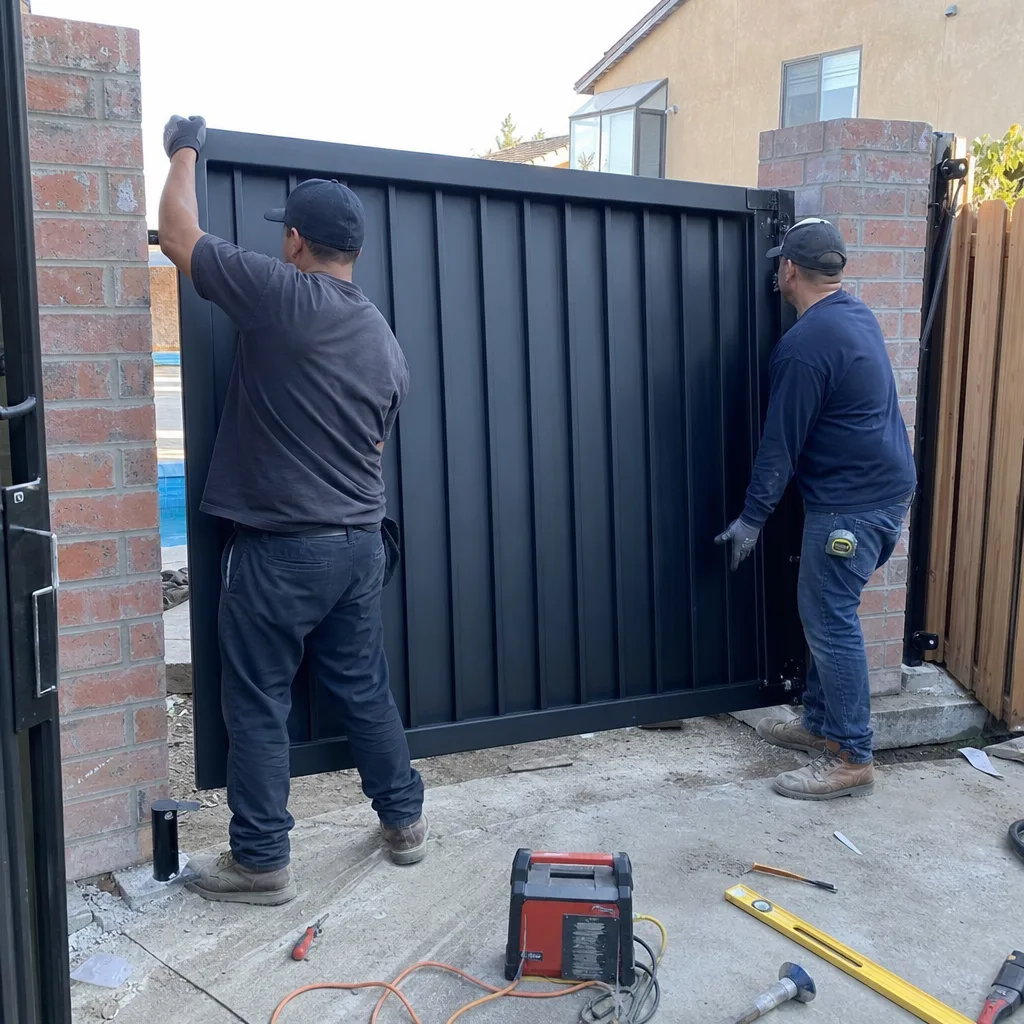
Some gate maintenance is appropriate for a careful homeowner. Some is genuinely dangerous and belongs with a trained professional. For help deciding which route to take, read our DIY vs Professional Gate Repair: The San Fernando Homeowner’s Decision Guide. Here’s the clean split, because a real expert always flags the difference.
What a homeowner can do:
- Visual inspection of hinges, brackets, and posts for rust, cracks, or movement
- Manual release testing
- Photo-eye lens cleaning and basic alignment check
- Battery voltage checks with a multimeter (power off, probes on terminals only)
- Lubricating hinge pins and slide-track rollers with light machine oil
- Cabinet cleaning and ventilation clearing (power off first)
- Remote battery replacement
- Running the gate through test cycles to observe behavior
What needs a technician:
- Any work involving high-tension torsion springs, extension springs, or spring-loaded counterbalance systems. These springs hold significant stored energy, and improper release can cause serious injury. This is the single most dangerous component on any gate system.
- Any wiring work inside the operator cabinet or at the control board. Gate operators run on 120V or 240V AC alongside low-voltage control wiring. Contact with the wrong terminal can be lethal.
- Hydraulic fluid replacement or seal work. Opened hydraulic systems need the correct fluid spec, proper bleeding procedures, and correct disposal of the old fluid.
- Gate post resetting or concrete work. A shifted post is a structural problem, not a hardware problem. Improper repair will fail again.
- Limit switch adjustment or replacement. Limit switches control the gate’s travel endpoints. Set them wrong and the gate can overrun its track or crush against the stops.
- Gate operator replacement. This involves electrical disconnect, physical mounting, wiring, and safety circuit integration. The manufacturer instructions assume a trained installer.
If you’re not sure which category something falls into, take a photo and call someone who can tell you. We do free estimates on Gate Repair services across San Fernando, and we’re happy to look at photos and give you an honest read on whether a service call is even needed.
Common Mistakes to Avoid
- Maintaining on a spring-only schedule. A March inspection and a September inspection miss the entire heat-load period. San Fernando’s pattern requires summer-active maintenance, not spring-only. The gate that only gets checked in spring will carry summer damage into November.
- Ignoring slow travel in the morning. “The gate is just slower in winter” is not a normal condition. Slower travel means higher current draw, which means more heat in the motor, which means shorter motor life. The cause is almost always fixable, and it’s cheaper to fix in January than in July.
- Skipping the battery until a power outage. The worst time to test a battery is when you need it. A $20 multimeter and a quarterly voltage check catch most battery failures before they strand a vehicle.
- DIY spring work. Even experienced homeowners should not touch torsion springs. The stored energy is enough to break bones or worse. This is the one area where the “I’ll watch a YouTube video” approach is genuinely dangerous.
- Deferring Santa Ana post-wind checks. The hinge bolt that’s loose after a November wind event will be a sheared hinge in February. Wind damage compounds. Fifteen minutes after each event saves a full gate rebuild later.
- Guessing at limit switch adjustments. The limit switch sets where the gate stops. Setting it “a little further” to compensate for drift masks the underlying problem and can cause the gate to overrun and damage itself.
- Ignoring the manual release. Every automatic gate has a manual release function, and most homeowners have never tested it. When the power fails or the operator dies, the 30 seconds you spend testing the manual release quarterly is the difference between driving out and being stuck.
When to Call a Professional
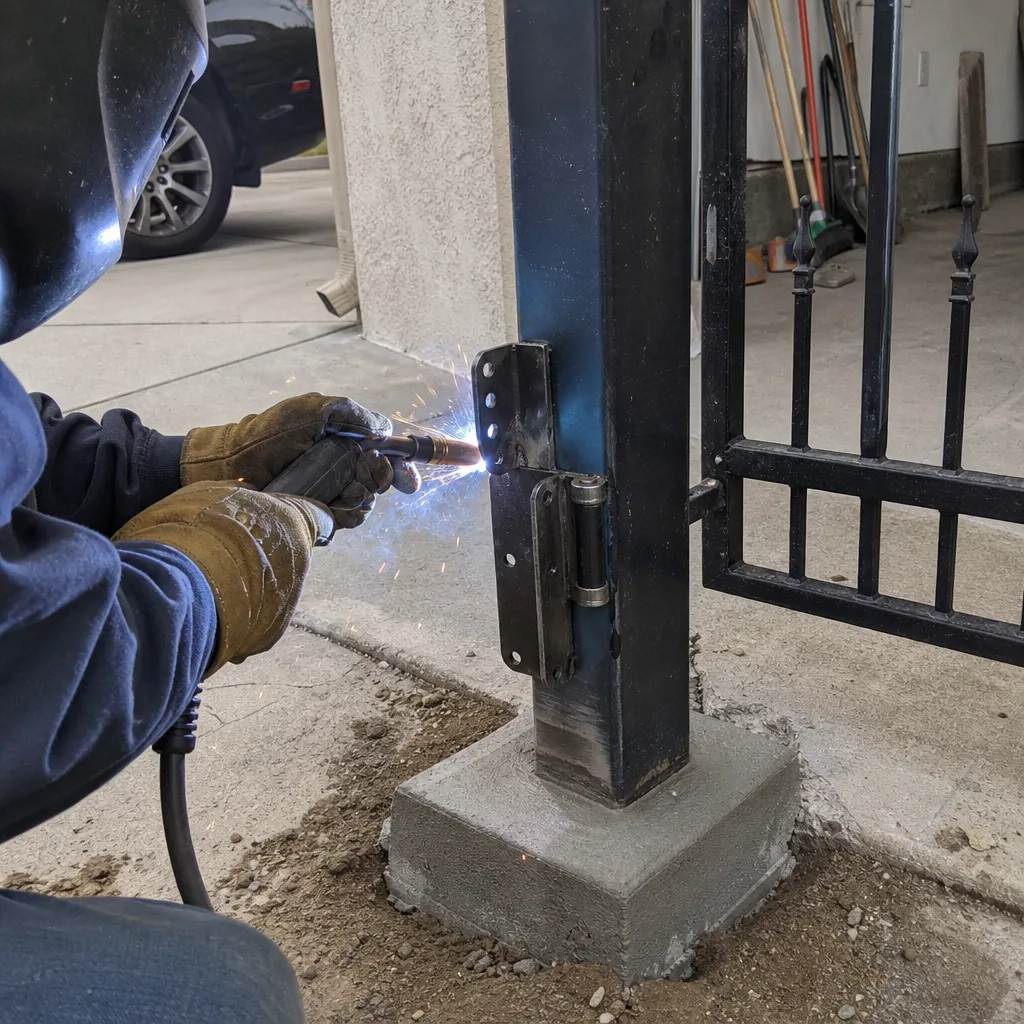
Call a professional when the gate makes unusual noises during travel, when travel speed changes noticeably, when the gate reverses without obstruction, when the battery fails a voltage test, when any structural component shows cracks or movement, or when you see burn marks or melted insulation anywhere in the cabinet. Also call if you inherited a gate with no maintenance history, because the lack of documentation means the next problem is a diagnostic project, not a quick fix. Vance Gate Repair San Fernando offers free estimates in San Fernando, and our techs provide a written price before any work starts. Call (747) 260-0589 to schedule.
Frequently Asked Questions
Basic seasonal inspections and tune-ups on a residential gate in San Fernando typically fall in the $95-$180 range, depending on the system type and the number of components tested. Repairs identified during maintenance are quoted separately, and at Vance Gate Repair San Fernando, every price is in writing before the work begins.
We answer the phone live, 24 hours a day, and we dispatch for emergency gate repairs across San Fernando. The fastest way to get a technician out is to call (747) 260-0589 and describe what the gate is doing, because the symptoms often tell us what parts to bring.
Twice a year: once in September, after the heat-load period, and once in March, before it starts. That schedule catches heat damage at its peak and allows pre-summer repairs before the hottest months begin. Some can work with an annual inspection, but twice-yearly matches the actual failure pattern in this climate.
Sustained wind above 40 mph can permanently bend slide-gate rails, deform hinge brackets, and shift gate posts. The gate itself may still function after a wind event, but the underlying damage will compound with each successive storm. A post-wind inspection after every major event is the cheapest structural insurance in San Fernando.
What does a full gate installation in San Fernando include?
A full installation includes the gate structure, the operator, the safety system, the electrical connection, and programming. We provide the written quote before any work starts, covering every component in the scope, so there are no surprise line items at the end.
The usual causes are a weak remote battery, a receiver antenna that’s been damaged, or a control board issue that responds to temperature. We’d test the remote output, check the antenna, and record the control board behavior on a visit. Call (747) 260-0589 for a diagnosis.
Most residential gate motors work in high temperatures, but they work harder and last shorter lives when the internal temperature stays above 140°F. Gate motor and opener service in San Fernando often includes ventilation or shading improvements because the heat-load is the primary lifespan variable here.
The Bottom Line
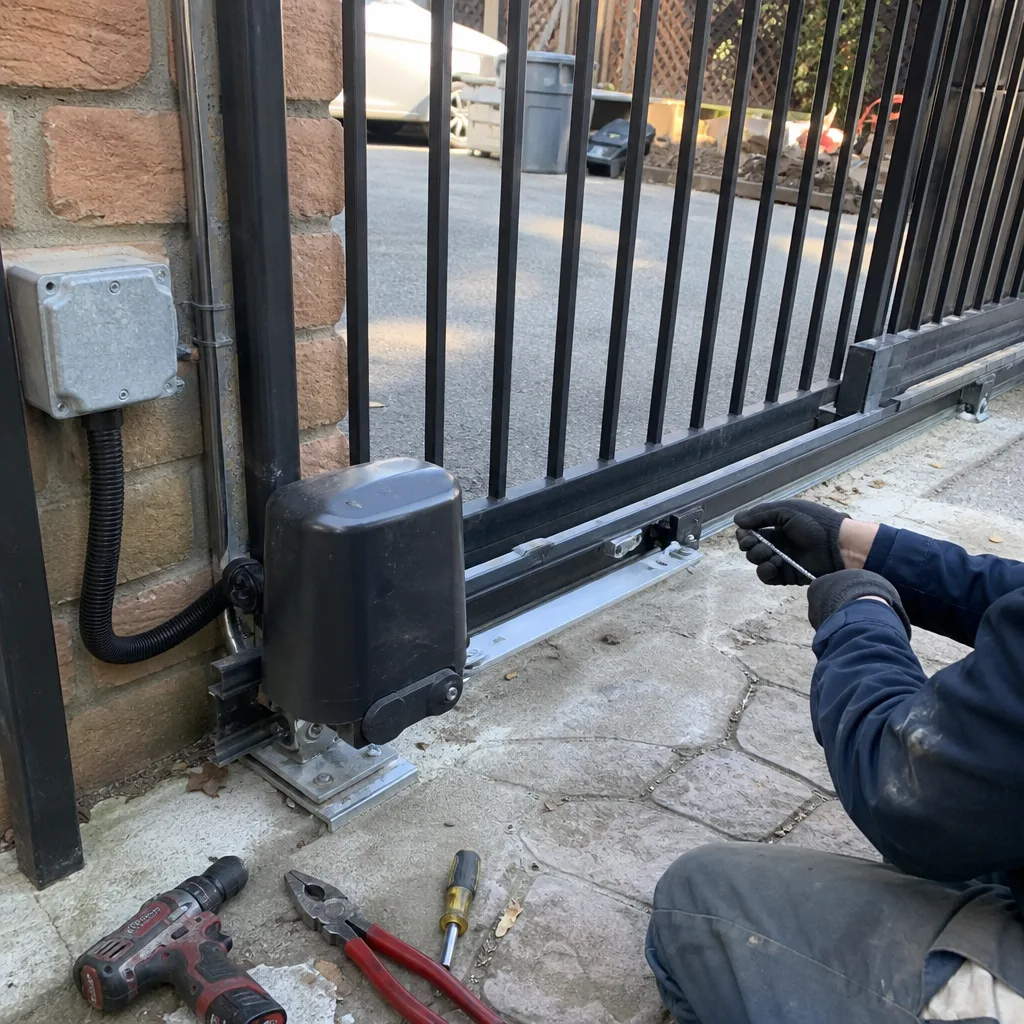
San Fernando’s gate maintenance calendar should be built around June through September as the damage period, with September and October as the detection window and November through February as the consequence period. The homeowner who checks hinges in March and calls it a year will be the one calling a technician in November. The gate that survived summer does not have to fail in winter, but it will if summer’s cumulative damage goes unaddressed. Browse our more guides & resources for year-round gate care. If any of this guide raised a specific concern about your own gate in San Fernando, call (747) 260-0589 for a free estimate. We’ll give you a written price before we touch a single component, and a documented record when we leave.
Written by Adrian Vance, Owner at Vance Gate Repair San Fernando, serving San Fernando since 2014.