
Last updated September 20, 2026
Free on-site gate assessment - hinges, posts, and your LiftMaster or Nice gate operator checked before anything is quoted
The assessment is free and the quote is the invoice.

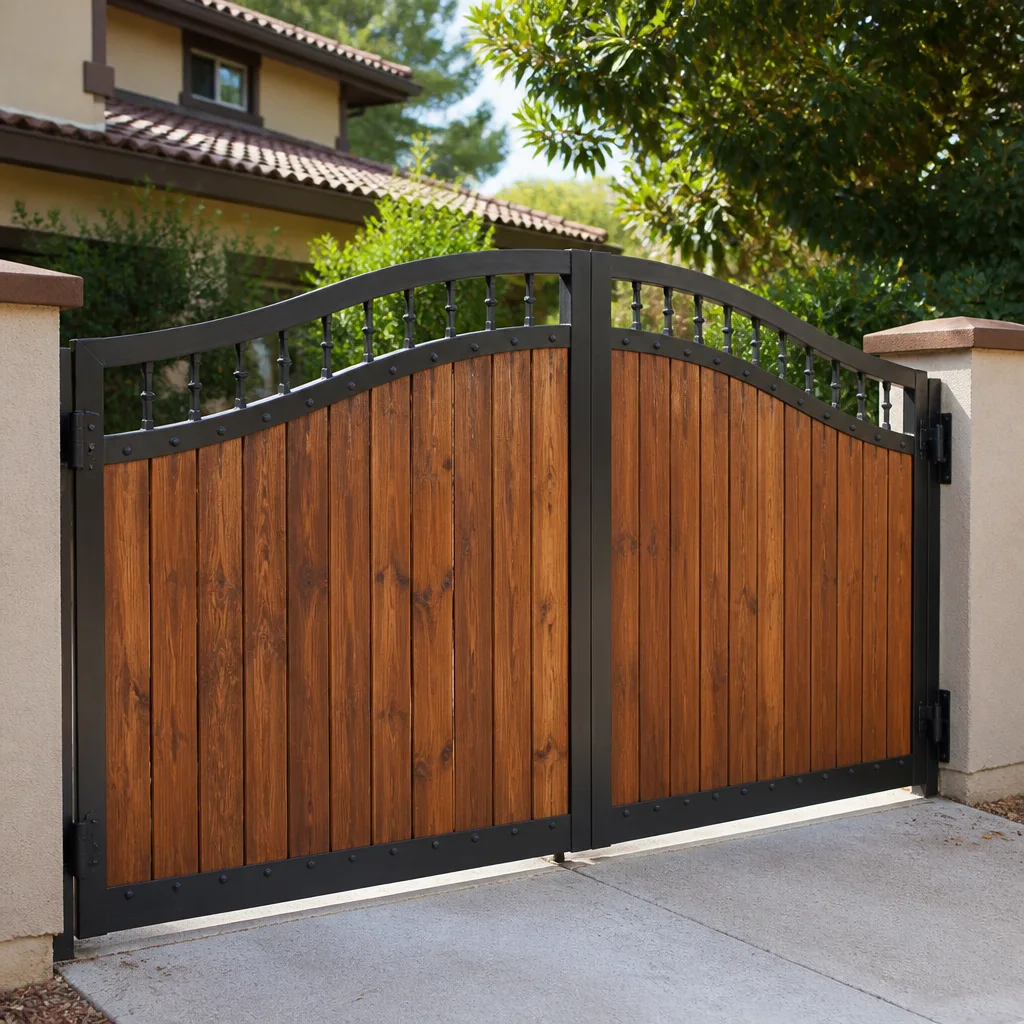
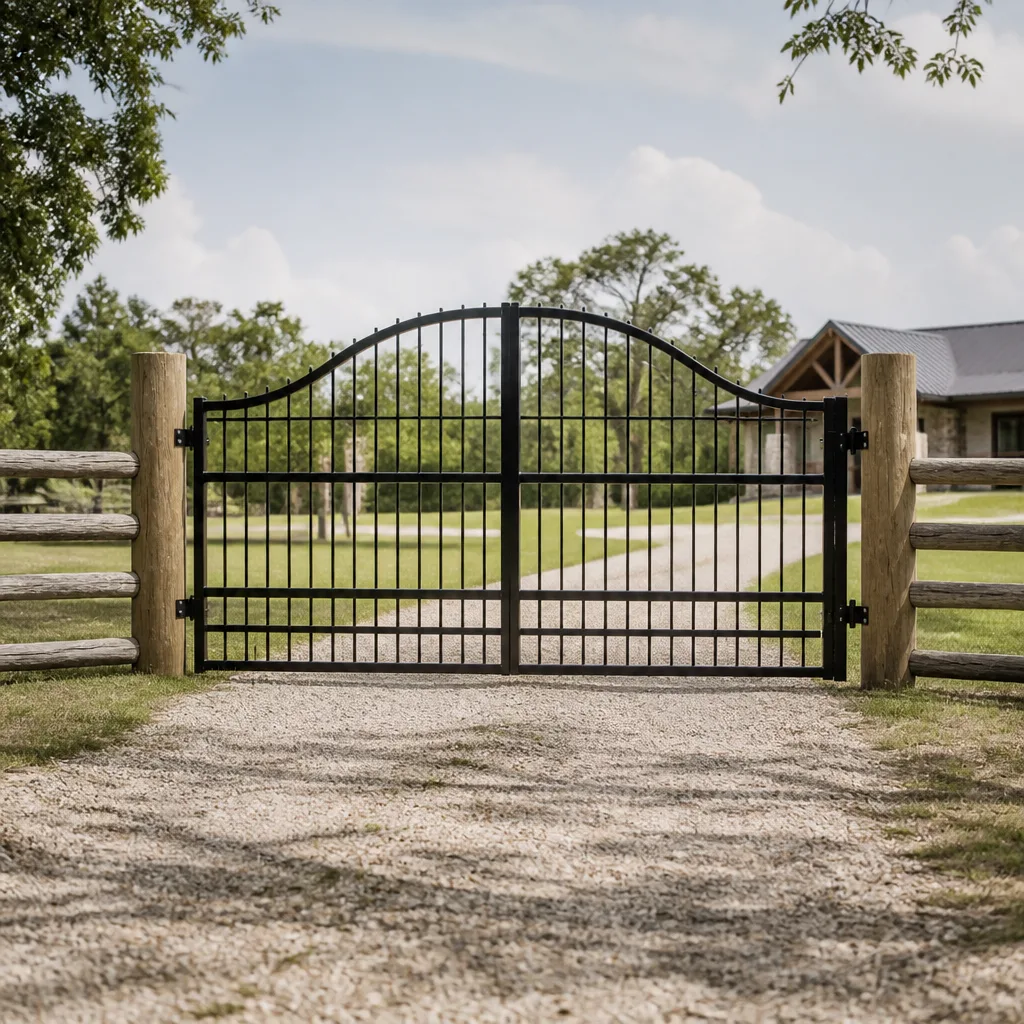
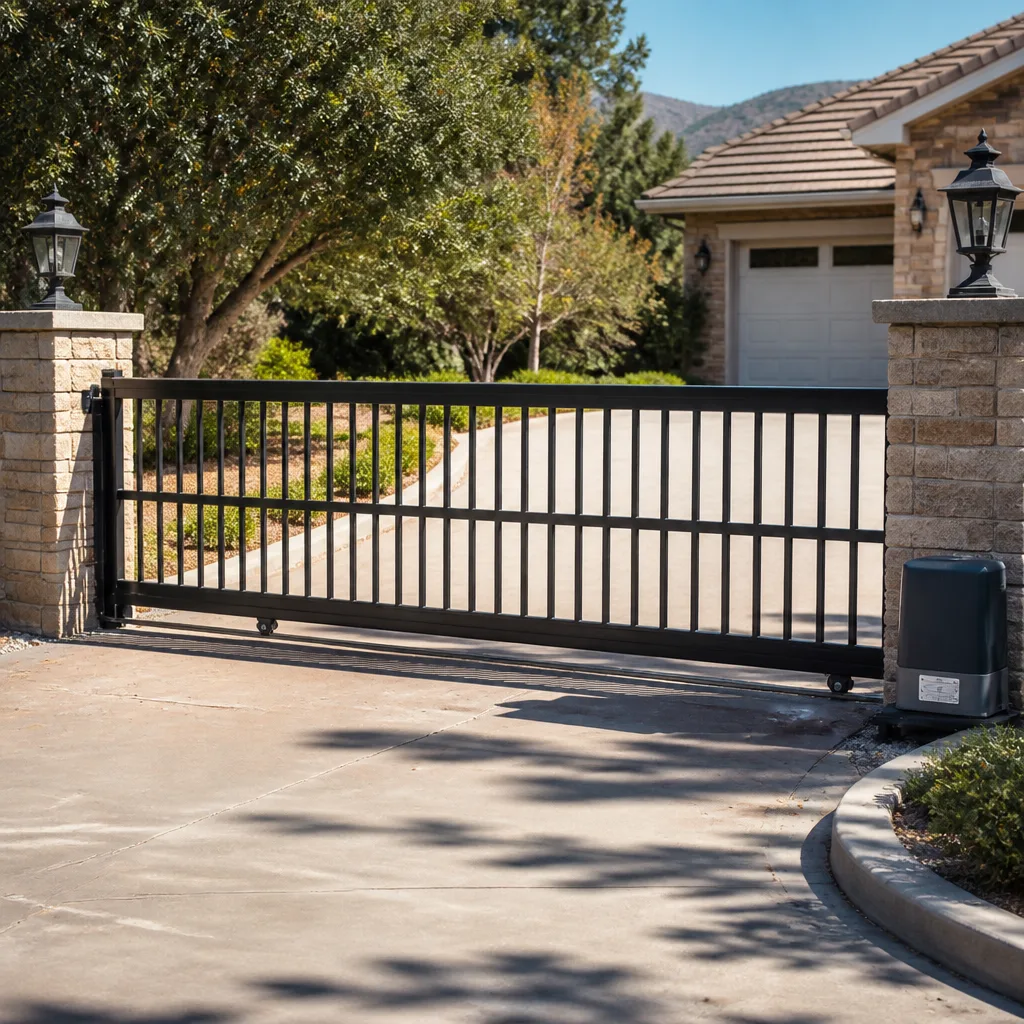
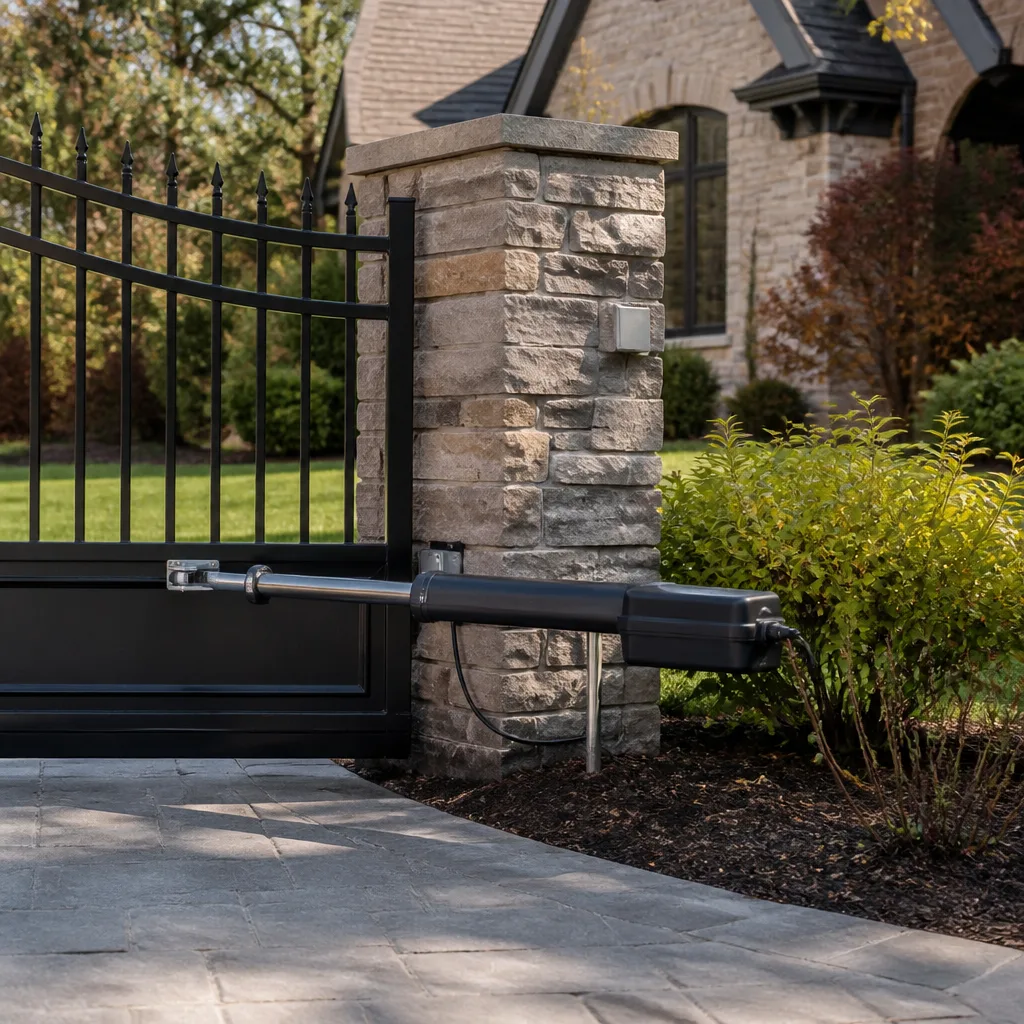
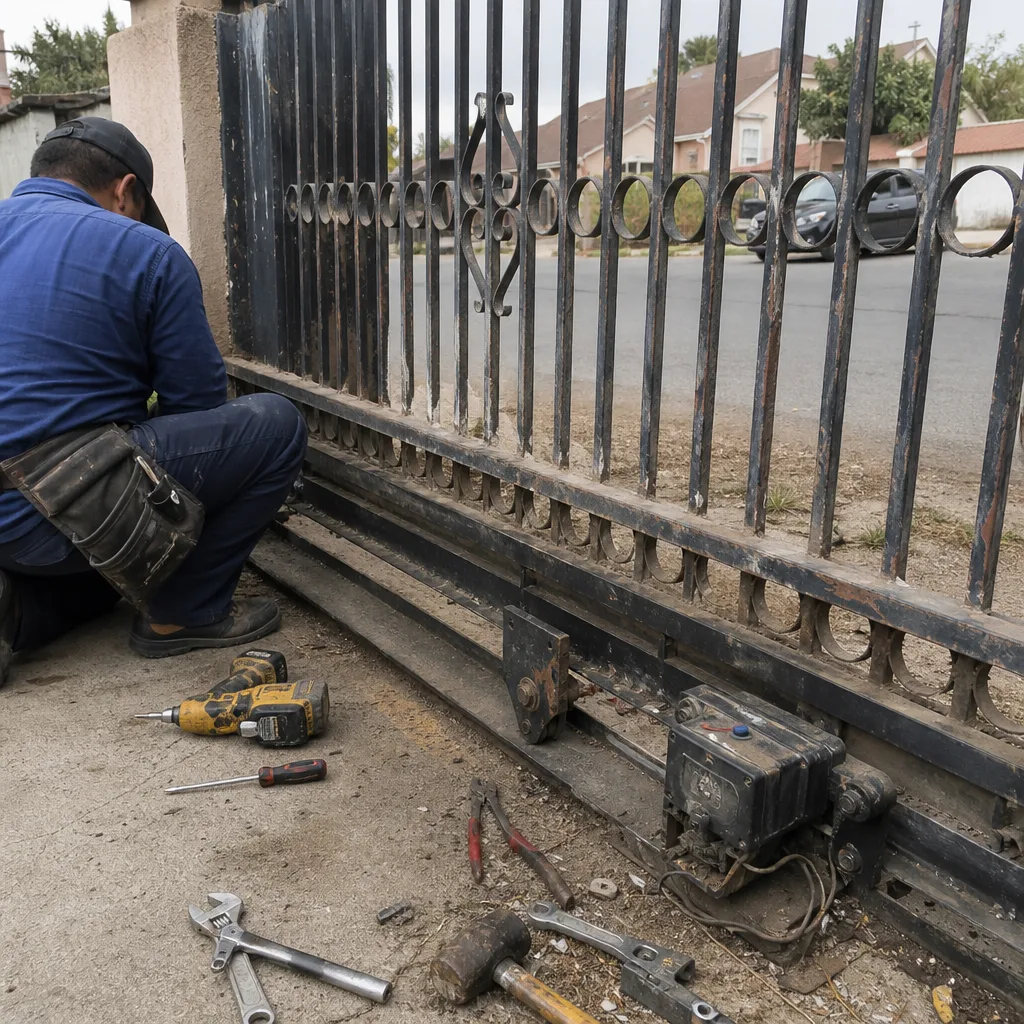 Before
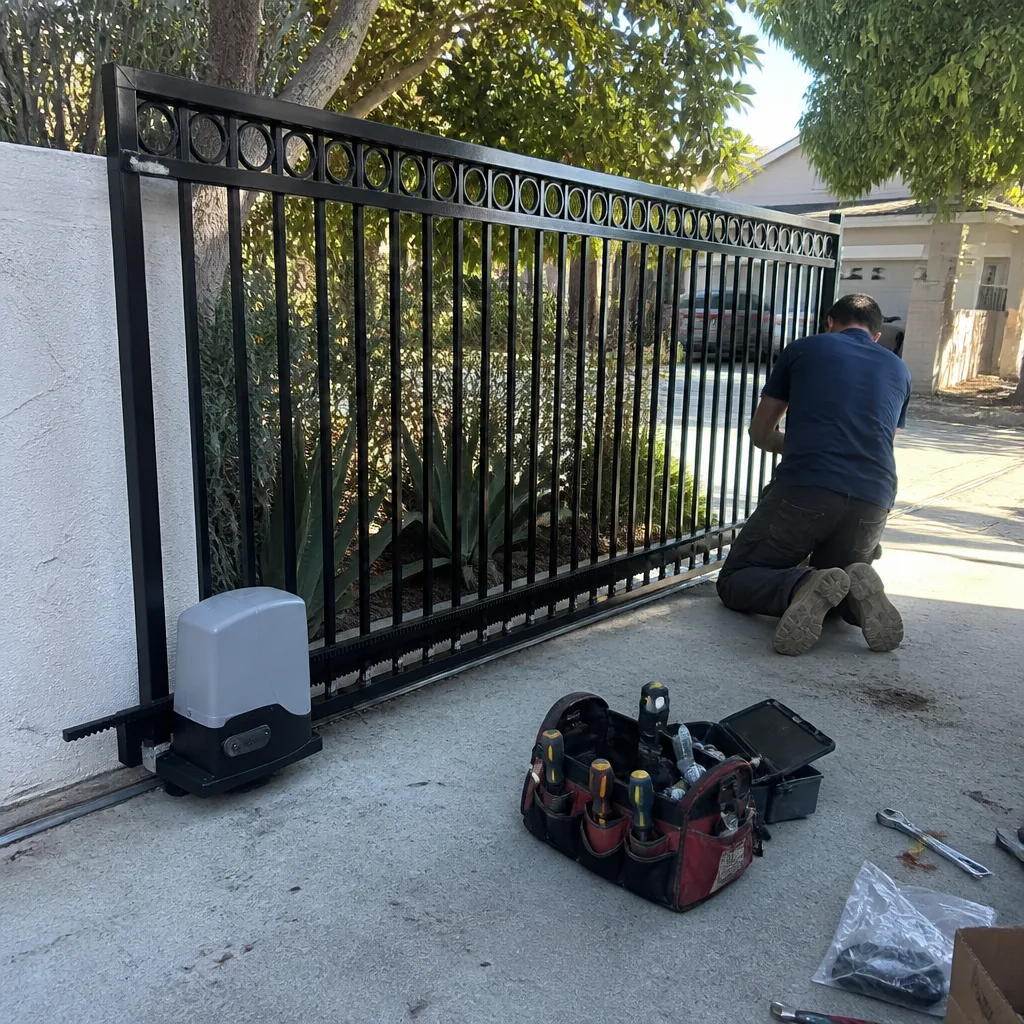 After
AfterDIY vs Professional Gate Repair: The San Fernando Homeowner’s Decision Guide
Here’s the number most guide articles won’t tell you: in California, the legal threshold for gate work isn’t whether the repair is hard. It’s whether the repair touches the automated operator, the entrapment sensors, or the structural posts. Cross that line without a contractor’s license, and you’ve just taken personal liability for any future injury the gate causes. That’s the distinction that changes the entire DIY conversation. This guide maps out exactly which San Fernando gate repairs a homeowner can do safely and legally, which ones trigger state licensing rules, and where the real cost difference lies once you factor in tooling, documentation, and the price of a second attempt. For professional help, see our Gate Repair services.
Quick Answer
For mechanical adjustments, photo-eye cleaning, manual-release testing, and cosmetic fixes, DIY is reasonable and often saves real money. For any repair that involves the operator motor, the entrapment sensors, the control board, or the structural posts, California code and UL 325 compliance requirements make professional repair the only defensible choice. The line isn’t skill. It’s liability.
Table of Contents
- The Liability Line: Which Repairs Follow the Property
- The Legal, Safe, Practical DIY List
- The Off-Limits List: Repairs That Trigger California Licensing
- The Insurance Problem Most DIY Guides Skip
- The ‘I Watched a YouTube Video’ Reality Check
- The True Cost of DIY Gate Repair: A Line-Item Comparison
- The One DIY Task That Saves the Most Money With the Least Risk
- Why Documentation Is the Difference Between Repair and Guessing
- Common Mistakes to Avoid
- When to Call a Professional
- Frequently Asked Questions
- The Bottom Line
BeforeAfterThe Liability Line: Which Repairs Follow the Property
Most homeowners frame the DIY question around skill: “Can I figure this out?” That’s the wrong question. The right question is: “If this gate injures someone two years from now, who does the attorney come after?” In California, the answer depends on what you touched.
When a licensed contractor installs or services an automated gate operator in San Fernando, the work carries with it a paper trail: the contractor’s license, the permit (where required), the UL 325 compliance verification, and the contractor’s liability insurance. If something fails and a child is injured, the liability chain runs through that documentation. The homeowner’s exposure is limited because a licensed professional made the call.
When a homeowner performs the same operator replacement without a license, permit, and compliance review, that liability chain stops at the property line. It stops at the homeowner. Not because the homeowner is less capable. Because California’s Contractors State License Board requires a C-61/D-16 (gate operator) classification for automated gate work, and because UL 325, the national safety standard for automated gates, requires specific testing protocols that assume a trained installer.
Here’s the practical translation for San Fernando homeowners: a mechanical repair that doesn’t involve the operator or entrapment protection is your decision. A repair that changes how the gate opens, closes, senses, or reverses is a legal and insurance decision disguised as a repair decision.
The Legal, Safe, Practical DIY List
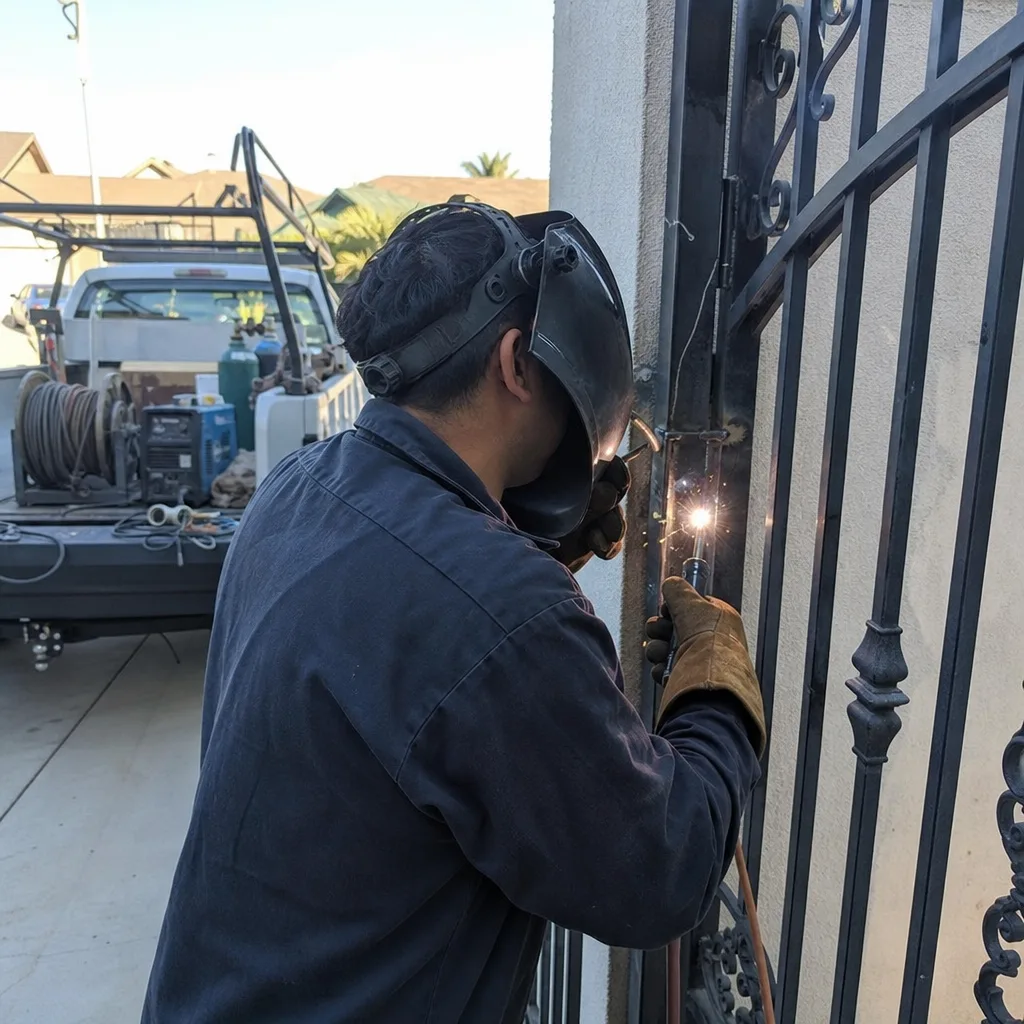
There is a legitimate DIY layer for gate maintenance, and it’s not small. These tasks don’t require a license, don’t trigger permit obligations, and won’t change the gate’s safety profile. Done correctly, they extend the life of the system and reduce the frequency of professional service calls.
What a San Fernando Homeowner Can Do Safely
- Photo-eye lens cleaning: The photo-eye is the infrared sensor pair near the ground on either side of the gate opening. San Fernando’s dry, dusty summers coat these lenses with a fine grit that causes phantom reversal or refusal to close. A soft cloth and glass cleaner fixes it in five minutes.
- Manual-release testing: Every automated gate has a manual release mechanism, usually a key or pull chain on the operator. Testing it monthly confirms you can open the gate during a power outage. This is a functional check, not a modification.
- Track lubrication (slide gates): A dry silicone spray on the gate track and rollers reduces motor strain and extends operator life. Do not use grease; it collects dust and creates a paste that accelerates wear in our climate.
- Physical obstruction clearing: Removing rocks, roots, or debris from the gate path and wheel track. This is pure maintenance with zero safety-system involvement.
- Hinge tightening (swing gates): Loose hinge bolts cause sag, which causes misaligned photo-eyes and premature motor wear. Tightening them is accessible, low-risk mechanical work.
- Battery replacement in wireless keypads and solar systems: Low-voltage accessory battery swaps don’t touch the operator or its safety circuits.
- Cosmetic work: Rust removal, repainting, and wood gate resealing fall outside the operator system entirely.
These tasks share a common profile: they don’t require opening the operator housing, don’t modify entrapment protection, don’t alter wiring, and don’t change how the gate applies force. If a task falls inside that boundary, it’s a reasonable DIY candidate. If it sits outside, the next section explains why.
The Off-Limits List: Repairs That Trigger California Licensing
California’s contractor licensing law is specific about gate automation. Installation, replacement, or substantive modification of an automated gate operator requires a C-61/D-16 specialty classification. The law doesn’t care whether you’re handy. It cares about the public safety function the equipment performs.
Repairs That Should Always Go to a Licensed Gate Contractor
- Operator motor replacement: Any job that involves removing and installing the motor unit itself. This includes swing-arm operators, slide-gate operators, and jackshaft operators. The motor is the heart of force application, and UL 325 compliance begins here.
- Entrapment sensor installation or modification: Photo-eyes, edge sensors, and contact strips are life-safety devices. Their placement, alignment, and integration with the operator’s reverse logic are governed by UL 325. A homeowner modification creates undocumented liability.
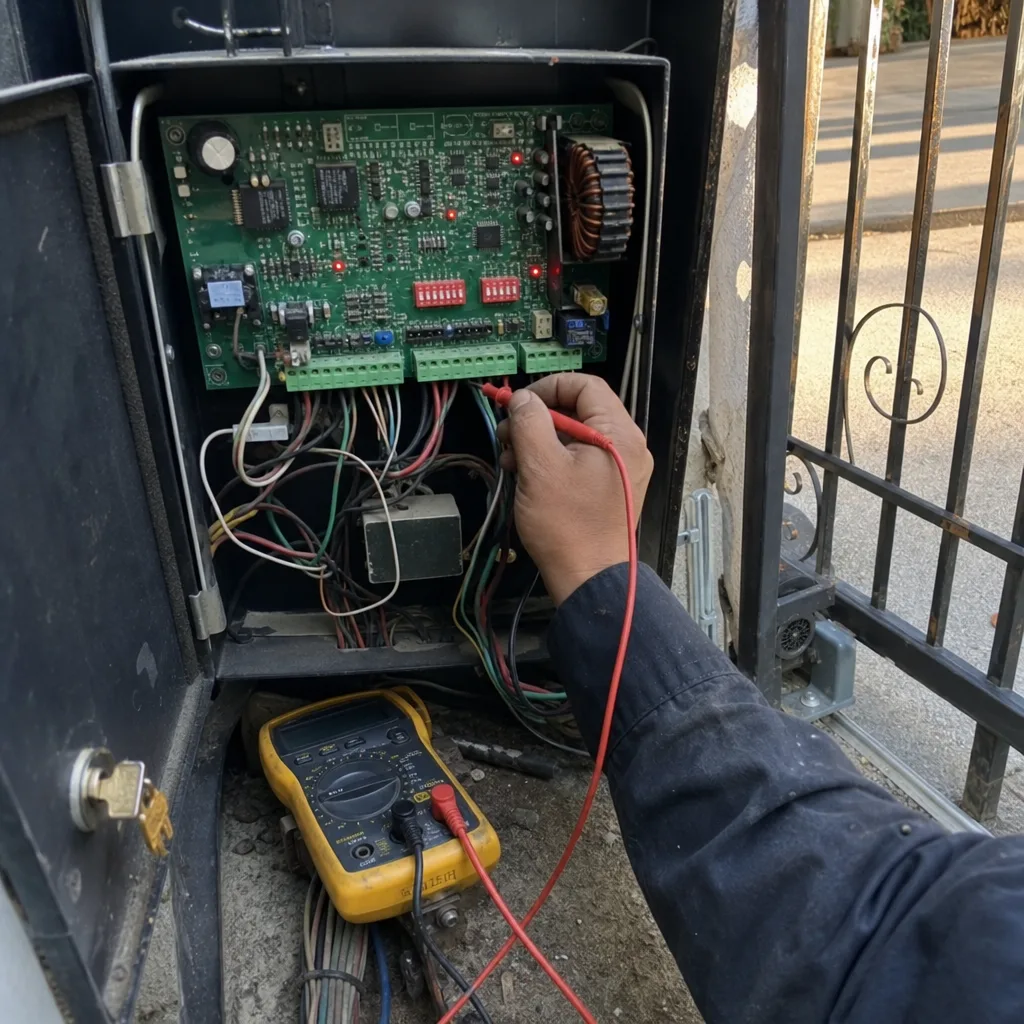
- Control board replacement: The board holds the limit settings, force sensitivity, auto-close timing, and safety-device inputs. Wiring a new board requires matching the specific operator’s schematics and verifying every safety input after installation.
- Gate post replacement or resetting: The posts bear the full weight and dynamic load of the gate. Improper depth, concrete mix, or anchor placement in San Fernando’s expansive clay soils causes slow post migration, which eventually destroys the operator. Post work also requires concrete permits in some circumstances.
- Any 120V or 240V line-side electrical work: Running new power to a gate location requires a licensed electrician or a C-61/D-16 contractor with electrical scope. This is not a handyman task.
- Welding repairs on structural gate frames: A cracked steel frame member isn’t a bolt-on fix. It requires proper weldment, gusseting, and load assessment. A weld failure on an automated gate is a catastrophic failure mode.
- Automated gate system installation (new): Full stop. New automated installations require the operator, the safety devices, the control wiring, the power feed, and the compliance verification as an integrated system.
The pattern is consistent: any repair that changes how the gate moves, senses, reverses, or bears load is professional-grade work with legal consequences attached. The decision isn’t about capability. It’s about standing behind the work when the work has a life-safety dimension.
The Insurance Problem Most DIY Guides Skip
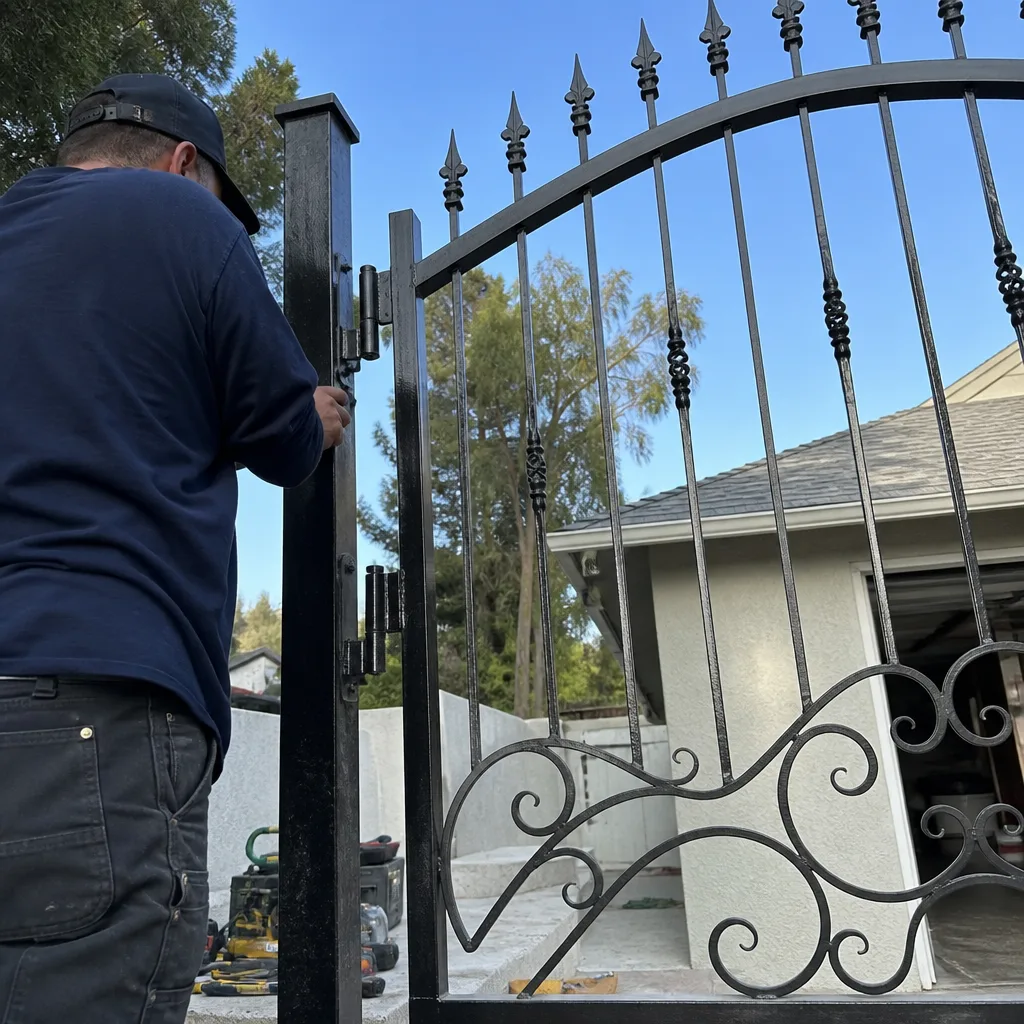
Here’s the sentence that changes most homeowners’ calculations: if your homeowner’s insurance carrier learns that a gate injury or property damage resulted from unpermitted, unlicensed DIY operator work, your coverage position weakens significantly. Not always to zero, but the carrier gets a legal argument you handed them.
Insurance policies cover accidental losses. They typically exclude losses arising from work that required a licensed contractor and wasn’t performed by one. An automated gate operator installation is exactly that in California. If a gate you modified yourself crushes a neighbor’s car or injures a delivery driver, the claim review will include questions about who did the work and whether permits were pulled. Your DIY labor becomes the policy exclusion the adjuster was looking for.
This isn’t scare rhetoric. It’s the documented structure of residential insurance: the policy covers what you didn’t know would happen, but it doesn’t cover what you did yourself in defiance of licensing law and then couldn’t verify was safe.
A licensed operator doing the same work carries its own liability insurance. That insurance stands between your gate and your personal assets. When a gate repair contractor in San Fernando replaces an operator, the work record includes the license, the compliance verification, and the liability coverage. That’s the paper shield a DIY repair never has.
The math is uncomfortable but straightforward: you might save $600 to $900 on a DIY operator replacement. If that operator fails and injures someone, the first hour of legal defense exceeds that savings by a factor of five. The insurance-alone argument closes the DIY case for anything touching the operator or entrapment sensors.
The ‘I Watched a YouTube Video’ Reality Check
Some gate repairs translate well from video instruction. Others have a step that videos skip because the step requires test equipment or experience to recognize. Understanding the difference saves you from a Saturday afternoon that ends with a non-functioning gate and a service call anyway.
What Translates Well
- Photo-eye lens cleaning: The video shows you where the lenses are, and the fix is visual. No hidden gotchas.
- Manual-release operation: The pull chain or release key is mechanical. The video shows the motion, and you repeat it. Low risk, reversible.
- Track debris clearing: Removal is straightforward. If the gate still binds after clearing, that’s a post or roller problem, not a technique failure.
- Remote programming: Most gate remote pairing sequences are published by the manufacturer and work consistently. Some require opening the operator cover, but programming doesn’t involve safety-device modification.
What Videos Skip
- Force-sensitivity verification: Many operator replacement videos skip the part where you test the gate’s reverse pressure with a force gauge. UL 325 specifies maximum entrapment forces. The test requires a $300 to $500 gauge most homeowners will never buy, and the video creator assumes you’ll skip it. That skipped step is a compliance failure with a body count attached.
- Photo-eye alignment under load: The video shows aligning sensors with the gate open. It doesn’t show that the gate frame flexes slightly under movement, which means the alignment that works in the video’s static shot fails the moment the gate reaches closing speed. A professional checks alignment during the actual close cycle.
- Limit switch calibration: Videos show the adjustment screws but not the testing procedure that confirms the gate stops before the posts and doesn’t overtravel into the receiver. Overtravel causes the exact motor strain that kills operators months later.
- Local code and permit requirements: A nationally filmed video doesn’t know what San Fernando or Los Angeles County requires for your specific installation type. Code compliance is local by definition.
Vance Gate Repair San Fernando has been untangling DIY attempts since 2014. We’ve seen a DoorKing operator wired backward, a Ghost Controls system with the safety loop bypassed, and a Viking board fried by a homeowner who crossed two low-voltage wires. The common thread: the video made it look doable, and the skipped step was the part that required equipment the homeowner didn’t own.
The True Cost of DIY Gate Repair: A Line-Item Comparison
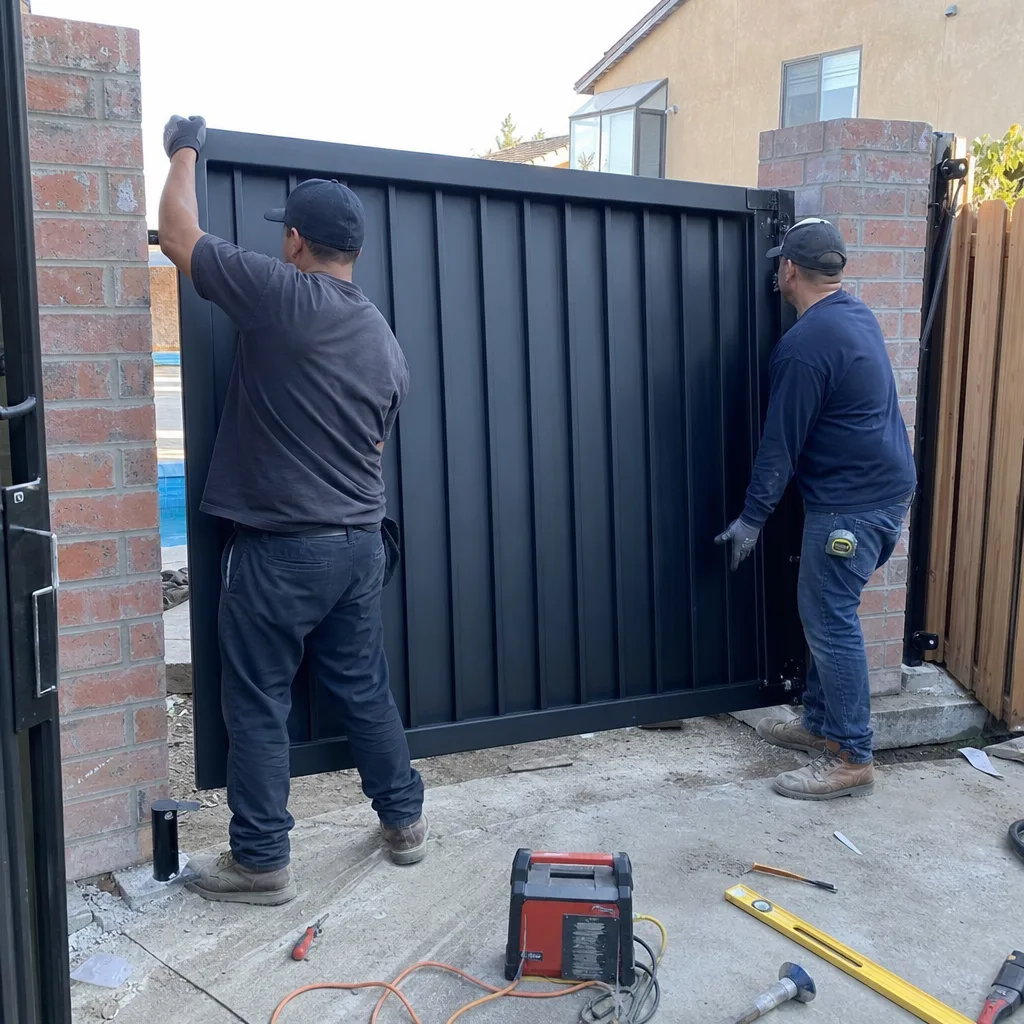
DIY cost comparisons usually end at parts. That’s a dishonest comparison. The real comparison includes tooling, time, the probability of a second attempt, and the diagnostic cost if a professional has to untangle the work. Here’s the honest arithmetic for a typical swing-gate operator replacement in San Fernando.
DIY Operator Replacement: Actual Cost
- Operator unit (entry-level swing arm): $450 to $700, depending on brand and whether you buy online or from a local supplier
- Force gauge (required for UL 325 verification): $300 to $500, or skipped entirely (which is a compliance failure, not a savings)
- Specialty tools (magnetic level, torque wrench with the right range, concrete anchor hardware): $80 to $150 if not already owned
- Your time (first attempt plus troubleshooting): 6 to 10 hours, and for San Fernando homeowners earning a typical professional wage, that’s $300 to $800 of your own labor value
- Probability of a second attempt or partial failure requiring professional correction: We estimate 35% to 50% based on the service calls we receive. The correction call often costs more than a fresh professional install would have, because we’re diagnosing before we’re repairing
- Permit fees and possible correction costs if unpermitted work is discovered during a future property transaction: Variable, but disclosure requirements in California mean unpermitted gate work becomes a sale-time problem
Professional Operator Replacement: Typical Cost
- Written flat-price quote (free, and provided before any work starts): Most San Fernando swing-gate operator replacements run between $1,150 and $2,400 depending on brand, gate weight, and bracket condition
- Included in that price: the operator, all mounting and bracket hardware, wiring connections, limit and force calibration, photo-eye alignment and testing, UL 325 compliance verification, the documented photo record, and the 365-day guarantee
- Time burden to the homeowner: roughly one hour of your presence for access and a final walkthrough
- Liability position after completion: contractor’s insurance and license stand behind the work; the paper trail exists
When you include the force gauge you’ll buy and never use again, the tooling you’ll buy and use once, and the 6 to 10 hours of your own time, the DIY path on an operator replacement saves maybe $200 to $400. That savings purchases zero warranty, zero compliance verification, and a liability exposure that follows the property. The math on an operator replacement doesn’t support DIY, and it’s not close.
For context on what a full gate project involves, see gate installation guidance for San Fernando homes and our breakdown of gate motor and opener service in San Fernando.
The One DIY Task That Saves the Most Money With the Least Risk
If you remember one DIY task from this guide, make it this one: the quarterly maintenance layer of photo-eye lens cleaning, alignment verification, and manual-release testing. See our Gate Repair Maintenance Checklist for San Fernando Homeowners for the full procedure.
The Quarterly Gate Maintenance Routine (30 Minutes, Zero Specialized Tools)
- Disconnect power at the operator’s service switch. This is the manual disconnect, not the breaker panel. Confirm the gate won’t move during your work.
- Clean both photo-eye lenses with a soft, dry cloth. If you use glass cleaner, spray it on the cloth, not on the sensor. San Fernando’s dust season is year-round, but lenses get especially dirty during the Santa Ana wind months.
- Reconnect power and run one full open-close cycle. Watch the gate close completely. If it reverses before closing, the photo-eyes are either still dirty or misaligned. Clean again. If it still reverses, call a professional; the misalignment is beyond a cleaning fix.
- Test the manual release. Pull the release handle or turn the key. The gate should move freely by hand in both directions. If it binds or drags, you have a track, roller, or hinge problem that’s building toward motor failure.
- Re-engage the operator and confirm it locks into automatic mode. Run one more full cycle to verify normal operation.
- Photograph the gate, the operator, and any visible wear points. A dated photo record is your baseline. If something changes, you’ll see it.
This routine doesn’t save money by avoiding all service calls. It saves money by catching minor failures before they become operator replacements. A photo-eye that’s merely dirty gets cleaned for free. A photo-eye that’s failing electrically gets replaced before it causes the operator’s safety logic to trigger repeatedly, which is the failure cascade that burns out control boards. The maintenance layer reduces professional call frequency and extends operator life, and it’s genuinely within a homeowner’s safe scope.
Why Documentation Is the Difference Between Repair and Guessing
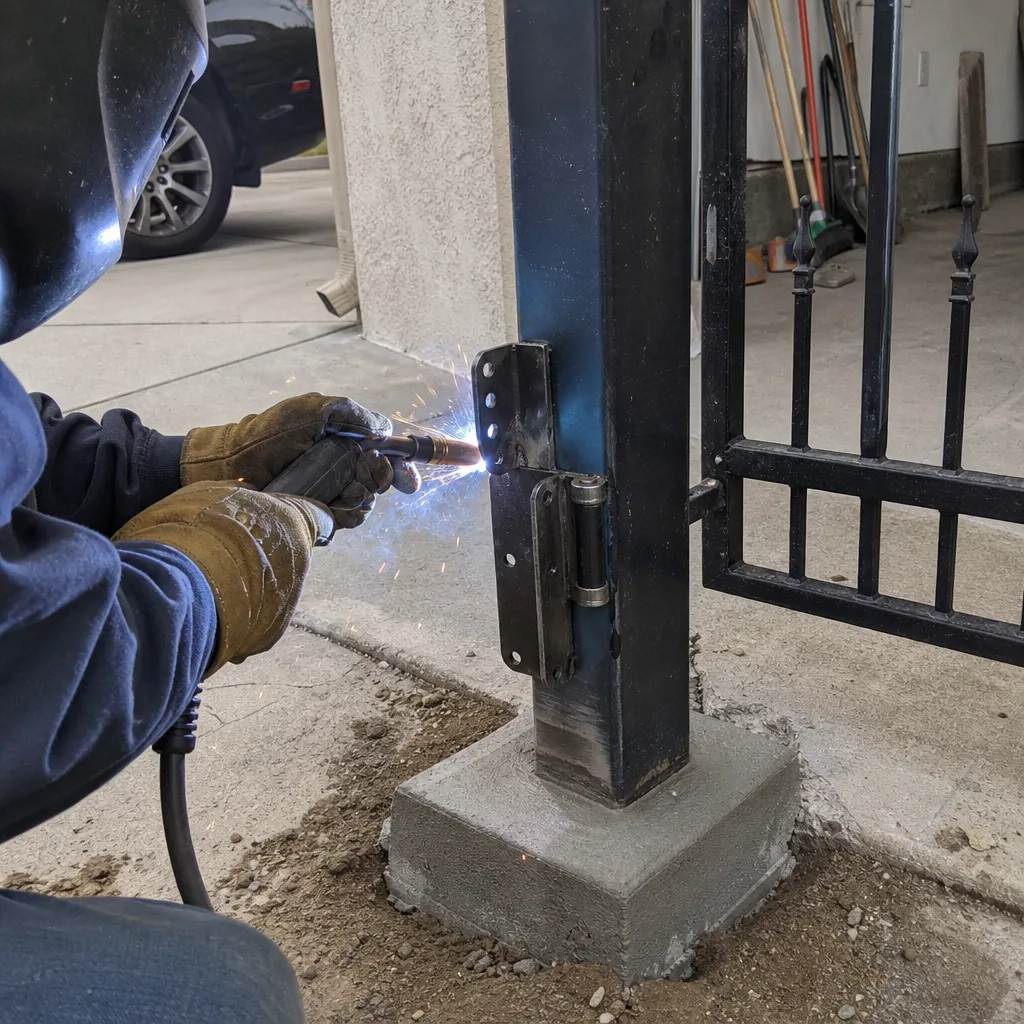
Every home has a history of half-documented work. The previous owner replaced the water heater in 2015 and left no receipt. The irrigation guy rerouted a valve and told you about it verbally. Gate systems accumulate the same undocumented history, and the cost hits when a future technician has to guess what was done.
Vance Gate Repair San Fernando was built on a documentation habit Adrian Vance developed in commercial access-control work starting in 2014. On every visit, we leave a written record of what was found, what was adjusted, and what was installed. The record includes wiring diagrams where applicable, limit-switch readings, and before-and-after photographs. That record gets filed with the job history and left with the homeowner.
Here’s what that documentation actually buys you. When your gate fails in three years and a different technician opens the operator, they see that a BFT arm was installed in March 2026, that the limit switches were set at 92 degrees of travel, that the photo-eyes were last aligned and verified in June, and that the force setting was calibrated to 15 pounds of closing pressure. They don’t start from zero. They don’t re-diagnose what’s already been established. You don’t pay twice to rediscover the same problem.
The Haven Standard, the operating ruleset we follow on every San Fernando job, makes this explicit: written price before work starts, photographic evidence on every visit, and the 365-Day Done Right Promise covering all completed work. If a repair isn’t right, we make it right within that window, no argument and no fee. That’s the difference between a gate company that fixes what’s broken today and one that leaves a record so the next failure costs less to fix.
For the full picture of what professional service includes, see Vance Gate Repair San Fernando home.
Common Mistakes to Avoid
- Replacing an operator without a force gauge. UL 325 has specific maximum force standards. Skipping the gauge means installing a system that may not reverse correctly, and that’s the injury scenario. The gauge costs $300 to $500 and you’ll use it once; the professional has it on the truck and uses it on every install.
- Buying an operator before checking bracket condition. The motor is half the job. The swing-arm bracket, the gate hinges, and the post condition determine whether the new motor survives. Homeowners who buy first and discover a cracked bracket second are into either welding or a return-and-reorder cycle.
- Misaligning photo-eyes and calling it an operator failure. Most “operator problems” in San Fernando are actually sensor problems. If the gate reverses before closing, clean the lenses first. Replacing the operator over a dirty sensor is a $1,500 mistake.
- Ignoring the manual-release system. If you don’t know where the manual release is and can’t test it, you’ll discover both facts during the first power outage with your car inside the driveway. Test it monthly, not annually.
- Underestimating San Fernando soil movement. Our clay soils expand and contract dramatically with moisture content. Gate posts set in unreinforced concrete move over time. A DIY post reset that doesn’t account for soil type will need redoing within two to three years.
- Treating the gate as a single system instead of three systems. A gate is structural (posts, hinges, frame), mechanical (tracks, rollers, arms), and electronic (operator, sensors, board). A failure in one system often creates symptoms in another. Treating it as one system produces misdiagnosis.
- Skipping the documentation. If you do DIY work, photograph everything and write down what you changed. Your future self, or a future technician, will be grateful when the record exists instead of starting from guesswork.
When to Call a Professional
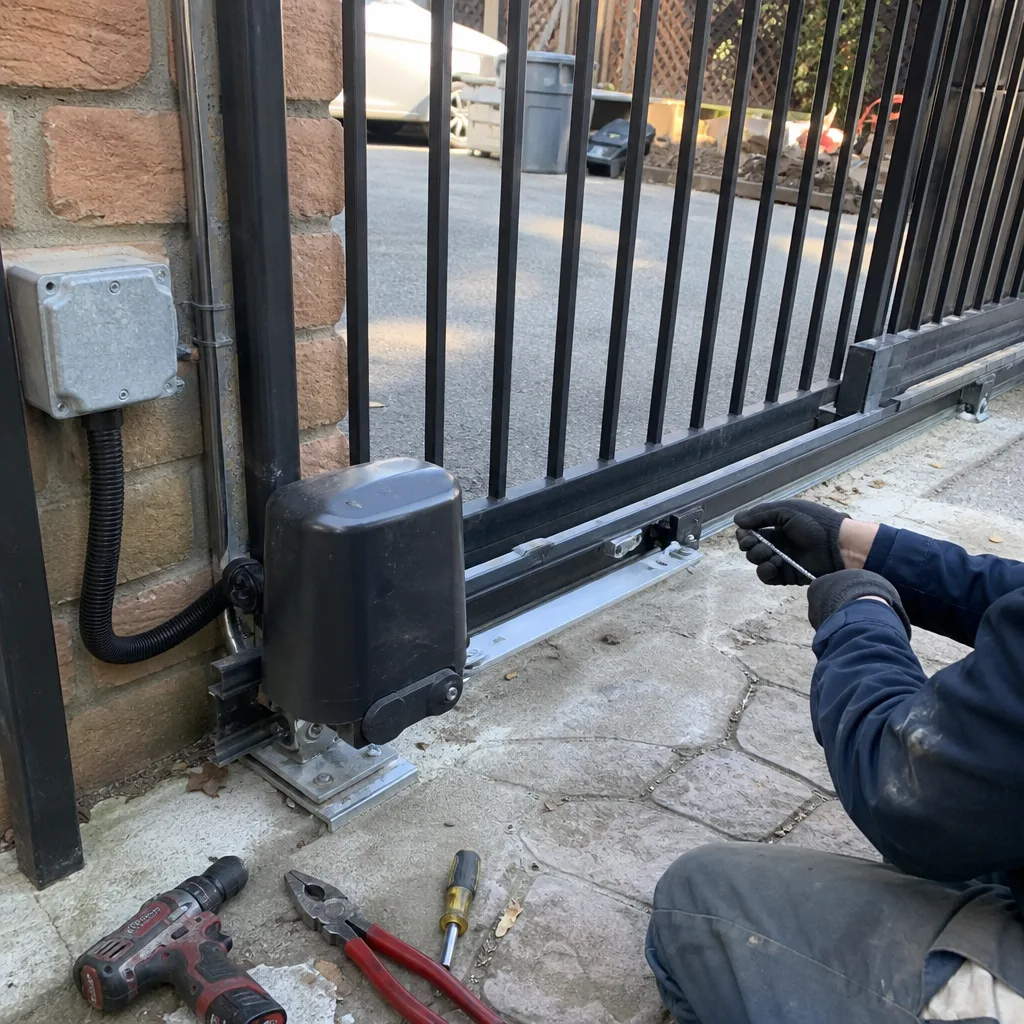
Call a professional when the repair touches the operator, the entrapment sensors, the control board, the structural posts, or any line-voltage wiring. Call when the gate reverses unexpectedly, when the motor runs but the gate doesn’t move, when you hear grinding from the operator housing, or when the gate has sagged visibly at the hinge side. Call when photo-eye cleaning doesn’t resolve a reversal problem. Call when you’re not sure what failed. Vance Gate Repair San Fernando provides free estimates on gate repairs in San Fernando, and every estimate is a written price before any work begins. Call (747) 260-0589 and a live person answers.
Frequently Asked Questions
Most San Fernando gate repairs run between $175 and $850. Simple fixes like photo-eye alignment, limit-switch adjustment, and remote programming sit at the lower end. Operator replacements typically land between $1,150 and $2,400 depending on brand and gate weight. Every Vance Gate Repair San Fernando job includes a written price before work starts. Call (747) 260-0589 for an exact quote on your specific situation.
No. California requires a C-61/D-16 specialty contractor license for automated gate operator work. An unlicensed homeowner who performs the replacement assumes personal liability for any future injury or damage the gate causes, and homeowner’s insurance typically excludes losses arising from unpermitted work that required a licensed contractor. The legal exposure makes DIY operator replacement a poor risk calculation regardless of skill level.
You can clean photo-eye lenses, test the manual-release mechanism, lubricate slide-gate tracks with dry silicone, clear path obstructions, tighten hinge bolts, replace low-voltage accessory batteries, and perform cosmetic maintenance. These tasks don’t touch the operator, the entrapment sensors, the control board, or structural components. Anything outside that boundary enters licensed-and-permitted territory.
The most likely causes are misaligned photo-eyes, an improperly set limit switch, or a force sensitivity that’s set too high, which causes the operator to interpret resistance as an obstruction and reverse. Unfortunately, the fix now involves diagnosing the homewiring and calibration work before any repair can happen, which typically costs more than a professional installation would have from the start. Call (747) 260-0589 and we’ll sort it out with a written price before touching anything.
Yes. We service LiftMaster, FAAC, BFT, Linear, Viking, Ghost Controls, DoorKing, Elite, and Mighty Mule operators. We repair whatever motor is already on your property rather than steering you toward a brand we’d rather sell. That’s been our position since Adrian Vance started the company in 2014.
Most repairs are completed in a single visit, typically one to four hours depending on the problem’s complexity. A photo-eye alignment or limit-switch reset is often a 60-to-90-minute job. An operator replacement runs three to five hours including calibration and compliance verification. Call (747) 260-0589 and we’ll give you a written price and a realistic time window before we begin.
San Fernando’s clay-heavy soils cause more post movement and foundation stress than sandy-soil communities, which translates to more frequent structural repairs and more involved post work when it’s needed. The dry climate also accelerates dust intrusion into photo-eyes and operator housings, which increases wear on electrical components. Local repair costs reflect the local conditions.
Yes. Vance Gate Repair San Fernando reviews any written estimate from another gate company at no cost. Bring the paperwork, and we’ll tell you what’s fairly priced, what’s overbuilt, and what’s missing from the scope. The second opinion itself is free and carries no obligation. Call (747) 260-0589.
The Bottom Line
DIY gate repair isn’t a skill question; it’s a liability question. The tasks that are safe and legal for a homeowner, like photo-eye cleaning, manual-release testing, and track lubrication, are genuinely worth doing and meaningfully reduce long-term costs. The tasks that trigger licensing requirements, like operator replacement, sensor modification, board replacement, and post work, carry liability and insurance exposure that erases any DIY savings. A written professional quote isn’t just a price; it’s a liability shield, a compliance record, and a warranty. In San Fernando’s climate and legal landscape, the smart DIY move is the maintenance layer, and the smart professional move is everything that touches the operator or the safety devices. For more guides & resources, visit our blog, or for a free written estimate on any gate repair, call Vance Gate Repair San Fernando at (747) 260-0589.
Written by Adrian Vance, Owner at Vance Gate Repair San Fernando, serving San Fernando since 2014.