
Last updated September 20, 2026
Free on-site gate assessment - hinges, posts, and your LiftMaster or Nice gate operator checked before anything is quoted
The assessment is free and the quote is the invoice.

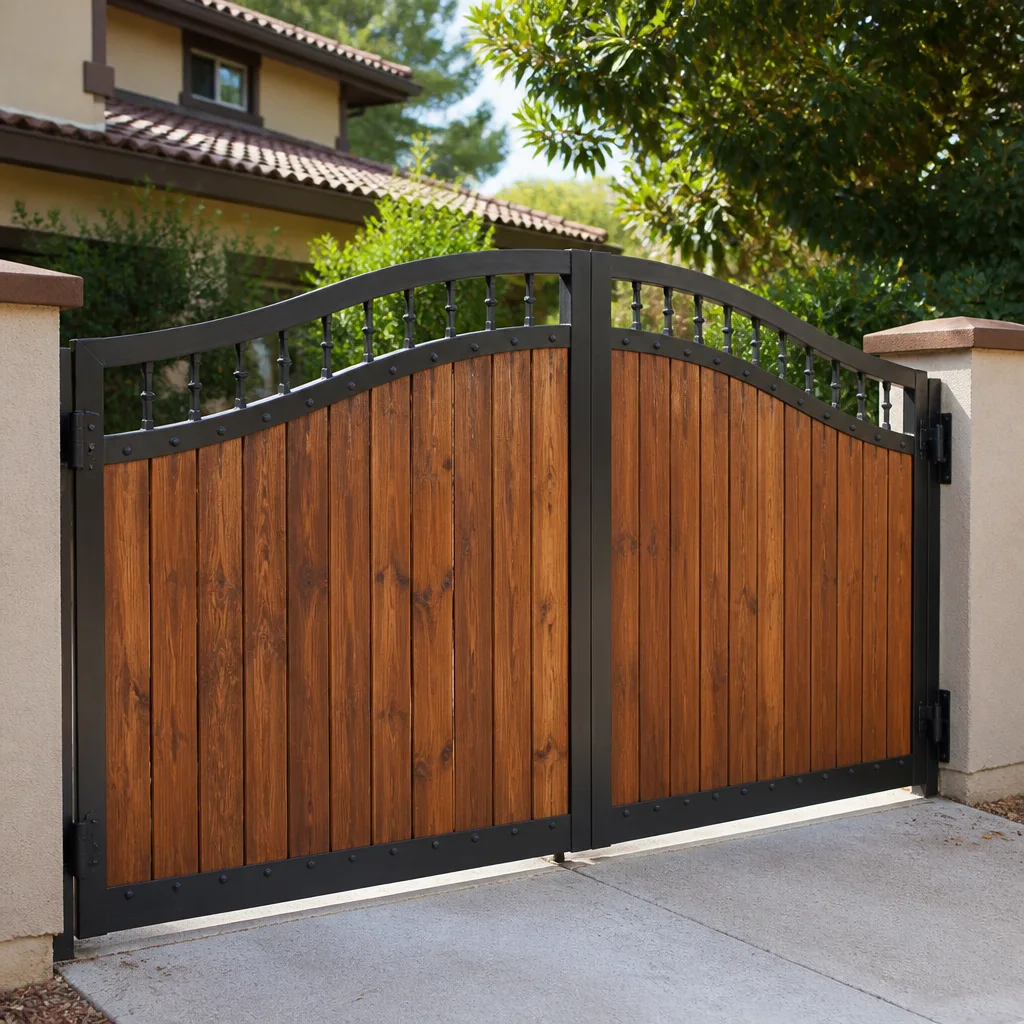
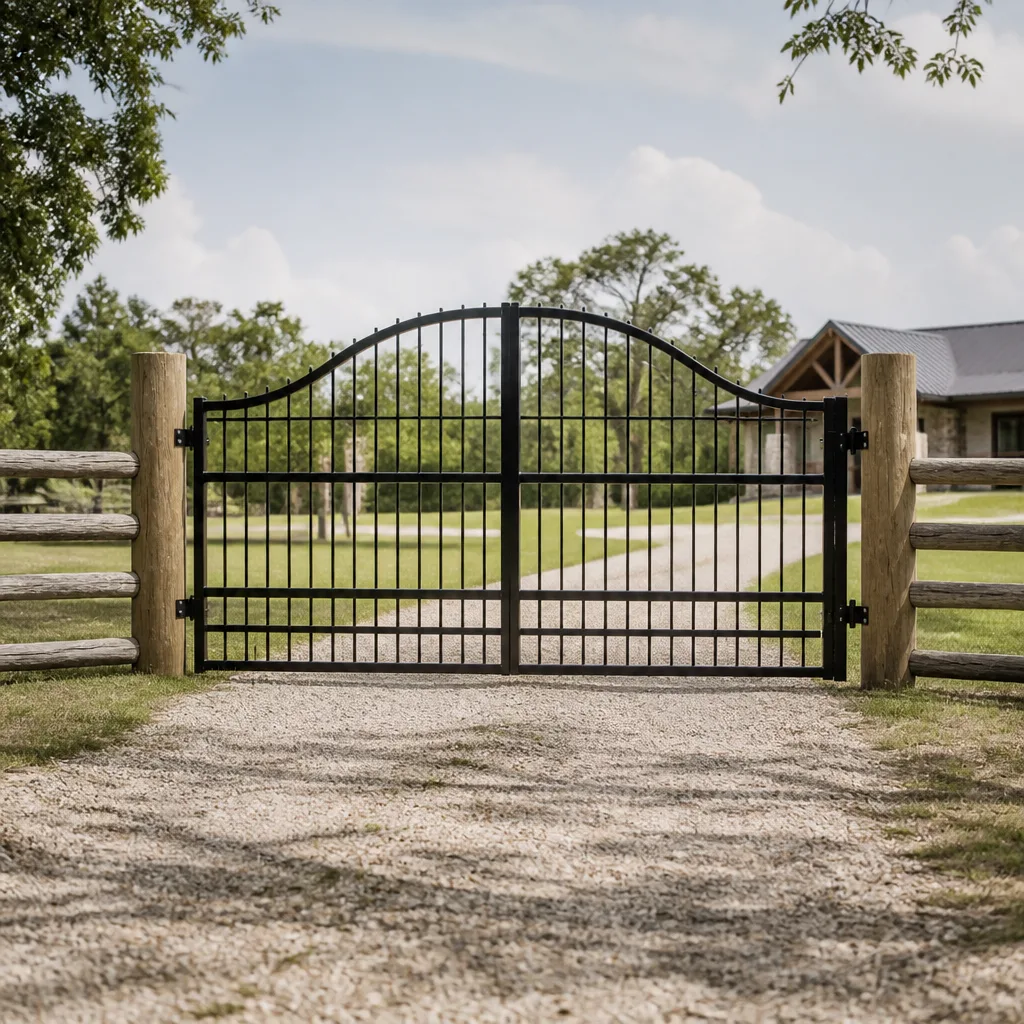
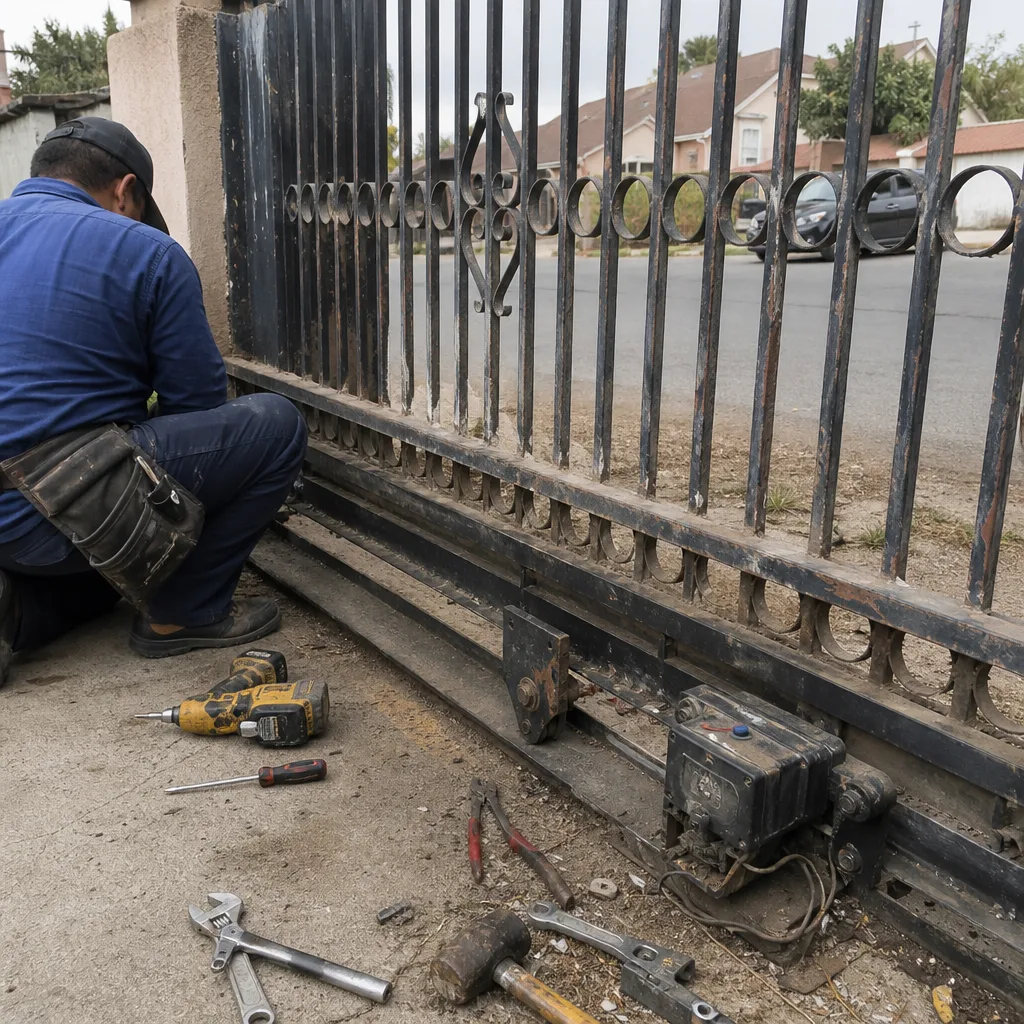 Before
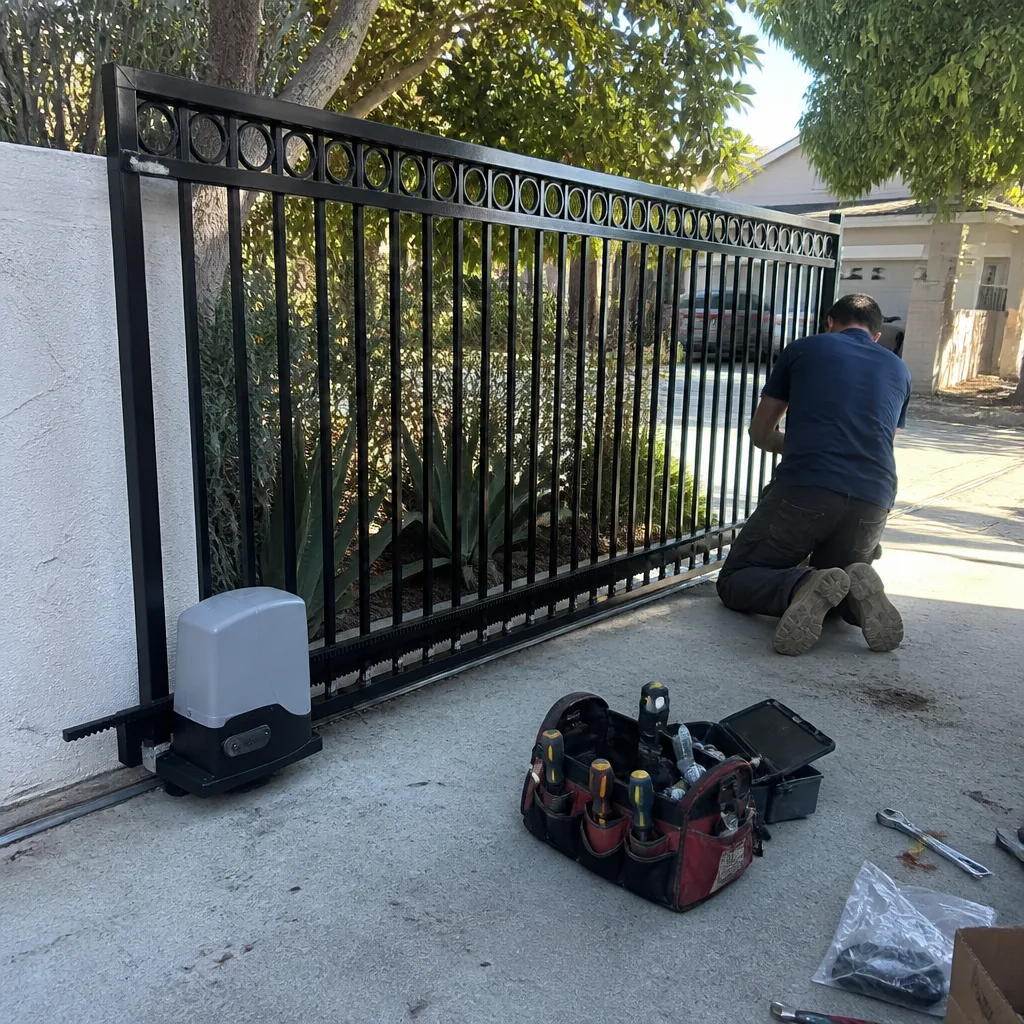 After
AfterThe Complete Guide to Gate Repair in San Fernando
A gate that stops mid-swing isn’t broken in a hundred different ways. It’s broken in one of five, and misdiagnosing which one is why so many San Fernando homeowners pay for a repair that fails again within 90 days. This guide maps those five root-cause categories, explains what San Fernando’s climate does to each of them, and gives you the decision tree to evaluate any quote you receive. By the end, you’ll know what a documented repair record should contain, when a permit is required, and what realistic price bands look like for Gate Repair Cost Breakdown: The San Fernando Homeowner’s Reference for 2026.
Quick Answer
Gate repair in San Fernando typically costs between $180 and $2,400 depending on which of five root causes is at play: mechanical wear, electrical fault, operator failure, structural shift, or a control-system error. Misdiagnosis is the reason most repeat repairs happen, not poor parts. A proper diagnosis names the root cause in writing, prices the fix before work starts, and leaves you with a photo record of what was found and what was changed.
Table of Contents
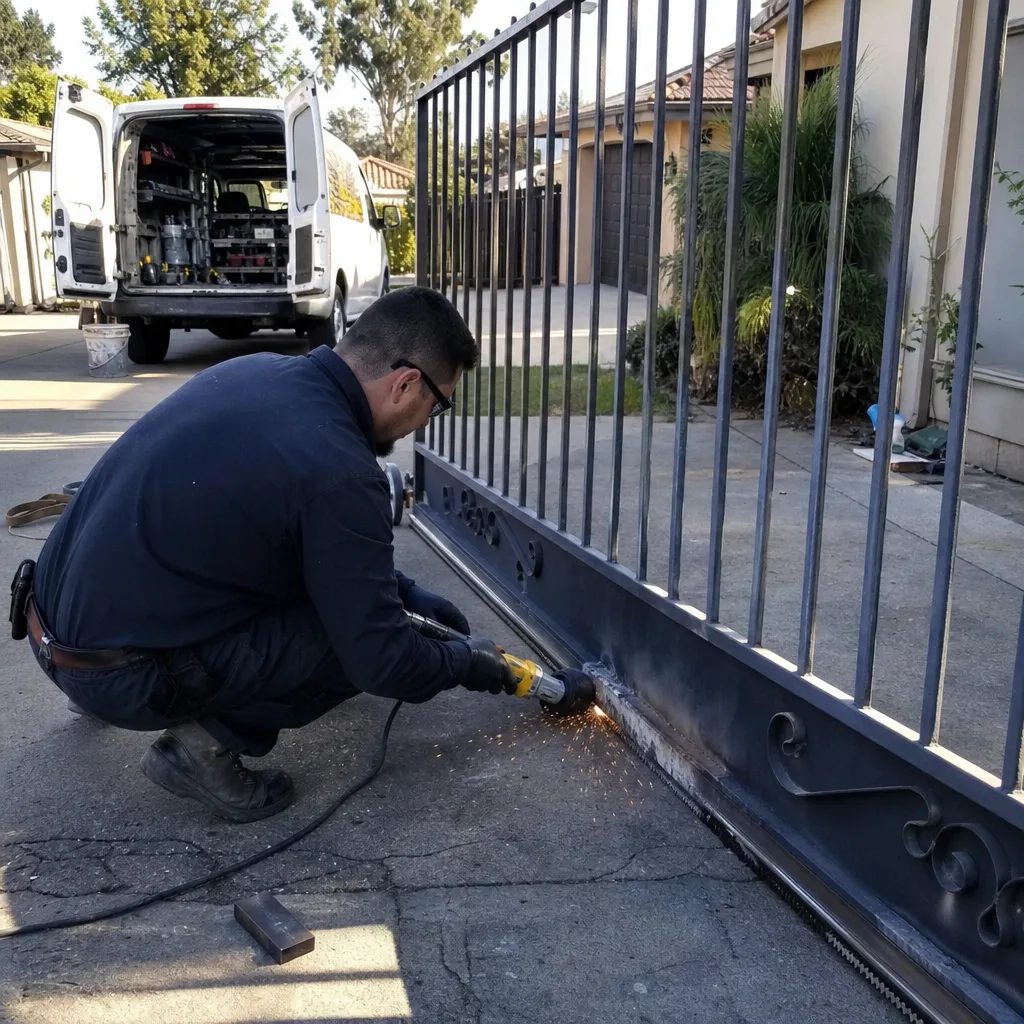
- The Five Root Causes of Gate Failure in San Fernando
- Why San Fernando’s Climate Accelerates Specific Failures
- What a Documented Repair Record Must Contain
- Code-Triggered vs. Mechanical Repairs: When Is a Permit Required?
- The Symptom-to-Quote Decision Tree
- Common Mistakes to Avoid
- When to Call a Professional
- Frequently Asked Questions
BeforeAfterThe Five Root Causes of Gate Failure in San Fernando
Every gate failure we’ve documented since 2014 falls into one of five categories. Not ten. Not fifty. Five. And the category determines everything downstream: the part, the timeline, and the price. Here’s what each category looks like up close.
1. Mechanical Wear
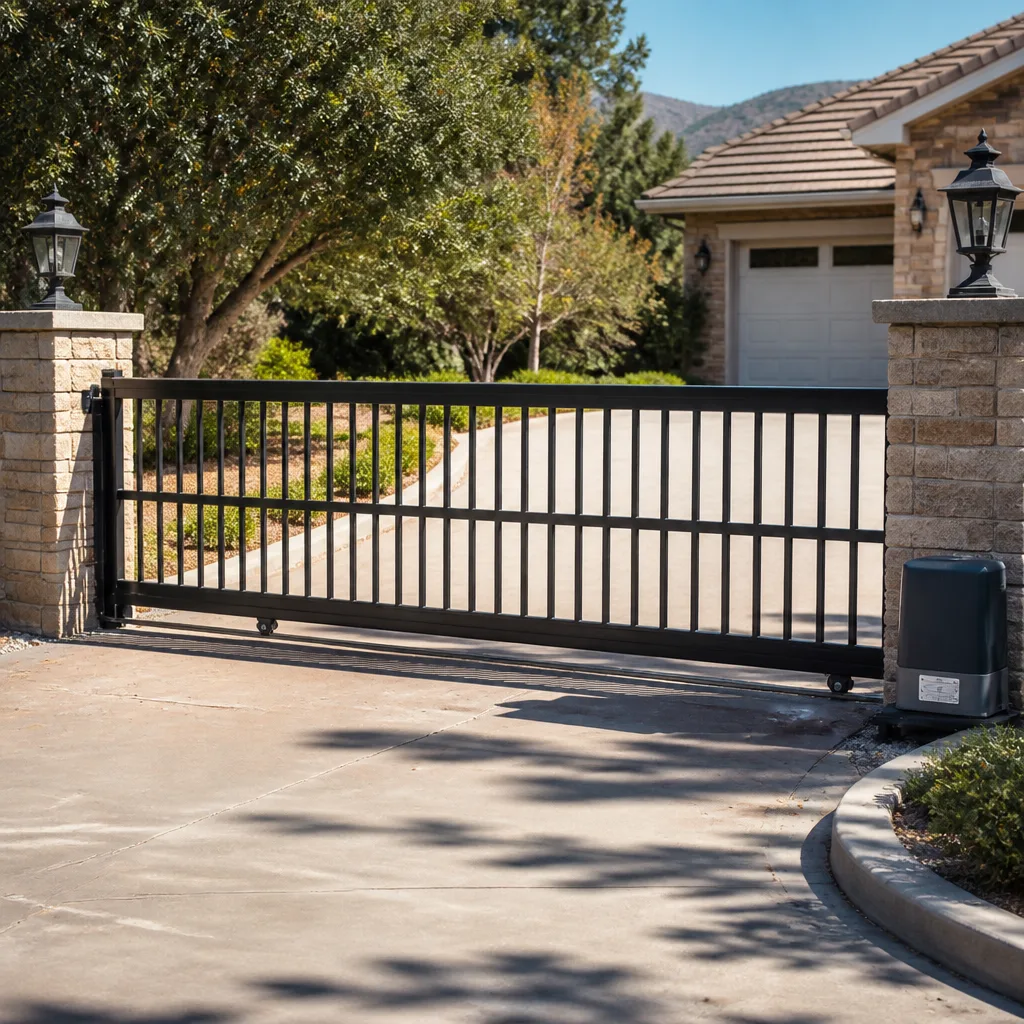
Mechanical wear means physical parts have degraded through friction, load, or time. This is the most common category, and it’s almost always visible if you know what to look for. Hinges sag, rollers flatten, chains stretch, brackets crack, wheel bearings seize. On a swing gate, a sagging hinge is the classic culprit: the gate leaf drops a quarter inch, drags on the concrete, and the motor strains against the added resistance until something fails. On a slide gate, the wheels and track take the abuse, especially where San Fernando’s fine dust accumulates into a grinding paste.
The repair here is usually localized: replace the hinge, the roller, the bracket. Depending on the brand and gate weight, expect $180 to $650 for most mechanical repairs. A Viking or DoorKing slide gate with badly flattened steel wheels may run higher because the wheels are married to the track alignment. The key diagnostic question is whether the gate moves freely by hand with the operator disengaged. If it doesn’t, you’re looking at mechanical wear before you ever look at the motor.
2. Electrical Fault
Electrical faults live in the wiring, the transformer, the photo-eyes, or the circuit board’s low-voltage side. In San Fernando, the two most common electrical faults are photo-eye misalignment and corroded wire splices. The photo-eye is the infrared beam that stops the gate if something crosses the path; when it’s misaligned by even two inches, the gate reads a phantom obstruction and refuses to close or reverses mid-travel. Corroded splices are sneakier, because they work intermittently for weeks before they fail outright.
Electrical diagnostics are where a multimeter pays for itself. The repair usually costs $120 to $450, depending on whether the fix is a realignment, a splice re-termination, or a transformer swap. Ghost Controls and Mighty Mule DIY systems are overrepresented in this category, often because the original install used wire nuts instead of weatherproof connectors.
3. Operator Failure
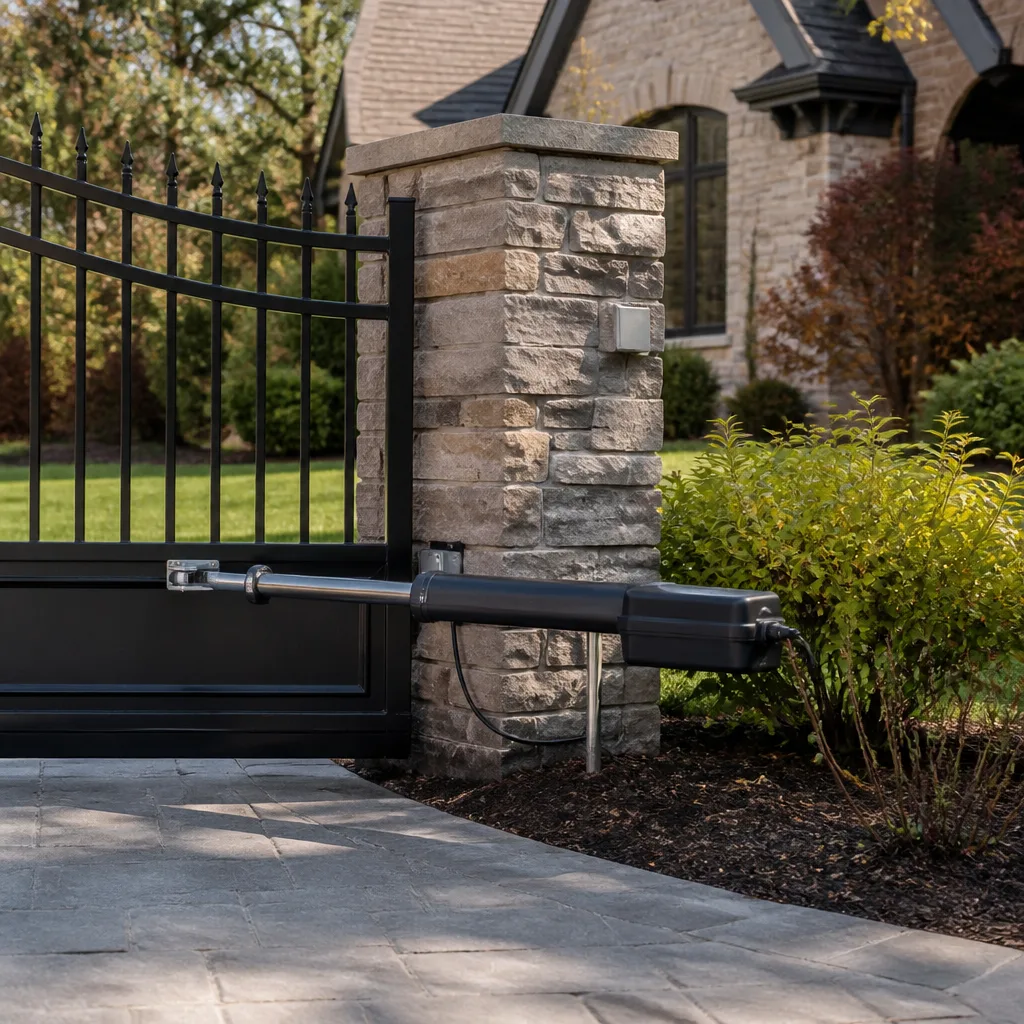
The operator is the motor and its integrated drive components: the gearbox, the limit switches, the capacitor, the control board’s high-voltage side. When an operator fails, the gate either won’t move at all, moves in one direction only, or moves erratically. A failed capacitor is the single most common operator failure we see, and it presents as a motor that hums but won’t start. Limit-switch drift is a close second: the switch that tells the motor where to stop has shifted, so the gate slams at the end of travel or stops twelve degrees short.
Operator repair ranges from $250 for a capacitor or limit-switch reset to $1,400 to $2,400 for a full swing-gate motor replacement, depending on brand and whether the arm bracket is intact. Elite and FAAC operators are common on San Fernando’s heavier ornamental gates, and their parts pricing is generally predictable when you know the model number. The brand matters, which is why a company that works on whatever motor is already on the property instead of steering you toward a replacement will save you the difference between a $300 capacitor and a $2,000 operator swap.
4. Structural Shift
Structural shift is the gate post or the mounting slab moving out of position. In San Fernando, this category is underdiagnosed because the movement is slow. A post leans a half degree over two years until the gate binds at the latch, and the operator burns out trying to close a gate that physically cannot close. You’ll see stress cracks at the base of the post, a gap opening between the post and the driveway, or a gate that binds only in summer when the concrete expands.
Structural repair is the most expensive category because it’s not a gate repair at all: it’s a reset or re-pour of the mounting post, which runs $800 to $3,000 depending on post size, whether the old footing needs demolition, and whether the gate must be removed and re-hung. This is the category where a verbal estimate from one company and a written scope from another diverge most wildly. You want the written scope.
5. Control-System Error
Control-system errors are programming and logic failures: the keypad lost its codes, the remote receivers are saturated with interference, the loop detector won’t recognize your car, the safety reversal setting was overwritten. These repairs are cheap in parts and expensive in time, because the diagnostic is methodical rather than intuitive. A keypad that works intermittently is often a poor ground, not a bad keypad. A remote that stopped working the same week a new WiFi router went in is likely frequency interference, not a failed receiver.
Control-system repairs typically run $120 to $400, and they demand the patience to test one variable at a time. DoorKing and LiftMaster residential systems have distinct programming sequences, and a technician who knows the brand saves you the cost of replacing a control board that was never the problem.
Back to the start: most gate failures in San Fernando trace back to one of these five. The right diagnosis names the category in writing, and the right price follows from the category, not from a technician’s mood. For a deeper look at how this plays out in practice, see our gate repair in San Fernando breakdown.
Why San Fernando’s Climate Accelerates Specific Failures
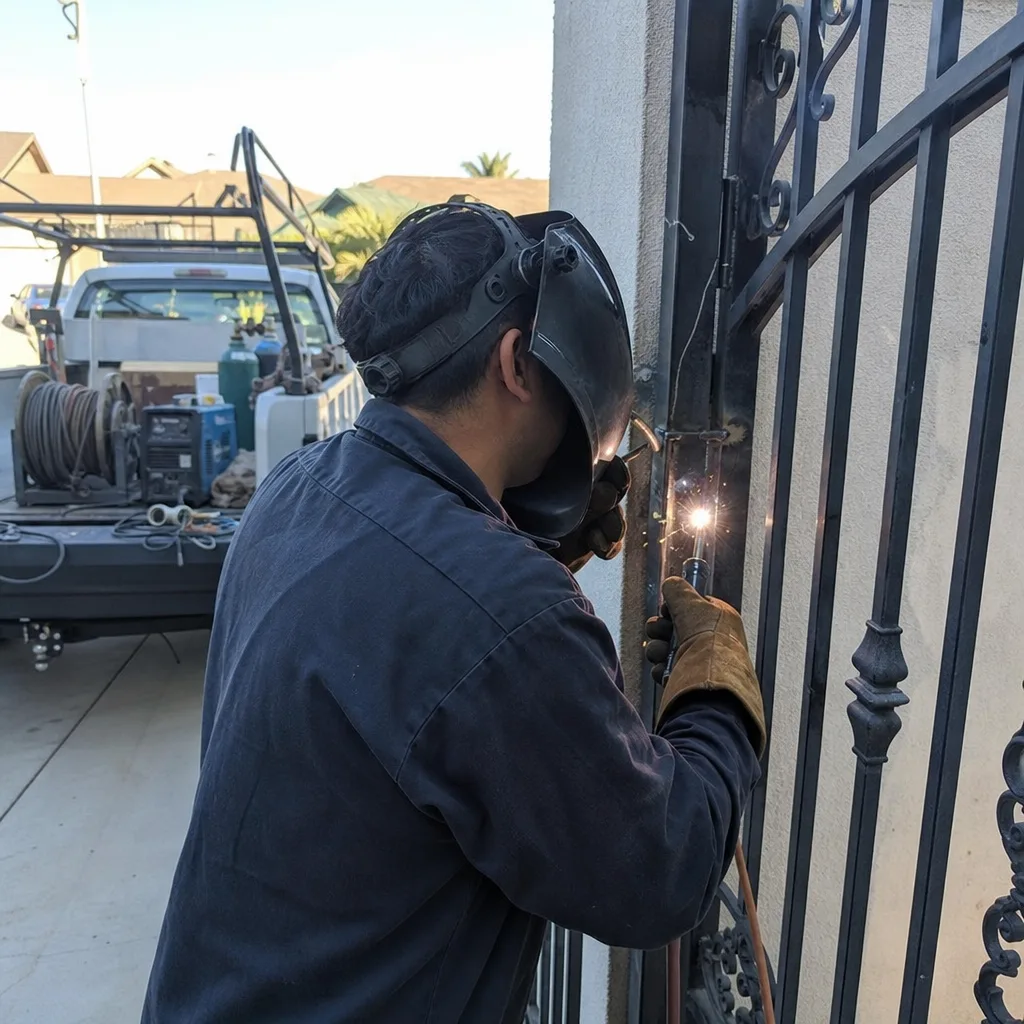
San Fernando’s heat is not a background detail. It’s an environmental variable that acts on gate hardware year after year, and it accelerates two failure types that other regions see less frequently: limit-switch drift and hydraulic seal degradation.
Limit switches are small electromechanical components that tell the operator where the gate’s travel ends. They’re set to the degree, and they are sensitive to thermal expansion. A gate installed in January at fifty degrees Fahrenheit is a different length at one hundred and ten degrees in August. The steel expands, the effective travel changes by a fraction of a degree, and over enough heat cycles the limit switch drifts out of calibration. The symptom is a gate that used to close softly and now slams against the end stop, or a gate that reverses at the wrong point because the control board thinks it’s hitting an obstruction. In most climates, limit-switch drift is a once-a-decade adjustment. In San Fernando, it’s a regular maintenance item on black iron gates that face west into the afternoon sun.
Hydraulic operators, the kind used on heavy estate gates and some commercial properties, suffer a different insult. The seals inside the hydraulic ram degrade faster in sustained high temperatures. When a seal breaks down, the operator loses pressure, the gate moves slower, and eventually the system fails to hold position with the pump off. A gate that drifts closed overnight is the tell. Replacing a hydraulic seal kit runs $400 to $900, and the repair is straightforward once the operator is identified: BFT and FAAC hydraulic units are the most common in San Fernando’s older neighborhoods.
Dust is the other local variable. The San Fernando Valley’s fine, powdery dust infiltrates everything: wheel bearings on slide gates, chain sprockets, photo-eye lenses, control-board housings. A photo-eye lens caked with dust behaves exactly like a misaligned beam, which is why every electrical diagnostic should begin by cleaning the lenses and wiping the sensor faces. It’s a thirty-second fix we perform on nearly every call, and it’s the kind of detail that disappears from generic gate repair advice written for a national audience.
Gate material interacts with all of this. Wrought iron and steel expand more than aluminum, so the same heat cycle produces more limit-switch drift on an ornamental steel gate than on an aluminum one. Vinyl gates fade and become brittle. Wood gates crack and warp. If you’re in the market for something new, gate installation in San Fernando should account for material behavior in this specific climate, not a national average.
What a Documented Repair Record Must Contain
Most gate repairs leave behind two things: an invoice and a vague memory. Neither helps the next technician. A documented record is the difference between a repair that compounds on what came before and one that forces the next technician to restart diagnosis from zero, which is exactly how homeowners end up paying twice to rediscover the same problem.
Here’s what a complete repair record contains:
- Written scope of work - the specific failure identified, in plain language, before any work starts. “Replaced failed run capacitor, 25µF 370V, on LiftMaster LA400 operator.” Not “fixed gate motor.”
- Written price - the flat price for the repair, agreed to before tools are picked up. If the price changes mid-job, the changed price is documented with the reason. No surprises at the end.
- Photo log - photos of the gate before, the failed component in place, the new component installed, and the final settings. Limit-switch positions photographed against reference marks are especially valuable six months later.
- Settings record - limit-switch readings, force-sensitivity settings, and any programming values changed. Written down, not left in the operator’s memory.
- Part numbers - the manufacturer part number of everything installed, plus the brand and model of the operator the part went into.
- Warranty terms - what’s covered, for how long, and what the homeowner should do if the failure recurs.
The absence of this record forces the next technician to guess. Was the limit switch already at 28 degrees when the new board was installed? Was the operator replaced in 2019 or 2021? Is the capacitor still under warranty? Without the record, the answer is a shrug and another diagnostic charge.
This documentation habit carried over from commercial access-control work, where a wiring diagram left undocumented is a liability. Every visit under The Haven Standard includes a photo record of what was found, what was adjusted, and what was installed, left with the homeowner and filed in the job record. When you’re comparing gate repair companies in San Fernando, ask directly: what do I receive when the technician leaves? If the answer is “an invoice,” keep looking.
Code-Triggered vs. Mechanical Repairs: When Is a Permit Required?
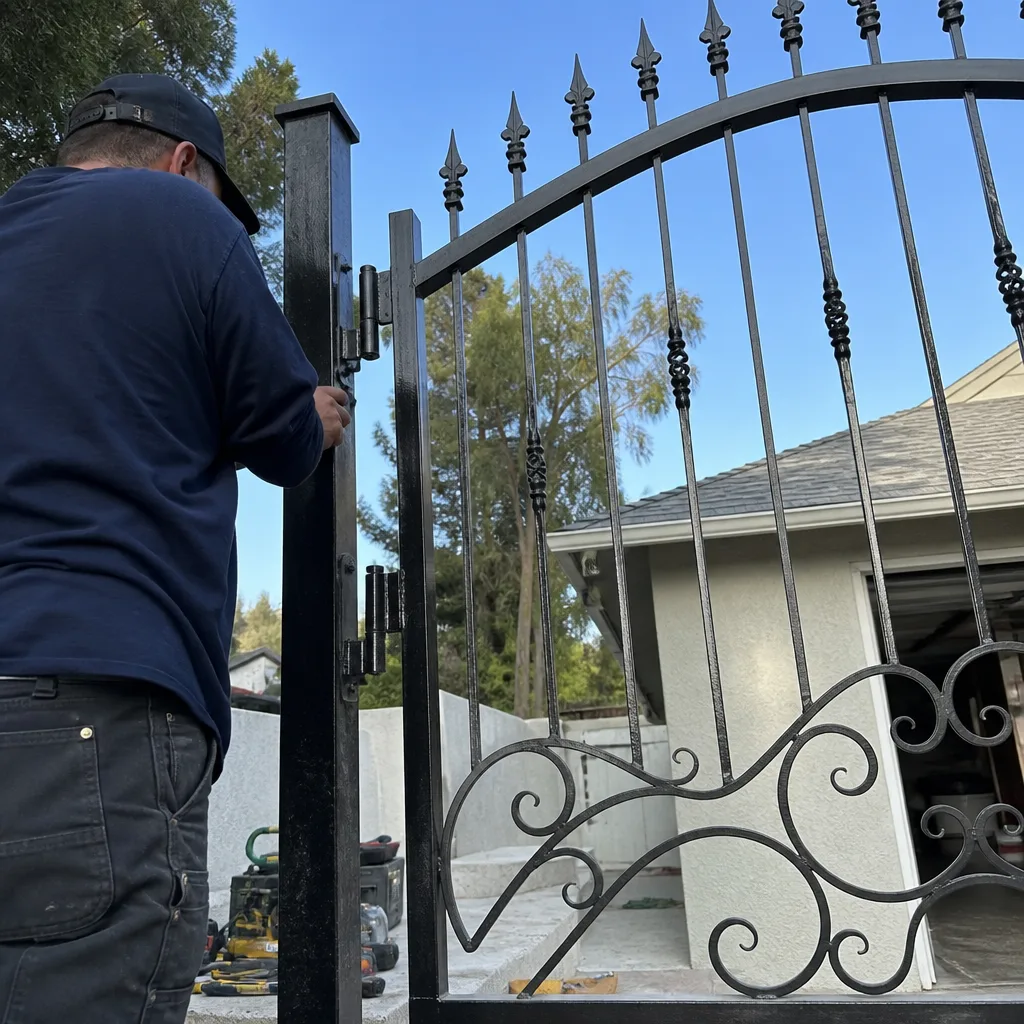
Not every gate repair needs a permit, and knowing which ones do keeps you out of expensive retroactive correction. The dividing line in San Fernando is whether the work changes the gate’s footprint, its electrical feed, or its safety systems in a way that the building department thinks is new construction.
Permit-triggering work includes:
- New gate installation where no gate previously existed
- Replacement of gate posts that requires new concrete footings
- New electrical runs from the panel to the operator, or a new dedicated circuit
- Structural modifications to the gate frame or supporting masonry
- Any work that changes the gate’s height, weight, or leaf configuration
Mechanical repairs that do NOT require a permit include:
- Photo-eye alignment or lens cleaning
- Capacitor, limit-switch, or control-board replacement on the existing operator
- Hinge, roller, wheel, or bracket replacement
- Keypad and remote programming
- Hydraulic seal replacement on an existing operator
The rule of thumb: if the work restores the gate to its original, permitted condition, no permit is needed. If the work changes what was originally approved, a permit is likely required. San Fernando’s building department follows the California Building Code, which treats automated vehicle gates as a safety system subject to UL 325 compliance. A gate that predates current safety standards and is being substantially repaired may be required to bring its entrapment protection up to code, which means adding photo-eyes or contact edges that weren’t there before.
When a permit is required, the inspector will want to see the gate cycle through its safety behaviors: reversal on obstruction, photo-eye interruption mid-close, and audible alarm where applicable. A technician who hands you a repair without telling you it should have been permitted is not doing you a favor.
The Symptom-to-Quote Decision Tree
Here’s the realistic decision tree San Fernando homeowners use to evaluate any quote they receive. Start with the symptom, move to the likely cause, and the cost band follows.
| Symptom | Likely Root Cause | Repair Category | Typical Cost Band |
|---|---|---|---|
| Gate hums but won’t move | Failed capacitor or seized gearbox | Operator failure | $250 - $600 |
| Gate slams or reverses at wrong point | Limit-switch drift | Operator failure | $120 - $350 |
| Gate won’t close, reverses mid-travel | Photo-eye misalignment or dirty lens | Electrical fault | $120 - $250 |
| Gate binds, drags, or scrapes | Hinge sag, roller wear, or structural shift | Mechanical wear or structural | $180 - $3,000 |
| Gate works manually but not with remote | Receiver failure or frequency interference | Control-system error | $120 - $400 |
| Gate drifts closed overnight | Hydraulic seal degradation | Operator failure | $400 - $900 |
| Keypad works intermittently | Poor ground or corroded splice | Electrical fault | $120 - $350 |
| Post leaning, gap at driveway | Structural shift | Structural | $800 - $3,000 |
Use this table as a reference when you receive a quote. If a technician quotes you $2,500 for a photo-eye realignment, the category is wrong. If they quote $300 to re-pour a post, so is the scope. The decision tree keeps both sides honest.
For issues that live in the motor itself, whether it’s a failed capacitor or a full replacement, see our gate motor and opener service in San Fernando page for brand-specific detail. And for anything involving keypads, receivers, or entry systems, Vance Gate Repair San Fernando home has the access-control background that matters.
Common Mistakes to Avoid
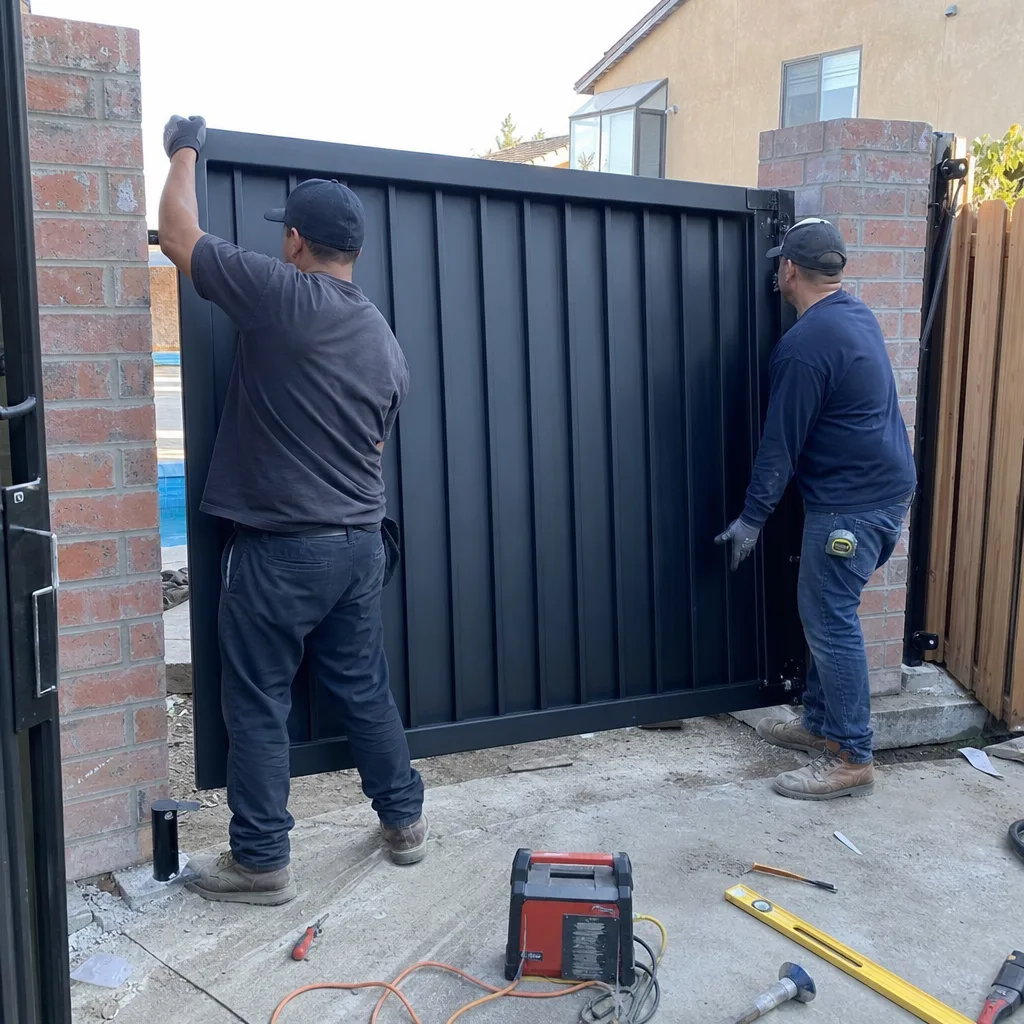
- Replacing the operator when the hinge is the problem. A sagging hinge creates drag, the drag burns out the motor, and a technician who doesn’t check mechanical movement first sells you a motor that will burn out the same way. Always disengage the operator and swing the gate by hand before authorizing any motor work.
- Accepting a verbal estimate. If the price isn’t written down with the scope before work starts, you’ve handed the technician the ability to revise it later. In San Fernando’s gate repair market, a written price is the single strongest consumer protection available.
- Ignoring summer limit-switch drift. A gate that slams harder in August is not normal. It’s thermal expansion shifting the limit switch, and leaving it uncorrected means the operator absorbs the impact until something more expensive fails.
- Skipping the photo-eye lens during troubleshooting. A dirty lens mimics an obstruction, and many homeowners replace perfectly good photo-eyes because no one wiped the dust off. San Fernando’s fine dust makes this a monthly maintenance item during dry months.
- Treating a leaning post as a cosmetic issue. A post that’s moved a half degree isn’t worried about appearances; it’s transferring stress into the gate leaf, the hinges, and the operator. The longer you wait, the more components fail downstream.
- Mixing brands incompatibly. Pairing a Ghost Controls remote receiver with a DoorKing control board without verifying signal compatibility creates an intermittent control system that’s difficult to diagnose. A gate repair company that works on all nine major brands can tell you what plays together before you buy parts.
- Failing to keep the repair record. A paid invoice without a scope, settings, and photo log is a receipt, not a record. When the gate fails again in two years, that missing record means starting diagnosis over at full cost.
When to Call a Professional
Some gate repairs are genuinely unsafe to attempt without training and proper tools. Operators contain capacitors that hold charge after power is cut. Gate leaves weigh hundreds of pounds and can crush whatever is in their travel path. A photo-eye misalignment that looks simple is often a symptom of a deeper limit-switch or board fault. If the gate slams, sparks, smokes, or won’t stop on obstruction, stop using it and call our Gate Repair services.
For homeowners in San Fernando who want a written scope and price before work begins, Vance Gate Repair San Fernando offers free estimates and a documented photo record on every visit. Call (747) 260-0589 to schedule a diagnosis. A live person answers, and the price is written before anyone picks up a tool.
Frequently Asked Questions
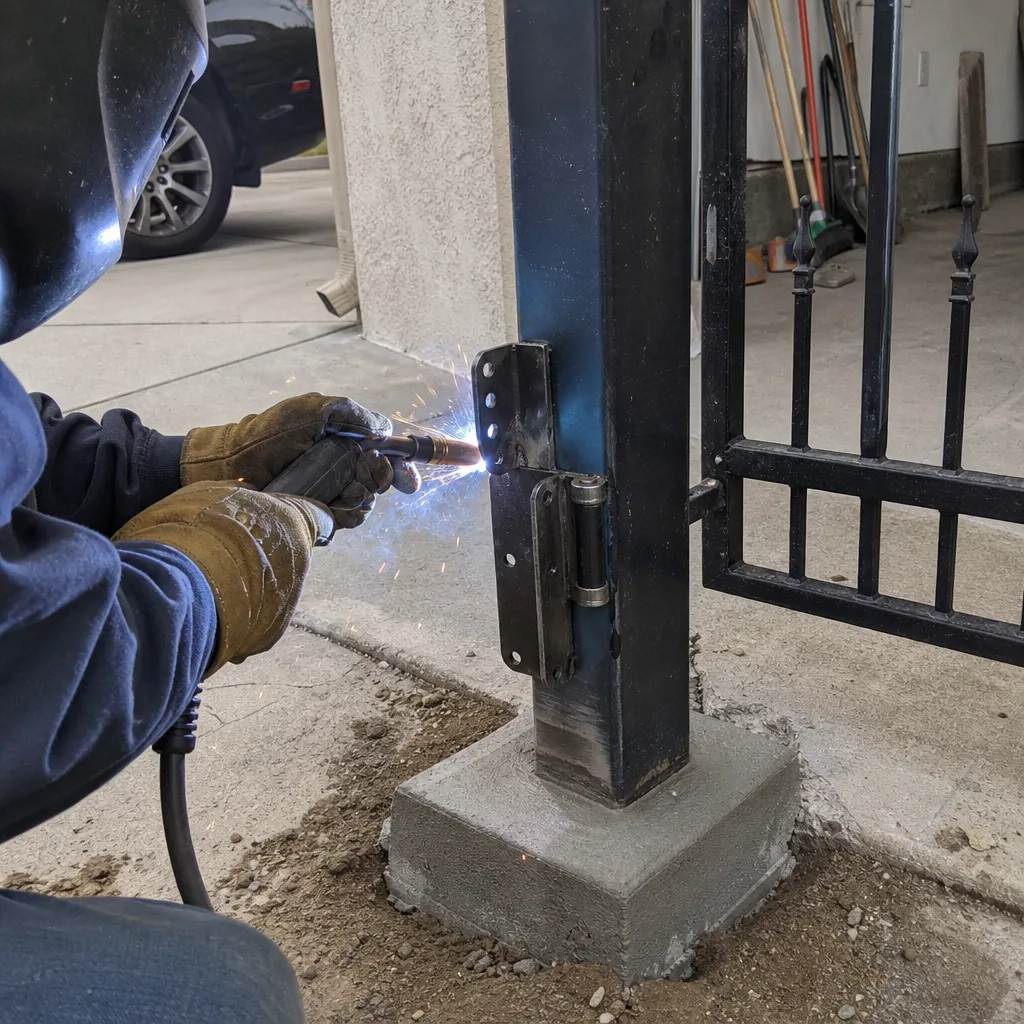
Gate repair in San Fernando typically runs $180 to $2,400 depending on the root cause. Mechanical repairs like hinges and rollers cost $180 to $650, electrical faults run $120 to $450, and full operator replacements range $1,400 to $2,400 for most brands. Structural post resets are the outliers at $800 to $3,000. Call (747) 260-0589 for an exact quote in writing; estimates are free.
Vance Gate Repair San Fernando dispatches same-day for most mechanical, electrical, and operator failures, with a live person answering at (747) 260-0589 around the clock. The written price is handed over before any work starts, so there’s no surprise invoice at the end of the visit.
We service nine major gate-automation brands: LiftMaster, FAAC, BFT, Linear, Viking, Ghost Controls, DoorKing, Elite, and Mighty Mule. If your gate has an operator from one of these manufacturers, we can repair it in place rather than steering you toward a replacement you may not need. Call (747) 260-0589 with your operator’s model number for a written estimate.
Most repairs that restore a gate to its original condition, such as hinge replacement, photo-eye realignment, capacitor swaps, and programming, do not require a permit. Work that changes the gate’s footprint, adds new electrical runs, or replaces structural posts typically does. When a permit is required, we can advise on the exact scope before any work begins.
That’s limit-switch drift caused by thermal expansion in San Fernando’s summer heat. The steel gate leaf lengthens at high temperatures, the effective travel changes, and the limit switch drifts out of calibration. The fix is a calibration adjustment, usually $120 to $350, and it should be checked annually on sun-exposed metal gates.
At minimum, you should receive a written scope of work, the flat price you agreed to, photo documentation of the failed part and the new installation, the part number installed, and the final settings. Without this record, the next technician starts diagnosis from zero and you pay twice to rediscover the same problem. Call (747) 260-0589 to work with a company that provides this record by default.
The Bottom Line
Gate failure in San Fernando comes down to five root causes: mechanical wear, electrical fault, operator failure, structural shift, and control-system error. Diagnosing the category correctly is what separates a repair that holds from one that fails again in ninety days. This climate adds its own accelerants: limit-switch drift from thermal cycling, hydraulic seal degradation from sustained heat, and dust infiltration that mimics electrical faults. A written scope, a written price, and a photo record are not extras; they’re the baseline for any repair worth paying for. When the gate acts up, start with the decision tree, then call (747) 260-0589 for a free estimate in San Fernando, or explore DIY vs Professional Gate Repair: The San Fernando Homeowner’s Decision Guide.
Written by Adrian Vance, Owner at Vance Gate Repair San Fernando, serving San Fernando since 2014.